What Nissan Cars Have CVT Transmission Problems in 2026
Many Nissan vehicles produced between 2003 and 2020 are notorious for Xtronic CVT transmission failures, particularly high-volume models like the Altima, Rogue, and Sentra. Overheating and premature belt wear are the primary culprits behind catastrophic failures. Knowing which model years are affected helps owners identify symptoms early and explore warranty options.
If you own or are looking to buy a used Nissan, you need to know which models carry the infamous Xtronic CVT transmission defects. Spanning roughly from 2003 through 2020, Nissan equipped millions of vehicles with continuously variable transmissions that became notorious for premature failure, shuddering, and sudden loss of power. Models like the Altima, Rogue, Sentra, and Murano bore the brunt of these engineering flaws, leading to extended warranties, class-action lawsuits, and a generation of drivers dealing with catastrophic repair bills.
Understanding which specific years and vehicle lines are high-risk helps you avoid buying a financial trap on the 2026 used car market. Whether you are troubleshooting a transmission that just started whining on your commute or inspecting a potential purchase, knowing the exact failure points of Nissan’s Xtronic CVT system is critical to protecting your wallet.
Key Takeaways
- Models from 2003 to 2020, including Altima, Rogue, and Sentra, face the highest risk of CVT failure.
- Common symptoms include whining noises, severe jerking, shuddering, and sudden entry into limp mode.
- Overheating, fluid breakdown, and metal belt slip cause internal component degradation and complete failure.
- Regular fluid changes every 30,000 miles significantly extend the lifespan of Nissan CVT units.
- Extended warranties and class-action settlements may cover eligible repairs for specific affected model years.
What Causes Nissan CVT Transmission Problems and Failures
Design Flaws and Overheating Issues
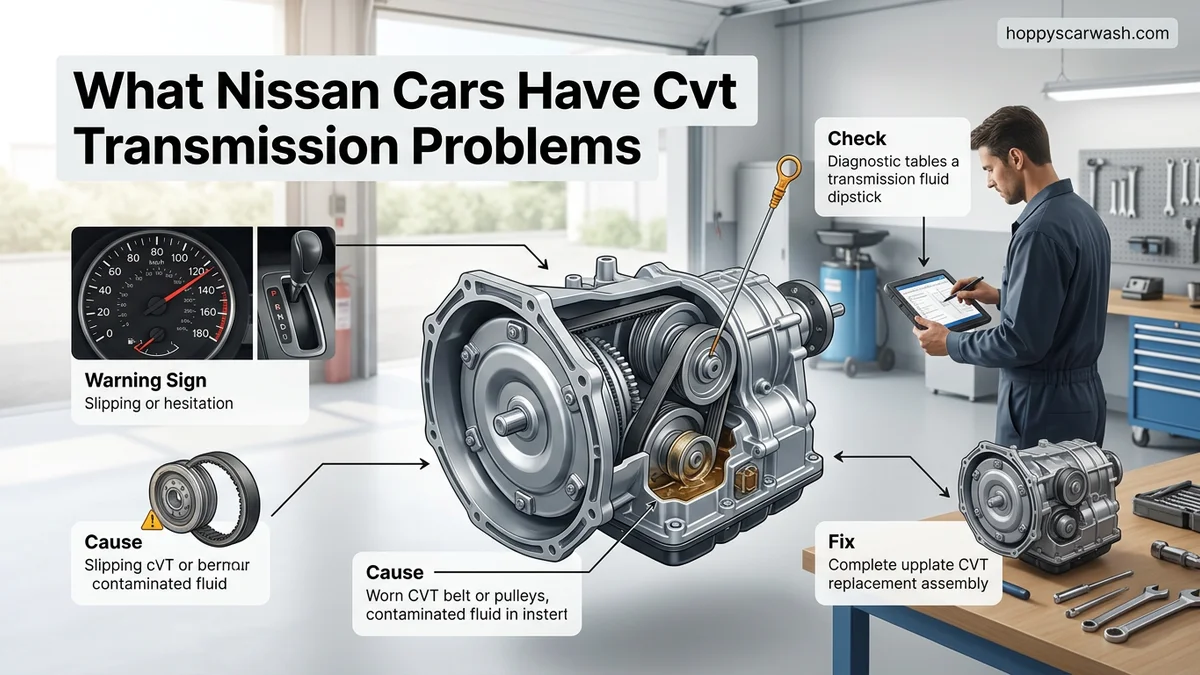
Nissan’s Xtronic CVT relies on a steel push-belt operating between two variable-width pulleys rather than traditional fixed gears. In early and mid-generation units, this design suffered from severe thermal management issues. Without adequate fluid cooling, the transmission fluid breaks down rapidly under high heat. When the fluid loses its lubricating properties, the belt begins to slip against the pulley faces, creating microscopic metal shavings that contaminate the system and destroy internal components.
Mechanical Wear and Valve Body Failures
Beyond thermal breakdown, these transmissions suffer from high mechanical stress on the pulley surfaces and the valve body. Metal-on-metal contact causes grooving on the pulleys, which prevents the belt from adjusting smoothly. Additionally, the electronic valve body—responsible for controlling hydraulic pressure—frequently fails. When pressure drops, the transmission cannot maintain proper clamping force on the belt, triggering limp mode or complete drivetrain failure.
How to Diagnose Bad Nissan CVT Symptoms and Affected Models
Core Warning Signs of a Failing Nissan CVT
Catching a failing transmission early can sometimes save you from a complete roadside breakdown. Pay close attention to how your vehicle drives by watching for these red flags:
- A loud whining or buzzing noise that increases in pitch as your vehicle accelerates.
- Severe shaking, juddering, or jerking when you press the gas pedal from a stop.
- Delayed engagement when shifting between Park, Reverse, and Drive.
- The vehicle entering “limp mode,” where engine RPMs soar, but speed remains severely restricted.
- A persistent Check Engine light combined with transmission diagnostic trouble codes like P0846 or P17F1.
Which Specific Nissan Models and Years Are Affected
The vast majority of Nissan’s high-failure CVT units are concentrated in specific model lines produced between 2003 and 2020. If you are shopping for a used car in 2026, exercise extreme caution with the following generations:
- Nissan Altima: The 2007–2018 models are particularly prone to severe shuddering and total transmission failure.
- Nissan Rogue: The 2008–2020 model years frequently experience overheating and premature belt slip.
- Nissan Sentra: The 2013–2019 models feature notoriously fragile CVTs that often fail before reaching 100,000 miles.
- Nissan Murano: Early first and second-generation models (2003–2014) have high rates of valve body and pump failures.
- Nissan Versa: The 2012–2019 versions equipped with entry-level CVTs suffer from accelerated internal wear.
Step-by-Step Guide to Fixing and Maintaining Your Nissan CVT
Preventative maintenance remains the most effective defense against premature Nissan Xtronic CVT failure. Adhering to strict service intervals drastically extends the operational lifespan of these complex gearboxes.
1. Frequent Fluid Changes
Nissan once claimed these transmissions featured “lifetime fluid,” but automotive engineers strongly disagree. Technicians and fluid manufacturers recommend draining and refilling the NS-3 transmission fluid every 30,000 miles to remove microscopic metal debris.
2. Software Calibration Updates
Dealerships frequently release Transmission Control Module (TCM) software updates. These patches recalibrate internal hydraulic pressures to reduce component wear. Check with a local service center to ensure your vehicle runs the latest software version.
3. Proper Driving Habits
CVTs do not handle heavy towing or aggressive throttle inputs well. Avoid sudden full-throttle acceleration from a complete stop, as this spikes belt stress and accelerates pulley scoring.
What If It Still Doesn’t Work: Warranties and Legal Recourse
If fluid changes and software updates fail to resolve slipping, shuddering, or whining noises, mechanical failure is likely imminent. Owners facing expensive repairs should explore available manufacturer support and legal protections in 2026.
- Check Extended Warranty Coverage: Nissan extended CVT warranties to 84 months or 84,000 miles for many 2010-2018 models following major class-action settlements. Verify if your specific VIN qualifies for this extended manufacturer coverage.
- Consult an Independent Specialist: Dealership replacements often cost between $4,000 and $7,000. Independent transmission shops specializing in rebuilds may offer specialized valve body replacements or remanufactured units for 20 to 30 percent less.
- Explore Lemon Law and Consumer Protection: If the vehicle experiences repeated transmission failures under a recent purchase warranty, consult a consumer protection attorney regarding state-specific lemon laws.
- Request Goodwill Assistance: Contact Nissan Consumer Affairs directly if your vehicle is slightly out of warranty but has a documented history of dealership-serviced maintenance. Manufacturers occasionally cover a percentage of the replacement cost as a goodwill gesture.
Conclusion
Nissan CVT transmission problems across models like the Altima, Rogue, and Sentra stem from systemic heat accumulation and premature belt wear. While preventative fluid changes every 30,000 miles mitigate risks, severe mechanical failure requires costly component replacement or transmission rebuilding. According to verified research and automotive industry data sources, proactive maintenance and verifying extended warranty coverage remain the best strategies for minimizing out-of-pocket expenses in 2026. Schedule a professional fluid inspection today if your Nissan displays early signs of CVT shuddering or delay.
❓ Frequently Asked Questions
Which specific Nissan years are most affected by CVT issues?
Model years between 2007 and 2018 experience the highest rates of catastrophic transmission failure. During this era, early iterations of Nissan’s Xtronic CVT suffered from severe overheating and premature metal belt wear.
What does limp mode mean on a Nissan CVT?
Limp mode is a safety feature that restricts engine RPM and vehicle speed to prevent total destruction of the transmission. If your Nissan suddenly refuses to accelerate past 40 mph and the transmission warning light illuminates, it has entered limp mode.
Are newer Nissan models from 2021 onwards still prone to CVT failures?
Nissan redesigned and reinforced its Xtronic CVT systems for models produced after 2021, significantly reducing failure rates. However, strict adherence to fluid change intervals remains crucial for long-term reliability.
Is it worth replacing the CVT on an older Nissan?
Replacing a CVT often costs between $3,500 and $5,500, which may exceed the total market value of older models like a 2008 Altima or 2011 Rogue. Owners should weigh repair costs against vehicle resale value before proceeding.
How does driving style impact Nissan CVT lifespan?
Aggressive driving, rapid acceleration, and heavy towing generate excessive heat within the CVT fluid. Because heat causes the fluid to break down and lose its lubricating properties, conservative driving habits help preserve the transmission.
How do I check if my Nissan CVT is overheating?
Some models feature a high-temperature protection mode that triggers a dashboard warning or forces the car into limp mode. If the transmission whines loudly after prolonged highway driving, it is likely running dangerously hot.