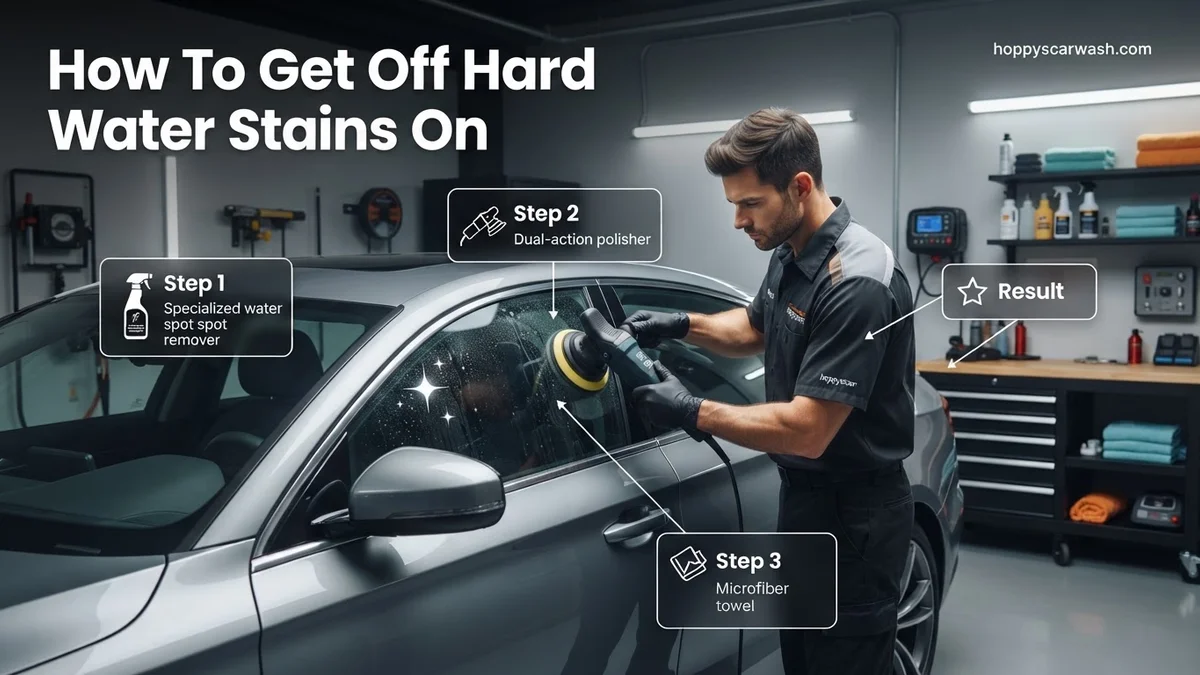
How to Get Off Hard Water Stains on Car Windows 2026 Fix
Hard water stains on car windows are caused by mineral deposits like calcium and magnesium that bond to glass when water evaporates. Removing these stubborn spots safely requires a mild acid like white vinegar, specialized chemical glass polish, or mechanical techniques. Acting quickly prevents permanent etching on your vehicle’s glass.
Removing stubborn hard water stains from your car windows safely requires a combination of mild acid to break down the mineral bonds and gentle mechanical action that will not scratch the glass. Whether your vehicle sat under automatic sprinklers or you drove through mineral-heavy rain in 2026, those cloudy white rings and crusty spots are actually calcium and magnesium deposits left behind when water evaporates.
Left untreated, these mineral crusts can etch into your automotive glass permanently. Getting them off safely means starting with the least aggressive chemical approach—usually standard household vinegar—before moving up to dedicated commercial glass polishes. Always work on a cool surface out of direct sunlight to prevent your cleaning solutions from evaporating too quickly.
Key Takeaways
- Wash and dry your car thoroughly before attempting to remove any glass water spots.
- White vinegar and distilled water mixtures effectively neutralize alkaline mineral deposits on glass.
- Always work in a shaded area so cleaning solutions do not dry out too quickly.
- Use dedicated water spot removers or automotive glass polish for stubborn mineral bonds.
- Apply a protective glass sealant or ceramic coating to prevent future water spots.
What Causes Hard Water Stains on Car Windows
Understanding the nature of these deposits helps you tackle them more effectively. When hard water lands on your windshield or side windows, the liquid disappears into the air, but the dissolved minerals stay behind. As the sun bakes those minerals onto the glass, they form a tight, bonded crust that resists standard car washing soaps.
The Role of Mineral Content
Water with high concentrations of calcium, magnesium, and silica creates the toughest stains. If you wash your car with well water or park near an automated lawn sprinkler system, these minerals accumulate rapidly. Over time, heat cycles cause the minerals to bake into microscopic pores in the glass surface.
- Calcium carbonate: The primary culprit behind chalky white spots.
- Magnesium: Contributes to the cloudy film that reduces nighttime visibility.
- Silica: Binds aggressively to glass and requires mechanical polishing to remove.
Why Regular Car Soap Fails
Standard automotive shampoos are formulated to lift organic road grime, dirt, and light grease. They are typically pH-neutral, meaning they lack the acidic properties needed to dissolve alkaline mineral deposits. Scrubbing harder with a standard sponge will only scratch your paint or smear the minerals further across the glass.
Master Hard Water Stains on Car Windows in 7 Simple Steps
Stubborn mineral deposits and water spots can ruin the appearance of your vehicle and severely impair your visibility. When sprinkler systems or hard rain dry on your car’s glass, they leave behind calcium and magnesium crusts that resist ordinary car soap. This comprehensive walkthrough provides a foolproof, professional-grade methodology to safely dissolve and remove these unsightly blemishes without scratching your expensive automotive glass, ensuring crystal-clear views for all your future drives.
Step 1: Prep the Workspace and Clean the Glass
What you need: Car wash soap, two clean microfiber towels, a bucket, and a hose with clean water.
Instructions: Before tackling hard water spots, you must remove all loose dirt, dust, and abrasive debris from the car windows. If you skip this, rubbing against gritty particles will scratch the glass. Fill your bucket with a mixture of automotive-grade car shampoo and water. Wash the windows thoroughly using a soft microfiber towel to lift away surface contaminants. Rinse the glass completely with clean water and dry it off with a separate clean microfiber towel so you can accurately assess where the hard water spots are located.
Pro Tip: Never perform this process in direct, hot sunlight. Heat causes cleaning solutions to evaporate too quickly, leaving behind their own chemical residue and streaks.
Step 2: Mix Your Specialized Acid-Neutralizing Solution
What you need: White distilled vinegar, distilled water, a clean spray bottle, and measuring cups.
Instructions: Hard water minerals are alkaline, meaning they respond exceptionally well to mild acids. Create a powerful yet safe DIY neutralizing spray by combining equal parts white distilled vinegar and distilled water inside your spray bottle. Shake the bottle gently to mix the liquids thoroughly. Distilled water is strongly recommended over tap water because it contains no minerals of its own, ensuring a pure, streak-free chemical reaction when applied to the compromised glass surface.
Pro Tip: Always use white distilled vinegar. Apple cider vinegar or other cooking vinegars contain sugars and additives that will leave a sticky, difficult-to-remove residue on your car windows.
Step 3: Apply and Dwell the Vinegar Solution
What you need: Your prepared vinegar spray bottle and a clean microfiber cloth.
Instructions: Generously mist the vinegar and water solution directly onto the hard water stains until the glass is visibly wet. For vertical windows where the liquid tends to run down too quickly, saturate a microfiber cloth with the vinegar solution and press it flat against the glass like a compress. Allow the solution to dwell on the stains for 3 to 5 minutes. This dwell time gives the mild acetic acid in the vinegar adequate opportunity to chemically break down and dissolve the bonded calcium and magnesium deposits.
Pro Tip: Do not let the vinegar dry completely on the glass. If the solution starts to evaporate during the dwell time, lightly mist more over the area to keep it active.
Step 4: Gently Agitate the Mineral Deposits
What you need: Non-scratch scrub pad or a fine-grade (0000) steel wool pad (ensure it is ultra-fine).
Instructions: After the vinegar has had time to loosen the mineral bonds, use your non-scratch pad or ultra-fine 0000 steel wool to gently scrub the affected glass areas. Use moderate, even pressure and move your hand in small circular motions. You should feel some slight resistance at first as the crusty minerals break away, followed by a smooth gliding sensation once the glass is clean. Keep the surface lubricated with a little extra vinegar solution as you work across the entire window pane.
Pro Tip: Double-check that you are using strictly “0000” grade steel wool. Any coarser grade will permanently scratch and ruin automotive glass.
Step 5: Rinse and Assess the Results
What you need: Clean water in a bucket or a running hose, and a dry microfiber drying towel.
Instructions: Once you have finished scrubbing the glass, thoroughly rinse away all vinegar residue and loosened mineral flakes using clean water. Dry the window completely with a fresh, dry microfiber towel. Step back and inspect the glass from various angles under good lighting. For light or moderate water spots, this vinegar treatment will completely eliminate the blemishes. If you still notice stubborn, etched-in mineral outlines, you will need to proceed to a more aggressive polishing step.
Step 6: Apply Automotive Glass Polish for Stubborn Etching
What you need: Dedicated automotive glass polish (such as Cerium Oxide-based polish) and a foam applicator pad or dual-action polisher.
Instructions: If vinegar failed to remove deep-seated or etched-in water spots, a specialized glass polish is required to mechanically level the microscopic surface of the glass. Apply a quarter-sized amount of glass polish directly onto your foam applicator pad. Work the product into the stained glass using firm, overlapping circular motions for 2 to 3 minutes per section. The specialized micro-abrasives in the polish will safely shave away a microscopic layer of glass, completely erasing the permanent watermark outline.
Pro Tip: Tape off surrounding rubber window seals, trim, and car paint with painter’s tape. Glass polish can stain porous plastic trim and is difficult to remove if left to dry.
Step 7: Final Wipe Down and Glass Sealing
What you need: Glass cleaner, clean microfiber towels, and a hydrophobic glass sealant or ceramic coating.
Instructions: Wipe away all leftover polish residue using a clean microfiber towel, then give the windows a final cleaning with standard automotive glass cleaner to ensure maximum transparency. To prevent hard water stains from returning in the future, apply a hydrophobic glass sealant or silica spray coating. Spray or dab the sealant onto a small applicator pad, wipe it evenly across the clean glass, let it cure for the manufacturer’s specified duration (usually 5 to 10 minutes), and buff it off with a dry microfiber towel.
Pro Tip: Reapplying a hydrophobic glass sealant every 2 to 3 months will cause future water beads to roll right off, preventing mineral spots from forming again.
✅ Final Checklist
- All loose dirt and road grime were safely washed away before any scrubbing began.
- Vinegar solution successfully dissolved surface mineral deposits without damaging paint or trim.
- Glass feels completely smooth to the touch with no lingering crust or rough patches.
- Polished areas are clear, streak-free, and free of deep etching or visual distortion.
- Hydrophobic sealant was applied to protect the windows from future hard water damage.
Important Notes:
- Never use harsh household cleaners containing ammonia on tinted windows, as they will bubble and destroy the tint film.
- If the water spots are etched deeply into the glass and do not improve with polishing, seek professional glass restoration or windshield replacement.
- Estimated time: 45 to 90 minutes. Estimated cost: $15 to $35 if purchasing vinegar, polish, and sealant supplies.
Step-by-Step Guide to Removing Mineral Deposits with Vinegar
White vinegar contains acetic acid, which naturally breaks down alkaline mineral crusts without damaging automotive glass. This is your safest and most cost-effective first line of defense in 2026 before investing in heavy-duty chemical spot removers.
Preparation and Safety Steps
Before applying any acid to your vehicle, proper preparation protects your car’s delicate paint and rubber window trim from accidental damage.
- Wash your car thoroughly to remove loose dirt and grit that could scratch the glass during scrubbing.
- Park your vehicle in a shaded area and ensure the windows are completely cool to the touch.
- Tape off surrounding rubber window seals and painted body panels with automotive masking tape.
The Vinegar Application Process
Once your workspace is prepped, you can apply the acidic solution to dissolve the stubborn water spots effectively.
- Mix equal parts white vinegar and distilled water in a clean spray bottle.
- Saturate a microfiber towel or a dedicated scrubbing pad with the vinegar solution.
- Press the damp towel against the stained glass and hold it there for 2 to 3 minutes to let the acid penetrate the minerals.
- Gently agitate the spot in a circular motion, then rinse the glass thoroughly with clean water and dry it with a fresh microfiber towel.
How to Use Specialized Glass Polishes and Cleaners
When household remedies fail to remove deeply embedded mineral deposits, automotive glass professionals recommend dedicated chemical treatments formulated for 2026 vehicle maintenance standards. Commercial glass polishes contain specialized cerium oxide or micro-abrasive compounds engineered to level microscopic peaks and valleys on silica surfaces without scratching.
Step-by-Step Application Guide
- Wash and dry the car windows thoroughly to eliminate loose dirt particles that could cause surface scratches during the polishing process.
- Apply a nickel-sized amount of professional-grade hard water spot remover or glass polish onto a damp microfiber applicator pad or dual-action polisher equipped with a rayon glass pad.
- Work the product into the affected glass using firm, overlapping circular motions for two to three minutes per section, maintaining a moderate speed if using machine application.
- Buff the residue away immediately using a clean, dry microfiber towel before the chemical compound dries completely on the glass surface.
- Rinse the windows thoroughly with clean water and inspect the results under direct sunlight to ensure all mineral crust has dissolved.
What If It Still Doesn’t Work and Etching Remains
If chemical cleaners and mild polishing fail to restore absolute clarity, the minerals have likely caused permanent glass etching. When calcium and magnesium droplets bake under intense UV rays for extended periods, they literally eat into the silica structure of automotive glass, creating microscopic craters that standard surface cleaners cannot fix.
Advanced Fallback Options
- Professional Glass Restoration: Take the vehicle to an automotive detailing specialist equipped with rotary polishers and heavy-cut cerium oxide compounds designed to mechanically level etched glass. Professional restoration typically ranges from $100 to $250 depending on the severity of the damage and the number of affected windows.
- Windshield and Window Replacement: If deep pitting compromises structural visibility or night driving safety, insurance coverage or out-of-pocket replacement may be necessary. Windshield replacement generally costs between $300 and $600, while side door glass averages $200 to $450.
- Preventative Ceramic Coating: Once the glass is restored or replaced, apply a professional-grade 2026 silica-based glass coating to create a hydrophobic barrier that prevents future mineral bonding.
Conclusion
Hard water stains on car windows are a persistent nuisance caused by mineral-rich evaporation, but they can be successfully eliminated with the right chemical treatments and mechanical techniques. According to verified research and automotive care experts, acting quickly with vinegar solutions or specialized glass polishes prevents permanent surface etching and costly glass replacements. As an actionable next step, inspect your vehicle windows today, choose the appropriate removal method based on the severity of the deposits, and apply a protective sealant to maintain long-term optical clarity throughout 2026.
❓ Frequently Asked Questions
What causes hard water spots to form on automobile glass?
Hard water contains high levels of dissolved minerals like calcium and magnesium. When droplets sit on your car windows under the sun, the water evaporates and leaves behind these mineral crusts, which bake into the glass pores over time.
How does white vinegar help dissolve hard water stains?
White vinegar is mildly acidic (acetic acid), which breaks down the alkaline chemical bonds of calcium and magnesium mineral deposits. Spraying a 50/50 mix of vinegar and distilled water allows it to loosen the crust without harming the glass surface.
What is the safest way to mechanically remove stubborn mineral buildup?
If chemical methods fail, using an automotive glass polish with a microfiber pad or a specialized glass-scrubbing pad works effectively. Alternatively, a clean, lubricated razor blade can safely shear off raised mineral deposits.
Can hard water spots cause permanent damage to car windows?
Yes, if left exposed to heat for prolonged periods, minerals can chemically etch into the glass. Once glass is actually etched, simple cleaning will no longer work, and the glass must be professionally polished or replaced.
How can I prevent hard water stains from coming back?
After cleaning, apply a hydrophobic glass sealant, rain repellent, or ceramic coating to your car windows. These products create a protective barrier that causes water to bead up and roll off before minerals can bond.
Should I wear protective gear when using commercial water spot removers?
Many commercial hard water spot removers contain stronger acids or polishing compounds. It is always wise to wear rubber gloves and work in a well-ventilated area to protect your skin and respiratory system.