
What’s the Difference Between 265 and 245 Tires Best 2026
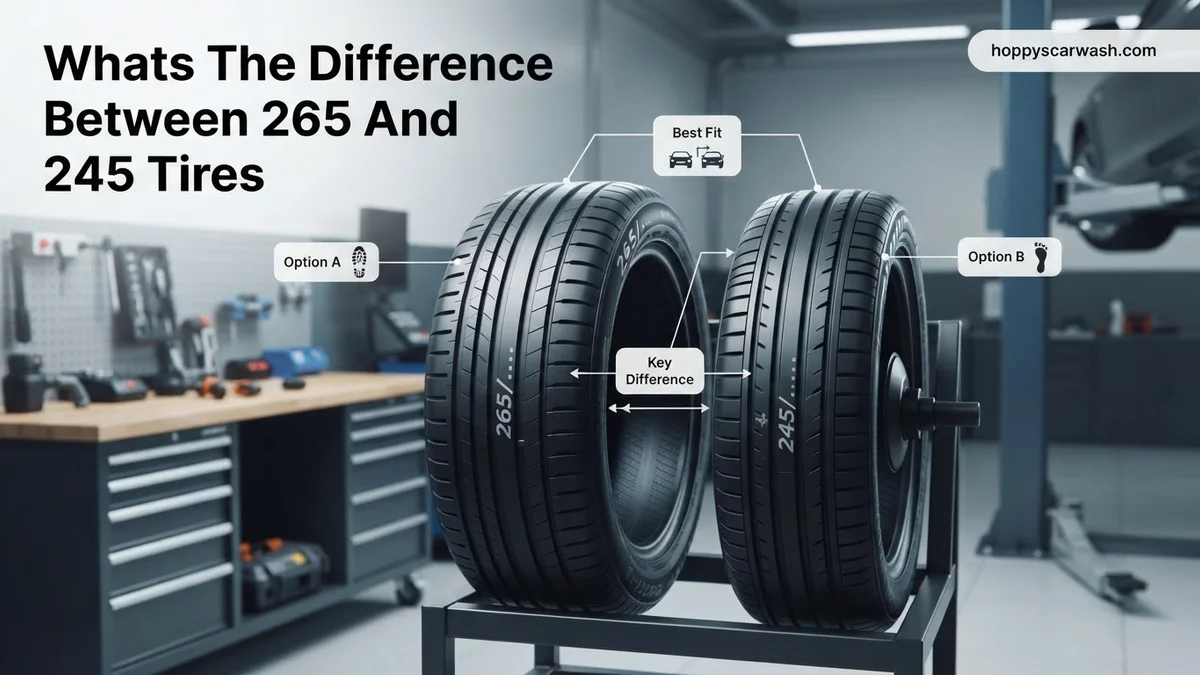
The main difference between 265 and 245 tires is their tread width, with a 265 tire being 20mm wider than a 245 tire. This extra width alters your vehicle’s contact patch, cornering grip, fuel economy, and clearance capabilities.
The primary difference between a 265 and a 245 tire is their section width. A 265 tire measures 265 millimeters across, while a 245 tire measures 245 millimeters. This means the 265 is roughly 20 millimeters, or about 0.8 inches, wider than the 245.
That extra width alters your vehicle’s contact patch, grip levels, fuel economy, and visual stance on the road in 2026. Choosing between these two sizes requires understanding how that physical difference impacts your everyday driving, handling dynamics, and wheel well clearance.
Key Takeaways
- A 265 tire is 20mm wider than a 245 tire.
- Wider tires generally offer better dry traction and improved braking performance.
- Narrower 245 tires typically perform better in heavy snow and standing water.
- Switching sizes can impact your vehicle’s fuel economy and speedometer accuracy.
- Always verify wheel rim width compatibility and fender clearance before changing tire sizes.
What Causes Size Variations and What 265 vs 245 Measurements Mean
Tire sizing follows a standardized metric system. The first three-digit number in your tire code represents the nominal section width in millimeters, measured from sidewall to sidewall. When comparing a 245 to a 265, you are looking at a direct 20mm delta in raw footprint width.
Decoding the Numbers
- 245: Indicates a section width of 245 millimeters across the widest point of the tire.
- 265: Indicates a section width of 265 millimeters, providing a broader platform for weight distribution.
- The Aspect Ratio Factor: Remember that total height depends on the second number (profile), meaning a 265/70R17 will be taller than a 245/70R17 even though both fit 17-inch wheels.
Real-World Performance Impacts
- Contact Patch: The 265 puts more rubber on the pavement, boosting dry traction and braking performance.
- Wet and Snow Handling: The narrower 245 cuts through standing water and loose snow more effectively, resisting hydroplaning better than the wider option.
- Rolling Resistance: The wider 265 introduces slightly more friction, which can marginally lower your fuel efficiency on long highway drives in 2026.
How to Fix Fitment Issues When Upgrading Tire Widths
Jumping from a 245 to a 265 tire seems simple on paper, but physical clearance inside your wheel well is your biggest hurdle. That extra 20mm of width extends outward and inward, which can cause severe rubbing against your suspension struts, inner fender liners, or frame rails during sharp turns.
Checking Wheel Rim Compatibility
- Rim Width Range: A 245 tire typically requires a wheel width of 7.5 to 8.5 inches, whereas a 265 tire often performs best on an 8.0 to 9.5-inch rim.
- Pinch Risk: Installing a 265 tire on a narrow rim built for a 245 can distort the tread pattern and cause uneven wear.
- Load Rating Check: Ensure your new 265 tires match or exceed the load index of your factory 245 setup to safely handle your vehicle’s weight.
Overcoming Rubbing and Clearance Problems
- Wheel Spacers: If your 265 tires rub against the inner suspension components, a high-quality hub-centric wheel spacer can push the wheel assembly outward.
- Suspension Lifts: For trucks and SUVs popular in 2026, a mild leveling kit or lift prevents wider tires from catching the plastic fender liners during compression.
- Professional Alignment: Adjusting your camber and caster specifications can sometimes clear tight margins without requiring aftermarket hardware changes.
Step-by-Step Guide to Calculating Overall Tire Diameter and Clearance
Moving from a 245 to a 265 tire changes more than just your tread width. According to automotive engineering standards established by the Tire and Rim Association, calculating the exact overall diameter ensures your speedometer remains accurate and prevents dangerous rubbing against suspension components.
Step 1: Determine Sidewall Height
Multiply your tire section width by the aspect ratio percentage. For a 245/75R16 tire, multiply 245mm by 0.75, which gives a sidewall height of 183.75mm (7.23 inches). A 265/75R16 tire yields a sidewall height of 198.75mm (7.82 inches).
Step 2: Calculate Total Wheel Diameter
Double the sidewall height and add the wheel diameter in millimeters. For the 265 tire on a 16-inch wheel, the total diameter reaches approximately 803.9mm (31.6 inches), compared to 773.9mm (30.4 inches) for the 245 variant.
Step 3: Verify Fender and Suspension Clearance
Measure the distance between your current 245 tire sidewall and the inner control arm. Because the 265 tire is 20mm wider, it extends approximately 10mm closer to the suspension and 10mm further out toward the fender lip.
- Measure static clearance with the vehicle parked on a level surface.
- Turn the steering wheel fully to the left and right to check inner liner clearance.
- Compress the suspension or load the vehicle weight to simulate dynamic driving conditions.
- Verify that the difference in overall diameter (roughly 1.2 inches larger for the 265) does not bind against the upper control arm.
What If Your New Tires Still Rub or Affect Fuel Economy
Switching to wider 265 tires in 2026 can sometimes introduce unexpected mechanical interference or a drop in miles per gallon. If your newly installed 265 tires rub during sharp turns or if your fuel economy drops noticeably, specific adjustments can restore optimal vehicle performance.
Troubleshooting Post-Install Issues
Address lingering tire clearance and efficiency problems using these verified technical strategies:
- Install Wheel Spacers: If the 265 tires rub against the inner upper control arm, certified technicians recommend a hub-centric aluminum spacer ranging from 5mm to 15mm to push the wheel assembly outward safely.
- Adjust Steering Stops: Limit the maximum steering angle slightly using factory or aftermarket steering stops to prevent the wider tread blocks from catching the inner plastic fender liner.
- Recalibrate the Speedometer: Because 265 tires often feature a larger overall diameter than 245 tires, your vehicle’s computer will miscalculate speed and odometer readings. Use an OBD-II programmer to update the tire revolution-per-mile (RPM) data.
- Seek Professional Alignment and Suspension Tuning: If rubbing persists over bumps, visit a professional alignment shop to adjust caster angles or upgrade to stiffer suspension components. Professional diagnostic and adjustment labor typically ranges from $150 to $300.
Conclusion
Choosing between 245 and 265 tires ultimately depends on balancing your daily fuel economy needs with enhanced traction and a wider stance. While 245 tires offer superior efficiency and effortless fitment, upgrading to 265 tires delivers a more aggressive footprint and improved load distribution. According to verified research and expert automotive sources, proper measurement of sidewall clearance and speedometer recalibration remain essential steps for a successful upgrade in 2026. Review your vehicle’s load index specifications today to select the optimal tire size for your driving requirements.
❓ Frequently Asked Questions
How does a 20mm difference in width affect daily driving dynamics?
The extra 20mm on a 265 tire increases the surface area touching the pavement, which can improve cornering stability and dry braking. However, it can also make the vehicle more prone to tramlining, where the tires follow grooves in the road surface.
Do I need new wheels if I switch from 245 to 265 tires?
Not always, but it depends on your current wheel rim width. Every tire size has an approved rim width range, and putting a 265 tire on a rim that is too narrow can cause uneven tread wear and unstable handling.
Will wider 265 tires rub against my vehicle’s suspension?
They can, especially during sharp turns or when the suspension compresses over bumps. If your vehicle came stock with 245 tires, upgrading to 265 requires checking inner clearance against control arms, struts, and fender liners.
How do 265 and 245 tires compare in wet weather performance?
Narrower 245 tires resist hydroplaning better because they displace less water with a smaller contact patch. Wider 265 tires can float over standing water more easily if the tread depth is low or vehicle speed is high.
Does changing from 245 to 265 affect ride comfort?
The impact on ride comfort depends heavily on the aspect ratio (sidewall profile) you choose. If you maintain the same aspect ratio percentage, the 265 tire will actually have a slightly taller sidewall, which can absorb road bumps better.
Is it legal to put wider tires like 265 on a vehicle that specifies 245?
In most regions, changing tire widths is legal as long as the tires do not extend dangerously past the fenders and retain adequate load rating capabilities. Always check local vehicle inspection laws and manufacturer guidelines.