How Do You Tell If a Catalytic Converter Is Bad 2026 Guide
A failing catalytic converter will display distinct symptoms like sluggish acceleration, a sulfur ‘rotten egg’ smell, and the dreaded Check Engine Light. Identifying these warning signs early prevents severe engine damage and costly secondary repairs.
A failing catalytic converter shows distinct warning signs long before it completely stops working. You will typically notice a sluggish engine, a sharp drop in fuel economy, a rotten egg sulfur smell from the exhaust, or a persistent check engine light illuminated on your dashboard. Modern vehicle standards in 2026 mean diagnostic systems are more sensitive than ever, catching emissions drops early.
Diagnosing this issue early saves you from complete engine stalls and costly downstream damage to your exhaust system or engine cylinders. Spotting the physical symptoms and knowing how to test the unit yourself will help you confirm whether your catalytic converter is clogged, damaged, or functioning normally.
Key Takeaways
- A P0420 diagnostic trouble code is the most common indicator of catalytic converter inefficiency.
- Listen for a rattling noise underneath your vehicle, which signals broken internal honeycomb structures.
- Perform a temperature test using an infrared thermometer before and after the converter.
- Reduced fuel economy and engine stalling point to a heavily clogged exhaust restriction.
- Replacing a bad converter typically costs between $1,000 and $2,500 depending on your vehicle model.
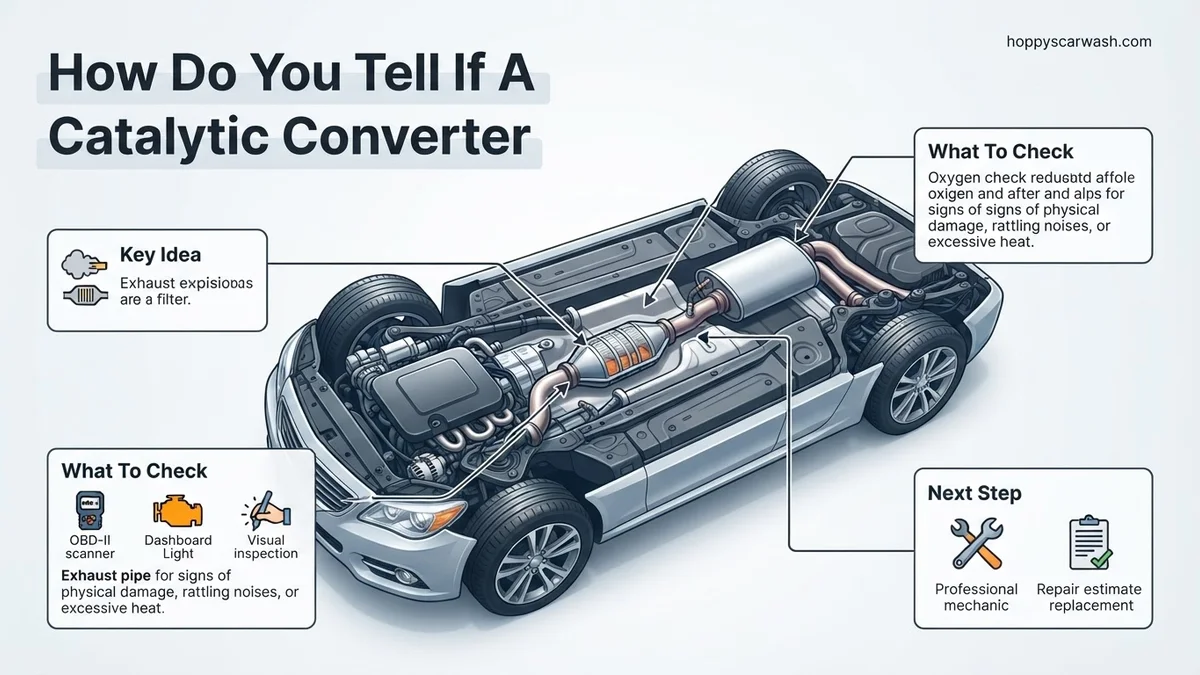
Symptoms and Causes of a Bad Catalytic Converter
Common Physical Symptoms
When your catalytic converter begins to fail or clog completely, your vehicle will actively try to tell you through degraded performance. Pay close attention to these primary warning signs:
- Sluggish Acceleration: Your engine feels starved for power, especially when you try to climb hills or pass other vehicles on the highway.
- Rotten Egg Odor: A sulfur smell coming from the exhaust indicates that the converter is failing to process hydrogen sulfide properly.
- Severe Drop in Fuel Economy: You find yourself visiting the gas station much more frequently because a clogged converter forces your engine to work harder.
- Check Engine Light: Diagnostic Trouble Codes like P0420 frequently trigger, indicating catalyst system efficiency below threshold.
Root Causes of Failure
Catalytic converters rarely fail on their own without an underlying mechanical issue. Unburned fuel entering the exhaust system from a misfiring spark plug or a leaking fuel injector will melt the delicate honeycomb structure inside. Contaminants like engine oil or coolant leaking past worn piston rings or a blown head gasket will also coat and ruin the catalyst material prematurely.
How to Diagnose and Fix Failing Catalytic Converters Like an Expert
Welcome to this comprehensive diagnostic guide designed to help you accurately determine whether your vehicle’s catalytic converter has failed. A failing catalytic converter can severely impact your fuel economy, cause engine hesitation, and ultimately lead to complete engine stalling or emission test failures. By following this systematic walkthrough, you will learn how to identify the subtle warning signs, perform physical inspections, and utilize diagnostic tools to pinpoint exhaust restrictions with absolute certainty.
Step 1: Listen for Unusual Exhaust Noises
What you need: A safe, well-lit workspace, a flashlight, and a long-handled rubber mallet or wooden block.
Instructions: Start your vehicle’s engine and let it idle in Park or Neutral with the parking brake securely engaged. Walk to the underside of your vehicle near the exhaust system and listen carefully. A rattling, buzzing, or metallic humming noise coming from beneath the vehicle usually indicates that the honeycomb ceramic core inside the catalytic converter has fractured, broken apart, or collapsed into smaller pieces. Next, with the engine turned off and the exhaust system completely cooled down, gently tap the exterior metal body of the catalytic converter using your rubber mallet. If you hear loose debris tumbling around or a distinct metallic clatter, the internal matrix is severely damaged and the unit requires immediate replacement.
Pro Tip: Never strike a hot exhaust pipe with bare hands or a metal hammer, as extreme thermal expansion makes the metal brittle and prone to denting.
Step 2: Monitor for Decreased Engine Performance and Acceleration
What you need: A clear open road or highway for a brief, safe test drive.
Instructions: Take your car out for a test drive, paying close attention to how the engine responds when you press the accelerator pedal. A clogged or blocked catalytic converter severely restricts exhaust gas flow, creating backpressure that chokes the engine cylinders. Notice if your car struggles to accelerate, feels sluggish when climbing hills, or refuses to rev past 3,000 RPMs even with the throttle fully depressed. In severe cases, the restricted exhaust will trap heat and pressure, causing the engine to sputter, jerk violently, or spontaneously stall out after driving for only a few miles.
Pro Tip: Do not confuse a clogged exhaust with a slipping transmission; if the engine revs high but the car does not move, look at the transmission, but if the engine refuses to rev at all, suspect a blocked catalytic converter.
Step 3: Scan for Diagnostic Trouble Codes Using an OBD-II Scanner
What you need: An OBD-II diagnostic scanner plugged into the port typically located underneath your vehicle’s driver-side dashboard.
Instructions: Turn your vehicle’s ignition to the “On” position without cranking the engine. Power on your OBD-II scan tool and retrieve any stored Diagnostic Trouble Codes (DTCs). Pay special attention to codes P0420 (“Catalyst System Efficiency Below Threshold – Bank 1”) and P0430 (“Catalyst System Efficiency Below Threshold – Bank 2”). These specific codes indicate that the oxygen sensors upstream and downstream are detecting similar exhaust gas readings, proving that the chemical conversion process inside the catalytic converter has failed. Note any accompanying misfire codes (such as P0300 through P0308), as unresolved engine misfires can pump unburned fuel into the exhaust, melting the converter.
Pro Tip: Always clear the codes and drive the vehicle through a complete drive cycle if you recently repaired another issue, as old stored codes can give a false impression of current converter health.
Step 4: Perform a Visual Inspection for Discoloration and Damage
What you need: Safety glasses, automotive creeper, and a bright shop light or LED flashlight.
Instructions: Safely elevate your vehicle using hydraulic floor jacks and secure it firmly with rated jack stands. Slide underneath the chassis and visually inspect the entire length of the exhaust system from the exhaust manifold back to the tailpipe. Look closely at the metal shell of the catalytic converter. Extreme internal heat—often caused by unburned fuel burning inside the converter—will cause the stainless steel or alloy housing to turn a deep, glowing purple, bright blue, or dark charcoal-black color. Check all surrounding heat shields for warping, melting, or cracking, and look for physical exterior impacts, deep dents, or exhaust leaks around the inlet and outlet gaskets.
Pro Tip: A discolored, cherry-red glowing converter body during or immediately after driving is a definitive sign of severe internal overheating and extreme restriction.
Step 5: Check Fuel Economy and Exhaust Odors
What you need: Your recent fuel receipts, vehicle trip odometer, and your sense of smell.
Instructions: Calculate your recent miles per gallon and compare it against your vehicle’s baseline specifications. A failing or clogged catalytic converter drastically reduces fuel efficiency because the engine has to work significantly harder to push exhaust gases past the restriction. Next, with the engine running in a well-ventilated outdoor area, stand near the rear tailpipe and smell the exhaust fumes. If you notice a strong, pungent, sulfurous odor that smells distinctly like rotten eggs, this is a classic indicator of a failing catalytic converter that can no longer properly process hydrogen sulfide gases.
Step 6: Conduct a Vacuum Gauge Test for Exhaust Backpressure
What you need: An engine diagnostic vacuum gauge, appropriate fittings, and basic hand wrenches.
Instructions: Disconnect the vacuum hose from the intake manifold and attach your mechanical vacuum gauge. Start the engine and observe the needle reading at a steady idle (normally between 17 to 22 inHg at sea level). Next, snap the throttle open quickly and let it return to idle. When a catalytic converter is severely blocked, the vacuum needle will drop rapidly upon acceleration, but instead of returning smoothly to normal, it will sluggishly crawl back down or remain locked at a low vacuum reading (below 10 inHg) because the trapped exhaust pressure cannot escape fast enough.
Step 7: Perform a Temperature Differential Test Using an Infrared Thermometer
What you need: A non-contact infrared (IR) thermometer gun.
Instructions: Start your vehicle and let the engine reach normal operating temperature by idling for roughly 15 minutes or taking a brief drive. Point your IR thermometer at the exhaust pipe directly before the catalytic converter (inlet), and then take a reading directly after the catalytic converter (outlet). Because the chemical conversion process is exothermic (produces heat), a healthy, functioning catalytic converter should show an outlet temperature that is at least 100 degrees Fahrenheit (and up to 300 degrees higher) than the inlet temperature. If the outlet temperature is cooler than, equal to, or only slightly higher than the inlet temperature, the catalyst core is dead and no chemical reaction is taking place.
Pro Tip: Infrared temperature readings can be affected by shiny metal reflectivity, so applying a small piece of painter’s tape or high-temp matte paint to the measurement spots will ensure highly accurate temperature readings.
✅ Final Checklist
- Confirmed physical rattling noises or loose debris inside the catalytic converter shell
- Retrieved and analyzed OBD-II trouble codes such as P0420 or P0430
- Verified abnormal exhaust backpressure using a vacuum gauge or temperature differential test
- Checked for severe sluggish acceleration and reduced fuel economy during a test drive
Important Notes:
- Always allow the exhaust system to cool completely before touching any components to prevent severe burns.
- Never ignore a glowing red catalytic converter, as it represents an immediate fire hazard to your vehicle.
- Professional replacement typically costs between $500 and $2,500 depending on your vehicle make, model, and whether emissions compliance requires OEM or aftermarket parts. Seek professional mechanic assistance if welding or specialized cutting tools are required.
Step-by-Step Guide to Testing Your Catalytic Converter
The Temperature Test
You can use a non-contact infrared thermometer to check the operational health of your catalytic converter at home. A properly functioning converter relies on high internal heat to break down harmful emissions safely.
- Start your vehicle and let it run until it reaches normal operating temperature, usually about 15 minutes of idling or a short drive.
- Safely raise the vehicle and secure it on jack stands if necessary to access the exhaust pipes.
- Point your infrared thermometer at the exhaust pipe directly before the catalytic converter and record the temperature.
- Take a reading of the temperature after or at the outlet of the catalytic converter.
- Compare the two numbers: A healthy converter outlet should be significantly hotter, often 100 to 300 degrees Fahrenheit higher than the inlet, due to the chemical reactions inside. If the outlet is cooler than or the same temperature as the inlet, the converter is clogged or inactive.
Checking Backpressure
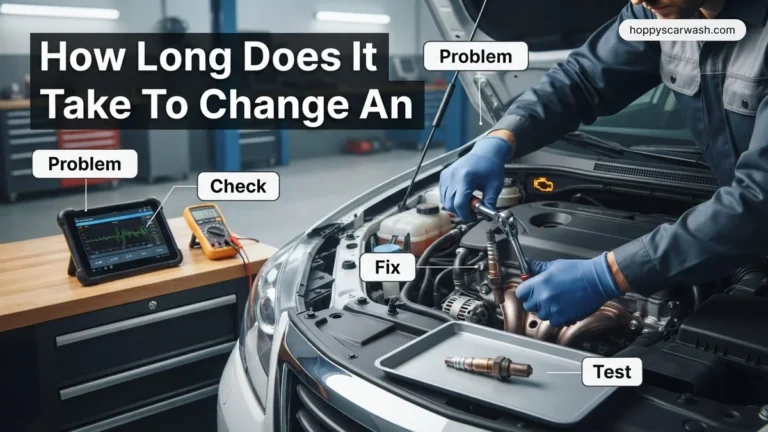
A severely clogged converter creates a bottleneck that traps exhaust gases in the engine cylinders. You can test for this restriction by removing the upstream oxygen sensor to create an escape route for trapped pressure. If your engine suddenly regains its lost power and idle quality with the oxygen sensor removed, you have successfully confirmed a heavily restricted or blocked catalytic converter.
How to Fix a Clogged or Failing Catalytic Converter
Addressing a failing catalytic converter requires determining whether the unit can be cleaned or if complete replacement is necessary. Because these components contain precious metals like platinum, palladium, and rhodium, replacement costs remain high as of 2026. Understanding your repair options prevents unnecessary spending.
Cleaning and Temporary Solutions
If the converter is only lightly contaminated with carbon buildup, chemical treatments may restore functionality. However, severe physical damage or melted honeycomb structures cannot be reversed chemically.
- Pour a specialized catalytic converter cleaner directly into a nearly empty fuel tank, following the manufacturer’s dosage instructions.
- Drive the vehicle on the highway for at least 20 to 30 minutes at sustained speeds above 50 mph to elevate exhaust temperatures and burn off carbon deposits.
- Scan the vehicle’s computer system to clear any lingering diagnostic trouble codes and monitor if the check engine light returns during subsequent drives.
Complete Replacement Procedures
When cleaning fails or internal damage is present, a physical replacement is mandatory to pass emissions testing and restore engine performance. Industry data shows that professional replacements typically range from $900 to $2,500 total, heavily dependent on vehicle make, model, and the number of converters installed.
- Disconnect the negative battery terminal to protect the vehicle’s electrical sensors during the mechanical replacement process.
- Raise the vehicle securely on a lift or jack stands, then apply penetrating oil to rusted exhaust bolts and oxygen sensor fittings.
- Unbolt the old catalytic converter, carefully remove the upstream and downstream oxygen sensors, and install the new EPA-compliant or CARB-compliant replacement unit with fresh gaskets.
What If It Still Doesn’t Work?
Replacing or cleaning the catalytic converter does not always solve the underlying dashboard warnings or performance issues. If symptoms persist after servicing the exhaust system, secondary mechanical failures are usually to blame. Consider the following troubleshooting fallback steps to resolve stubborn vehicle issues:
- Inspect for Upstream Engine Failures: A new converter will quickly fail again if an unaddressed engine misfire, oil leak, or rich fuel condition continues to dump raw fuel into the exhaust stream.
- Test Oxygen Sensors: Faulty or sluggish oxygen sensors frequently mimic catalytic converter failure codes, requiring professional diagnostic multimeter or oscilloscope testing.
- Check Backpressure Levels: If acceleration remains sluggish, use a pressure gauge at the oxygen sensor port to verify that downstream exhaust restrictions do not exist in the muffler or resonator.
- Consult a Certified Technician: When advanced diagnostic trouble codes persist beyond standard home repairs, schedule an appointment with a certified automotive repair facility for professional smoke testing and live data analysis. Professional diagnostic labor rates generally range from $120 to $250 per hour.
Conclusion
Identifying a bad catalytic converter early prevents catastrophic engine damage and costly secondary repairs. Whether you notice sulfur odors, sluggish acceleration, or persistent error codes, prompt action is critical. According to verified research and expert automotive sources, replacing a failing component restores optimal fuel efficiency and ensures environmental compliance. Your next best step is to perform a diagnostic scan to confirm exhaust temperatures and oxygen sensor readings before committing to a costly replacement.
❓ Frequently Asked Questions
How do oxygen sensors relate to a bad catalytic converter?
Upstream and downstream oxygen sensors monitor the converter’s efficiency. A faulty oxygen sensor can sometimes mimic the symptoms of a bad catalytic converter or trigger a false P0420 code.
Can fuel additives or catalytic converter cleaners actually fix a bad unit?
Chemical cleaners can help remove minor carbon buildup on a slightly clogged converter, but they cannot repair physical damage, melting, or complete structural failure inside the component.
What causes a catalytic converter to fail prematurely?
Premature failure is usually caused by unburned fuel entering the exhaust system from bad spark plugs, a failing oxygen sensor, oil leaks, or a faulty engine control module.
How can I check for exhaust backpressure at home?
You can test for backpressure by removing the upstream oxygen sensor and attaching a pressure gauge. Excessive pressure readings while revving the engine indicate a downstream blockage in the converter.
Does a rattling sound always mean the converter is bad?
A rattling sound usually means the internal ceramic substrate has broken apart and disintegrated. While it points directly to the converter, it can also originate from loose heat shields.
How long do catalytic converters typically last?
Under normal driving conditions, modern catalytic converters are built to last between 100,000 and 150,000 miles before requiring replacement.