Should I Change My Oil Based On Mileage Or Time Oil 2026
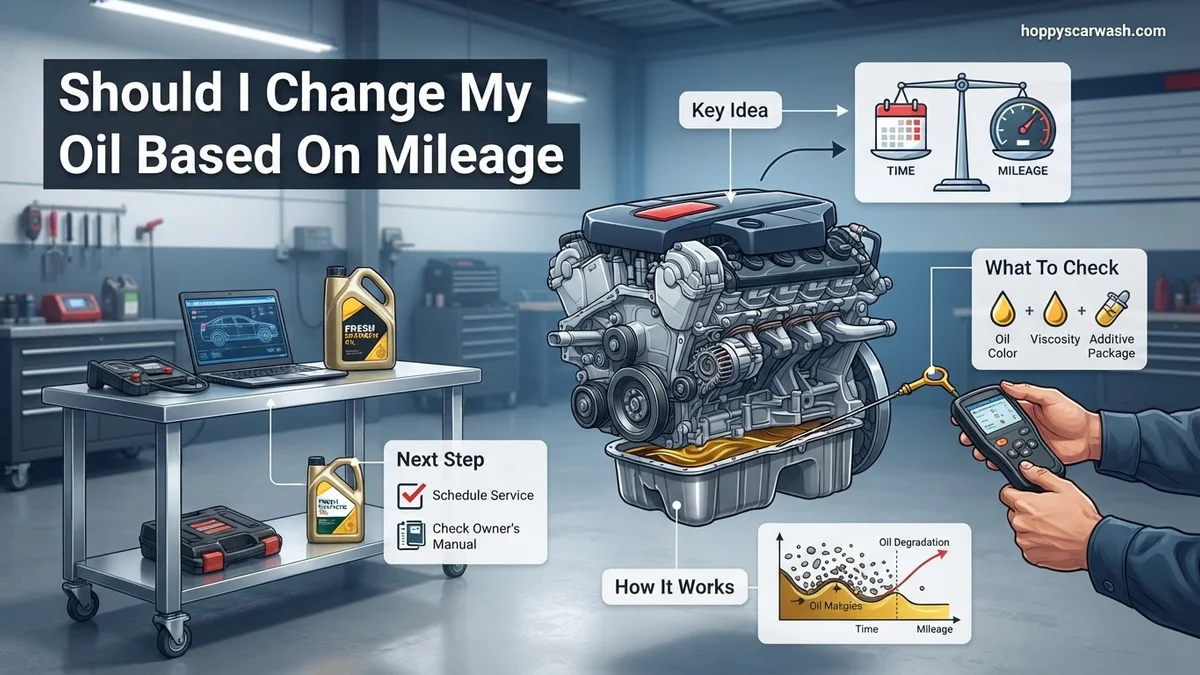
You must change your car’s oil based on both mileage and time, whichever comes first. Even if you do not drive many miles, oil still breaks down from oxidation, condensation, and chemical additive depletion over time.
You need to change your oil based on both mileage and time, whichever comes first. If you drive heavily, you will hit the mileage threshold quickly. But if you work from home or drive short distances in 2026, time becomes your engine’s biggest silent threat.
Many drivers assume that low mileage means clean oil. Unfortunately, motor oil begins to degrade the moment you pour it into your engine, regardless of how few miles you rack up on the odometer. Understanding how time and mileage interact prevents costly engine damage.
Key Takeaways
- Time matters just as much as mileage for engine oil degradation.
- Low-mileage vehicles require at least one oil change per year.
- Short trips cause moisture buildup and fuel dilution in the oil.
- Traditional mileage thresholds range between 3,000 and 7,500 miles.
- Synthetic oils resist thermal breakdown longer but still oxidize.
Why Oil Degrades Over Time Even With Low Mileage
Oxidation and Moisture Buildup
When engine oil sits idle, it is constantly exposed to oxygen. This process, known as oxidation, causes the oil to thicken and lose its ability to lubricate moving parts properly. Furthermore, every time you drive short distances, condensation forms inside your engine block. If the oil does not reach operating temperature for a sustained period, that moisture mixes with the oil, creating sludge and corrosive acids.
Additive Package Breakdown
Modern motor oil is more than just refined petroleum or synthetic fluid. It relies on a complex cocktail of detergents, dispersants, anti-wear agents, and rust inhibitors. Even if your car is parked in a garage all year, these chemical additives degrade over time. Once the additives deplete, the oil can no longer neutralize harmful byproducts of combustion or protect critical engine components from wear.
- Acidity increase: Byproducts from previous drives turn acidic, eating away at metal bearings.
- Viscosity shifts: Base oils lose their structural integrity, failing to maintain proper pressure.
- Sludge formation: Settled moisture and oxidized oil turn into a gel-like substance that blocks oil passages.
Mileage vs. Time Oil Changes Made Easy: Your Essential Action Plan
Deciding whether to change your vehicle’s engine oil based on the odometer reading or the calendar can be confusing for many car owners. While traditional wisdom heavily emphasizes mileage, modern driving habits and fluid technology mean time plays an equally vital role in engine health. This comprehensive guide will walk you through evaluating your driving style, understanding fluid degradation, checking your owner’s manual, and inspecting your oil so you can make the absolute best maintenance decision for your vehicle.
Step 1: Locate and Review Your Factory Owner’s Manual
What you need: Your vehicle’s physical owner’s manual or digital access to the manufacturer’s official maintenance schedule website.
Instructions: Open your owner’s manual and navigate directly to the maintenance, scheduled services, or engine care section. Look specifically for the oil change intervals. Manufacturers typically provide two distinct schedules: a “normal” service schedule and a “severe” or “special operating conditions” schedule. Compare the mileage recommendations—which often range from 5,000 to 10,000 miles for modern synthetic oils—against the time recommendations, which almost universally state “at least once a year” regardless of miles driven. Note both figures down as your baseline reference points.
Pro Tip: Never rely on dealership sticker reminders alone, as they often push shorter 3,000-mile intervals to increase service department revenue rather than following actual engineering specifications.
Step 2: Evaluate Your Driving Habits for “Severe Service” Criteria
What you need: A clear recollection of your typical weekly commuting patterns, trip lengths, and local climate conditions.
Instructions: Analyze how you use your vehicle daily. If your typical commute is under 10 miles each way, your engine rarely reaches its optimal operating temperature, leading to internal condensation buildup that dilutes the oil. Do you frequently encounter heavy stop-and-go city traffic, idle for long periods, tow a trailer, or drive in extreme dust, freezing cold, or extreme heat? If you answered yes to any of these, you fall squarely into the manufacturer’s “severe service” category. Under these conditions, you must default to the shorter interval—whether measured in reduced mileage or shorter calendar time (such as every 6 months).
Pro Tip: Short trips are actually much harder on engine oil than long highway commutes, meaning low-mileage city drivers often need oil changes sooner than high-mileage highway drivers.
Step 3: Check the Age of Your Current Oil on the Calendar
What you need: Your last oil change receipt, service record logbook, or digital maintenance app (like Carfax Car Care or Simply Auto).
Instructions: Look at the date when your oil was last changed. Even if your car has only been driven 2,000 miles in the past fourteen months, chemical degradation has already begun. Engine oil is exposed to residual combustion byproducts, moisture, and oxygen while sitting in the oil pan. Over time, these elements oxidize the base oil and deplete the vital additive packages (such as detergents, anti-wear agents, and dispersants) that protect your engine internals from friction and corrosion. If 12 months have passed since your last service, time has officially trumped mileage, and you need an immediate oil change.
Pro Tip: Synthetic oils resist thermal breakdown much better than conventional oils, but they are still equally susceptible to chemical oxidation and contamination from moisture over time.
Step 4: Inspect the Physical Condition of Your Engine Oil
What you need: A clean white paper towel or shop rag, and safe access to your vehicle’s engine bay.
Instructions: Park your car on a level surface, turn off the engine, and wait at least five minutes for the oil to drain back down into the oil pan. Open the hood, pull out the oil dipstick, wipe it clean with your rag, reinsert it fully, and pull it out again. Examine the oil on the paper towel. Fresh oil is amber and translucent. Healthy used oil is dark brown or black (which is completely normal due to suspended carbon), but it should still leave a clear streak. If the oil appears milky, foamy, or has a frothy light-brown texture, you have coolant contamination. If you see visible metallic particles or grit, your engine is experiencing internal wear.
Pro Tip: Color alone is a poor indicator of oil condition; modern detergents darken rapidly, so rely on the tactile feel, smell (a burnt odor indicates overheating), and time elapsed rather than just looking at the color.
Step 5: Factor in Your Specific Oil Type (Conventional vs. Synthetic)
What you need: Knowledge of whether your engine runs on conventional, synthetic blend, or full synthetic motor oil.
Instructions: Review what type of oil was used during your last service. Conventional mineral oils break down relatively quickly and generally require changing every 3,000 to 5,000 miles or every 6 months. Synthetic blends offer a middle ground, typically lasting 5,000 to 7,500 miles or 6 to 9 months. Full synthetic oils utilize engineered molecular structures that provide superior thermal stability and longevity, safely lasting 7,500 to 10,000 miles (or a maximum of 12 months). Never exceed the 12-month mark with any oil type, as the additive package degradation cycle remains largely unaffected by base oil quality once exposed to engine environments.
Pro Tip: Always match the oil viscosity (e.g., 5W-30 or 0W-20) and specifications (such as Dexos or European ACEA ratings) required by your specific engine, regardless of the change interval.
Step 6: Make Your Final Decision: Mileage, Time, or Both
What you need: Your current odometer reading, calendar date, and the data gathered from previous steps.
Instructions: Compare your current mileage and time elapsed against your manufacturer thresholds and severe driving adjustments. Apply the “whichever comes first” rule, which is the gold standard of automotive maintenance. For example, if your manual states 7,500 miles or 12 months, and you have driven 4,000 miles in 11 months, you should wait until you hit either 7,500 miles or the 12-month mark. However, if you have only driven 3,000 miles in 14 months, time has won, and you must schedule an oil change immediately. Never gamble with engine health by pushing past time limits just because mileage is low.
Pro Tip: Set a recurring calendar reminder on your smartphone for 11 months from your last oil change so you never accidentally miss the time-based window.
✅ Final Checklist
- Verified factory recommended oil change intervals from the owner’s manual
- Assessed whether driving habits fall under severe service conditions
- Confirmed the exact date and elapsed time since the last oil service
- Inspected oil dipstick for fluid clarity, contamination, and proper level
- Set a definitive maintenance plan based on the “whichever comes first” rule
Important Notes:
- Always ensure the engine is cool enough to touch safely before inspecting fluids under the hood.
- If you notice milky oil, fuel smells, or metallic shavings, seek professional mechanic assistance immediately to diagnose potential engine damage.
- Estimated time for this evaluation process: 10 to 15 minutes. Cost: Free (or the cost of a professional oil change if due, ranging from $40 to $100 depending on oil type).
How to Fix Your Maintenance Schedule Using Mileage and Time Rules
The Calendar Rule for Low-Mileage Drivers
If you drive fewer than 7,000 miles a year, the standard mileage rule no longer applies to you. Most vehicle manufacturers and oil chemists recommend changing your oil at least once a year, even if you have only driven 2,000 miles. Think of oil like food in your pantry; it has an expiration date because environmental exposure ruins it over time.
Balancing Mileage Milestones and Synthetic Performance
For high-mileage drivers, the calendar matters less than the distance. Standard conventional oils traditionally required changes every 3,000 to 5,000 miles. However, advanced full synthetic oils common in 2026 often push mileage intervals to 7,500 or even 10,000 miles under normal driving conditions.
- Severe Driving Conditions: Towing, frequent stop-and-go traffic, or extreme temperatures cut your mileage and time limits in half.
- The Dual-Trigger Rule: Always check your owner’s manual for the specific “months or miles” threshold, and obey whichever limit you reach first.
Step-by-Step Guide to Evaluating Your Driving Habits and Oil Life
Determining your optimal oil change schedule in 2026 requires evaluating both the calendar and your odometer. Drivers must analyze their specific driving habits against manufacturer thresholds to prevent premature engine wear.
Assessing Mileage Versus Time Accurately
Modern vehicles feature intelligent Oil Life Monitors (OLMs) that track engine revolutions, oil temperatures, and idle time. Drivers should cross-reference their OLM percentage with both their mileage and the time elapsed since the last service.
- Check your current odometer reading and compare it to the mileage sticker on your windshield.
- Look at the date of your last oil change to calculate the exact months elapsed.
- Access your vehicle dashboard menu to read the current oil life percentage.
- Review your owner’s manual to identify the maximum manufacturer time limit, typically 12 months.
- Determine which threshold comes first based on your specific driving patterns.
According to data from the Society of Automotive Engineers (SAE), vehicles that frequently trigger time-based intervals rather than mileage limits face unique thermal stress. Short trips prevent the oil from reaching operating temperatures necessary to burn off internal condensation.
What If Your Driving Conditions Require More Frequent Changes
Standard maintenance schedules apply to ideal driving conditions. However, the American Automobile Association (AAA) reports that over 60 percent of drivers operate under severe driving conditions without realizing it.
Identifying Severe Service Parameters
Manufacturers outline specific criteria that demand cutting your oil change intervals in half, often reducing limits to every 3,000 to 5,000 miles or every six months.
- Frequent short trips of less than 5 miles in normal temperatures, or 10 miles in freezing weather.
- Extensive idling in stop-and-go city traffic or commercial delivery driving.
- Towing a trailer, hauling heavy loads, or operating a roof-mounted cargo carrier regularly.
- Driving in dusty, sandy, or heavily polluted environments that strain air and oil filtration.
When operating under these harsh parameters, standard synthetic oil degrades at an accelerated rate due to fuel dilution and particulate contamination. Adjusting your maintenance schedule to protect vital engine components prevents catastrophic mechanical failures down the road.
What If It Still Doesn’t Work?
If your engine oil darkens prematurely, triggers low-pressure warnings, or smells like gasoline despite following a strict maintenance schedule, underlying mechanical issues may be present. Addressing these anomalies promptly saves motorists from expensive engine overhauls.
- Check for external oil leaks around the valve cover gaskets, oil pan drain plug, and oil filter housing.
- Monitor your oil level weekly using the dipstick to detect excessive internal oil consumption.
- Scan for diagnostic trouble codes indicating faulty fuel injectors or a failing positive crankcase ventilation (PCV) valve.
- Consult a certified ASE mechanic for a professional diagnostic evaluation and oil pressure test if warnings persist.
- Professional diagnostic fees typically range from $100 to $200, while addressing underlying gasket leaks can cost between $150 and $600 depending on vehicle make and model.
Conclusion
Deciding whether to change your engine oil based on mileage or time comes down to which threshold arrives first in your daily driving routine. While high-mileage commuters will hit distance limits quickly, urban drivers and low-mileage motorists must prioritize the 12-month calendar mark to prevent lubricant degradation. According to verified research and expert sources from the automotive engineering sector, adhering strictly to the earlier of the two intervals ensures maximum engine longevity. Take action today by checking your vehicle’s service history and scheduling your next oil change before the critical time or mileage limit expires.
❓ Frequently Asked Questions
Should I change my oil by mileage or time?
You should follow whichever threshold comes first: the recommended mileage limit or the maximum time limit (usually one year). Relying only on mileage while ignoring time can lead to sludge buildup in low-mileage vehicles.
What happens if I leave old oil in my car for too long without driving?
Over time, the chemical additives in the oil break down, and moisture from condensation accumulates inside the crankcase. This can cause corrosion, varnish, and sludge formation that damages engine components.
Does synthetic oil last longer based on time?
While synthetic oil resists thermal breakdown and oxidation better than conventional oil, it still degrades when exposed to engine acids and moisture. Most manufacturers still recommend changing synthetic oil at least once a year regardless of mileage.
How do short commutes affect my oil change schedule?
Short commutes under 10 miles prevent the engine and exhaust from fully heating up, which traps condensation and fuel contaminants in the oil. Drivers with these habits fall under severe service schedules requiring more frequent changes.
Can I tell if my oil needs changing just by looking at the color?
Oil color is not an accurate indicator of its condition. Modern detergent oils turn dark quickly because they trap microscopic soot and contaminants, which is a sign that the oil is doing its job.
What are the signs that my oil is past its prime?
Common signs include a dark or gritty texture on the dipstick, a loud engine valve tick, the oil change light illuminating on your dashboard, or a burning oil smell inside the cabin.