Should the Better Tires Be in the Front or Back 2026 Guide
The better tires should always be installed on the rear wheels, regardless of whether your vehicle is front-wheel, rear-wheel, or all-wheel drive. This crucial safety measure prevents dangerous oversteer and loss of vehicle control on wet or slippery roads.
When you are buying only two new tires, the best tires must always go on the rear wheels of your vehicle. This rule applies regardless of whether your car is front-wheel drive, rear-wheel drive, or all-wheel drive.
Navigating tire safety in 2026 requires understanding how modern vehicle dynamics interact with wet roads. Putting your best rubber in the back prevents dangerous oversteer and keeps you from losing control when hydroplaning on slick highways.
Key Takeaways
- Always install your two newest or best tires on the rear axle.
- Rear tire loss of traction causes dangerous, hard-to-control oversteer.
- Drive train type (FWD, RWD, AWD) does not change this safety rule.
- Better rear tires reduce the risk of hydroplaning during heavy rain.
- Front tires wear faster due to steering and braking responsibilities.
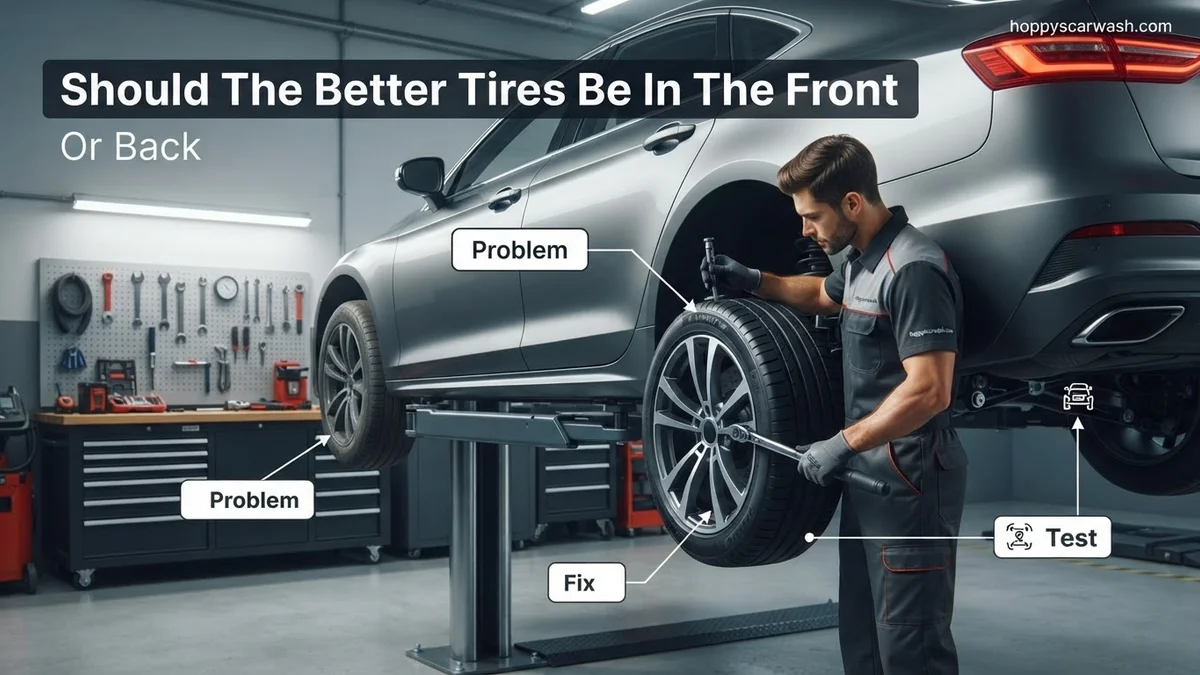
What Causes the Confusion Over Tire Placement
Most drivers assume that the best tires should go on the front wheels. This logical-sounding idea stems from two everyday driving experiences that happen right under your hands and feet.
The Front-Wheel Drive and Steering Misconception
You rely on your front tires for steering, major braking power, and acceleration if you drive a front-wheel-drive car. Because the front tires handle most of the workload, drivers naturally think fresh tread belongs up front to help the car turn and stop better.
The Braking Power Fallacy
Up to 70 percent of a car is stopping power happens through the front brakes. Drivers often conclude that maximum traction is needed where the heavy braking occurs, completely overlooking what happens to the back of the car during emergency maneuvers.
How to Fix Tire Positioning with a Proper Rear Installation
When you head to the tire shop in 2026, you need to insist that the technician mounts the new tires on the rear axle. Even if your steering wheel shakes or your front tread looks lower, safety experts agree that rear stability is the top priority.
The Physics of Rear-Wheel Hydroplaning
If your front tires lose traction in a puddle, the car usually pushes straight ahead in a manageable understeer. If your worn-out rear tires lose grip, the back end of the car will swing out violently in an oversteer spin that is nearly impossible for the average driver to correct.
Protecting Your Stability on Wet Roads
- Newer rear tires channel water away effectively to prevent sudden fishtailing.
- Maintaining superior rear grip keeps your vehicle tracking straight during emergency lane changes.
- Rear stability gives you predictable handling when braking hard on slick winter or rainy roadways.
What If It Still Doesn’t Work and Handling Feels Unstable
You have installed the tires according to best safety practices, yet your vehicle still feels unsettled on the road. If handling instability persists as you navigate the roadways of 2026, underlying mechanical issues or incorrect tire setups may be masking the fix. Persistent vibration, pulling, or sudden sliding require immediate diagnostic attention beyond basic tire placement.
Inspect Suspension and Alignment Components
Worn shocks, struts, or bad control arm bushings often mimic poor tire traction. If your suspension components are failing, even brand-new tires cannot maintain proper contact patches with the asphalt. Check for uneven tread wear patterns that indicate severe alignment issues.
Verify Correct Tire Pressures
Improper inflation alters the tire contact patch and ruins handling dynamics, regardless of whether the better tires are in the front or the back. Use a digital gauge to ensure all four tires match the manufacturer placard located inside the driver door jamb.
- Perform a manual pressure check when tires are completely cold to get an accurate baseline reading.
- Adjust pressures to factory specifications, keeping in mind that extreme seasonal temperature drops in 2026 can cause under-inflation.
- Inspect tire valve stems for slow leaks or missing valve caps that allow pressure to bleed off over time.
Consult a Certified Professional
If DIY checks fail to resolve the handling issue, visiting a certified service center is essential for your safety. According to automotive safety data from the National Highway Traffic Safety Administration (NHTSA), professional diagnostics can uncover hidden steering gear wear or electronic stability control faults. Professional suspension diagnostics generally range from $100 to $250, while a comprehensive four-wheel alignment typically costs between $75 and $150.
Conclusion
Placing the better tires on the rear axle remains the undisputed industry standard for preventing dangerous oversteer and spin-outs on wet roads. While front tires handle steering and braking forces, rear-end stability dictates whether a vehicle stays on its intended path during sudden maneuvers. According to verified research and expert sources from major tire manufacturers and automotive safety councils, prioritizing rear traction drastically lowers accident risks. Take the next actionable step today by checking your current tread depths and scheduling a professional rotation if your rear tires are worn.
❓ Frequently Asked Questions
Why is it safer to put new tires on the rear instead of the front?
Newer tires on the rear provide superior grip and water evacuation, which prevents the rear end from sliding out in a sharp turn or emergency maneuver. Front-wheel traction loss results in understeer, which is much easier for the average driver to correct than rear-wheel oversteer.
Does having front-wheel drive change where new tires should go?
No, front-wheel drive does not change the rule. While you might want better traction for acceleration and steering in the front, safety organizations universally agree that stability and preventing a spin on wet roads is the higher priority.
Won’t putting better tires in the back cause my front tires to hydroplane more easily?
Front tires can hydroplane, but drivers naturally react to front-end slips by easing off the accelerator and steering into the path. Conversely, a sudden loss of rear traction often causes an unrecoverable spin before the driver can react.
What should I do if I only buy two new tires?
The tire shop should install the two brand-new tires on the rear axle and move the partially worn rear tires to the front axle, assuming they still have safe tread depth remaining.
How can I tell which of my current tires are better?
Measure the tread depth using a tread depth gauge or a coin test. The tires with the deepest tread and least overall wear are considered the better tires and belong on the rear.
Do tire manufacturers and safety agencies agree on this rule?
Yes, major organizations including the Rubber Manufacturers Association, AAA, and all major tire brands strictly recommend putting new tires on the rear wheels.