What Happens If Water Gets In Your Exhaust Pipe Real 2026
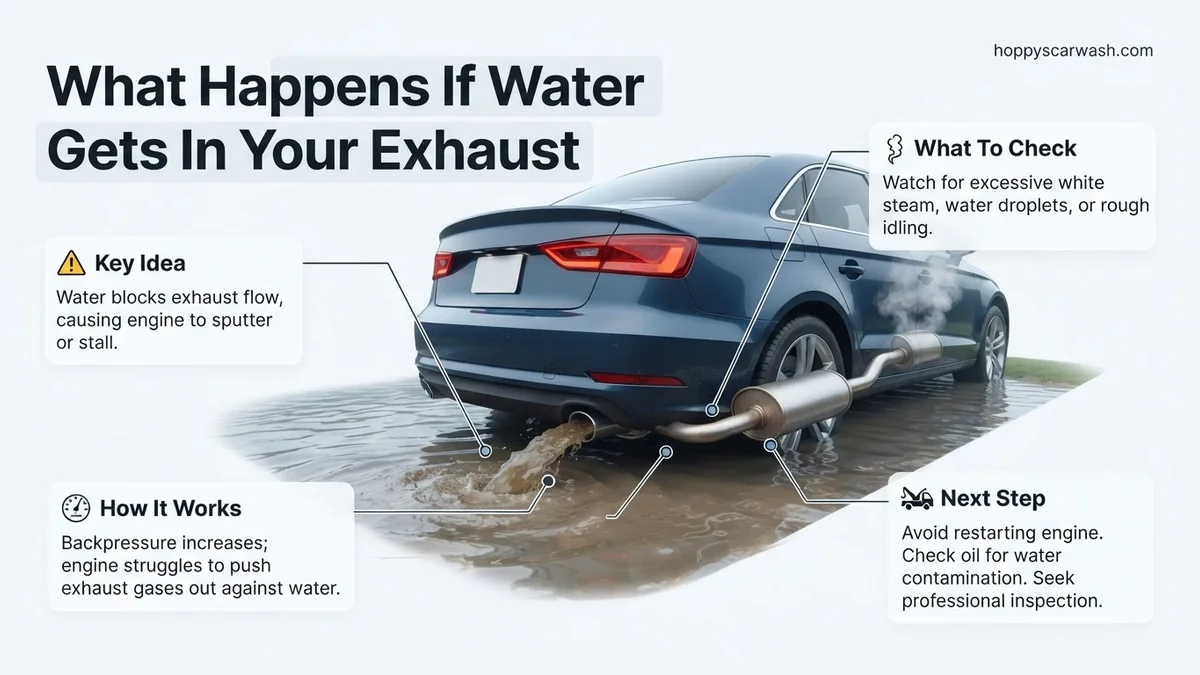
Water entering your exhaust pipe can restrict exhaust flow, cause the engine to stall, or in severe flood cases, lead to catastrophic engine damage. The severity depends entirely on the volume of water and whether it reaches the engine cylinders. Immediate action is required to safely clear the system before starting the car.
Water inside your exhaust pipe can severely damage your vehicle, potentially causing immediate engine stalling, dangerous back pressure, and in worst-case scenarios, catastrophic internal engine damage known as hydrolock. Whether you splashed through a deep puddle on your morning commute in 2026 or noticed sputtering after a heavy rainstorm, you need to know how much water entered your system and how to clear it before trying to start the engine again.
Ignoring this issue can lead to rusted exhaust components, damaged catalytic converters, and bent connecting rods that cost thousands to repair. This guide breaks down exactly what happens when water infiltrates your exhaust, how to assess the severity, and the practical steps you can take right now to safely clear the system and protect your engine.
Key Takeaways
- Small amounts of water usually vaporize and exit safely as normal steam.
- A blocked exhaust prevents escaping gases, causing the engine to sputter or stall.
- Never attempt to start your car if you suspect floodwater entered deep into the system.
- Check tailpipe water levels visually before turning the ignition key.
- Leftover moisture leads to internal rust, oxygen sensor failure, and catalytic converter damage.
What Causes Water to Enter Your Exhaust Pipe and Immediate Risks
Water typically enters an exhaust pipe through a few common scenarios, and the severity depends entirely on the volume of water and how it got there. Driving through flooded streets is the most dangerous culprit, as forward momentum can force water directly up the tailpipe. Other sources include high-pressure car washes spraying backward into the tip, heavy condensation, or malicious vandalism.
Immediate Risks to Your Engine and Exhaust
When water enters the exhaust, it creates immediate mechanical resistance. Here is what happens inside your vehicle:
- Exhaust Blockage: Water creates immediate back pressure, preventing the engine from expelling combustion gases properly.
- Engine Stalling: As pressure builds and oxygen sensors get flooded, your car will likely sputter, cough, and stall out completely.
- Hydrolock Potential: If enough water travels backward through the exhaust valves and into the cylinders, it can completely lock up the engine pistons.
- Thermal Shock: Pockets of cold water hitting a hot exhaust manifold or catalytic converter can crack expensive metal components instantly.
Severity Assessment Based on the Source
Not all water intrusion carries the same risk level. A few drops of condensation are normal, but a flooded tailpipe requires immediate caution.
- Deep Floodwaters: High risk. Water likely entered both the tailpipe and the air intake, demanding an immediate tow and professional inspection.
- Car Wash Intrusion: Low to moderate risk. Usually just a small amount trapped in the muffler tip that will blow out upon startup.
- Vandalism or Weather Pooling: Moderate risk. If water sat in the pipe overnight, check for localized rust and minor startup sputtering.
How to Troubleshoot and Diagnose Water Inside the Exhaust System
If you suspect water is trapped in your exhaust, do not immediately turn the ignition key. Taking a methodical approach to troubleshooting prevents minor exhaust flooding from turning into a total engine failure. You need to inspect the vehicle physically and test for internal blockages before attempting a restart.
Step-by-Step Physical Inspection
Before you even think about starting your car, perform these quick checks to gauge the extent of the problem:
- Look at the Tailpipe Height: Check if the water line on your bumper or road surface reached the level of your exhaust tip.
- Check the Oil Dipstick: Pull the dipstick and look at the oil. If it looks milky or frothy, water has contaminated your engine block.
- Inspect the Air Filter Box: Open your hood and check the air filter. If it is wet, water reached your intake, meaning deep engine flooding.
- Listen for Sloshing: Gently rock the vehicle or tap along the bottom of the muffler. A heavy sloshing sound indicates a full exhaust chamber.
Safe Clearing Techniques
If you confirm water is trapped in the exhaust system and the engine oil is clean, you can attempt to clear it safely:
- Elevate the Rear: Use a jack and jack stands to raise the rear of the car significantly higher than the front, allowing gravity to drain the water out of the tailpipe.
- Disconnect a Flanged Joint: If possible, loosen the bolts on an exhaust pipe flange near the middle of the car to let trapped water escape immediately.
- Crank Without Starting: If you are certain no water is in the cylinders, disable the fuel pump fuse and crank the engine for a few seconds to force air and water out of the exhaust system.
Step-by-Step Guide on How to Clear Water From Your Exhaust Pipe Safely
If you suspect water has entered your exhaust system, taking immediate and methodical action prevents catastrophic engine damage. Automotive experts recommend following a precise protocol before attempting to start the vehicle again.
Safety Preparations and Initial Inspection
- Ensure the vehicle is parked on level ground and the ignition is completely turned off to avoid electrical surges.
- Inspect the tailpipe visually. If standing water is visible inside the tip, do not attempt to crank the engine.
- Disconnect the negative battery terminal to protect sensitive onboard computers and sensors from short-circuiting.
Physical Removal and Drying Techniques
- Tilt or elevate the rear of the vehicle safely using rated jack stands if the exhaust angle traps water inside the muffler chambers.
- Tap gently along the length of the exhaust pipe and muffler using a rubber mallet to dislodge pooled pockets of condensation or floodwater.
- Utilize a wet-dry shop vacuum fitted with a narrow adapter hose to carefully extract moisture from deep within the tailpipe.
- Allow the exhaust system to air-dry completely for at least two to four hours in a well-ventilated garage or under direct sunlight.
What If Your Car Still Won’t Start After Clearing the Exhaust
When an engine refuses to turn over or fails to catch after clearing the exhaust pipe, water may have migrated further into vital engine components. Drivers should implement the following troubleshooting steps:
- Check the air filter housing. According to technical service bulletins from major manufacturers, water entering the exhaust often travels backward or enters through the intake simultaneously during deep puddles. Replace a soaked air filter immediately.
- Inspect the spark plugs and ignition coils. Pull the spark plug boots to check for moisture intrusion, which prevents proper combustion and causes severe misfires.
- Perform an oil contamination check. Pull the engine oil dipstick; if the oil appears milky or frothy, water has infiltrated the crankcase, requiring an immediate oil and filter change before attempting another start.
- Contact a certified mobile mechanic or arrange a flatbed tow to a professional service center if the engine hydrolocked. Professional diagnostic scans and engine extraction services typically range from $150 to $600 depending on vehicle make and severity.
Conclusion
Water inside an exhaust pipe poses a serious threat to vehicle operability, ranging from minor backpressure issues to total engine hydrolock. Safely clearing the moisture and checking adjacent systems prevents thousands of dollars in premature repairs. According to verified research and automotive safety organizations, addressing exhaust blockages promptly preserves catalytic converter integrity and extends emission system lifespan. As a final actionable step, inspect your tailpipe after heavy flooding or deep winter snowdrifts to catch blockages before starting your ignition.
❓ Frequently Asked Questions
What are the immediate symptoms of water inside the exhaust pipe?
Common signs include a sudden loss of engine power, unusual sputtering noises, heavy white smoke upon startup, or the engine failing to turn over entirely. If the exhaust is completely blocked by water, the back pressure will choke the engine.
What is hydrolock and can exhaust water cause it?
Hydrolock occurs when liquid water enters the engine cylinders through the intake or, in extreme cases of deep backing up, the exhaust system. Because water cannot be compressed, it stops the pistons dead in their tracks, bending connecting rods and destroying the engine.
How can I safely remove water from my exhaust pipe at home?
If you suspect minor water accumulation, safely elevate the rear of the vehicle using a jack and jack stands to let gravity drain the fluid. Alternatively, revving the engine slightly in an open, well-ventilated area can blow out minor droplets.
Can driving through deep puddles force water into the exhaust?
Yes, submerging your tailpipe while driving through deep water creates a vacuum effect or direct blockage as exhaust gases try to push against the water pressure, often stalling the car instantly.
What long-term damage should I watch out for after an exhaust flooding incident?
Lingering moisture can compromise delicate electronic components like oxygen sensors and ruin the expensive catalyst material inside your catalytic converter. It also dramatically speeds up rust formation from the inside out.
When should I call a professional mechanic instead of fixing it myself?
If your engine cranks but refuses to start, makes loud metallic knocking noises, or if you suspect floodwater reached the cabin and electrical systems, stop troubleshooting immediately and have the vehicle towed to a professional.