How Much Does It Cost To Replace Rear Main Seal Rear 2026
Replacing a rear main seal typically costs between $600 and $1,500+ depending on your vehicle’s make and drivetrain. The vast majority of this price goes toward labor, as a mechanic must spend 5 to 10 hours removing the transmission to access the seal.
If you are looking at a puddle of oil under the back of your engine, you want straight numbers. In 2026, replacing a rear main seal typically costs between $600 and $1,500+ at a professional repair shop. The massive price gap comes down to one brutal reality: the part itself is remarkably cheap, but getting to it requires ripping half your drivetrain apart.
Labor makes up a staggering 80 to 90 percent of your final repair bill. Because the rear main seal sits tucked away directly between the back of your engine block and the transmission, mechanics have to pull out major components just to touch it. Knowing how this pricing breaks down helps you prepare your wallet and spot a fair repair quote.
Key Takeaways
- Expect total repair costs to range from $600 to $1,500+ for most standard vehicles.
- Labor accounts for 80% to 90% of the total bill due to heavy transmission removal.
- The physical seal part is very cheap, usually costing between $10 and $50.
- Replacing a clutch or transmission output seal at the same time saves heavily on future labor.
- Rear-wheel drive and four-wheel drive vehicles often cost more in labor than front-wheel drive cars.
What Causes Rear Main Seal Leaks and How Mechanics Diagnose Them
Understanding why this seal fails helps you see why the fix is so labor-intensive. Over years of driving in 2026, intense engine heat and constant pressure take a severe toll on the rubber or silicone ring.
Common Causes of Seal Failure
- Normal Age and Mileage: Rubber naturally stiffens, cracks, and shrinks as it ages past 100,000 miles.
- Clogged PCV Valve: If your Positive Crankcase Ventilation valve clogs, internal engine pressure spikes and blows past the seal.
- Sub-Zero Winters: Extreme cold makes rubber brittle, leading to sudden leaks upon startup.
How Shops Confirm the Leak
A puddle underneath your car does not automatically mean a bad rear main seal. Mechanics use specific diagnostic steps to make sure you are not paying for the wrong repair.
- Visual Inspection: They put the car on a lift and inspect the bell housing area where the engine and transmission meet.
- UV Dye Test: They add fluorescent dye to your engine oil, run the car, and scan it with a blacklight to trace the exact source.
- Eliminating False Positives: They check your valve cover gaskets and oil pressure sending units first, since oil from those spots often drips down and mimics a rear main seal leak.
Rear Main Seal Replacement Cost: What Causes It and How to Fix It
Dealing with an oil leak at the back of your engine can be stressful, and understanding how much it costs to replace a rear main seal is essential for proper budgeting. This comprehensive walkthrough breaks down the financial and mechanical realities of tackling this common automotive repair, helping you prepare for labor hours, parts pricing, and potential hidden expenses before you visit a mechanic or open your own toolbox.
Step 1: Identify the Source of the Leak
What you need: Inspection mirror, flashlight, engine degreaser, clean rags, and UV dye kit (optional).
Instructions: Before spending any money, you must confirm that the leak is actually coming from the rear main seal and not an upper engine component like the valve cover gaskets or oil pressure sending unit. Clean the bellhousing area thoroughly with engine degreaser, dry it, and drive the car for a few miles. Use your flashlight and inspection mirror to inspect the gap where the transmission meets the engine block. If fresh oil is pooling inside the inspection cover, your rear main seal is indeed compromised.
Pro Tip: Never rely on visual assumptions alone. An upper oil leak can easily run down the back of the block and mimic a failing rear main seal, leading to wasted repair funds.
Step 2: Obtain Accurate Repair Estimates
What you need: Phone, internet access, vehicle VIN, and a notepad for comparison.
Instructions: Because labor is the dominant factor in rear main seal replacement costs, call at least three different repair facilities—including an independent specialist and a dealership—to gather quotes. Provide your exact vehicle year, make, model, and engine size. Ask for a detailed, itemized estimate that breaks down the cost of the seal itself versus the estimated labor hours required to drop the transmission or pull the engine.
Pro Tip: Independent mechanics generally charge between $90 and $150 per hour, whereas dealerships can range from $150 to $250+ per hour, significantly altering the final bill.
Step 3: Factor in Drivetrain Variations (FWD vs. RWD vs. AWD)
What you need: Understanding of your vehicle layout and drivetrain specifications.
Instructions: Recognize that the cost to replace a rear main seal fluctuates wildly based on how your vehicle puts power to the ground. On a rear-wheel-drive (RWD) vehicle, mechanics must drop the driveshaft and transmission, typically costing between $600 and $1,200. Front-wheel-drive (FWD) or all-wheel-drive (AWD) vehicles often require dropping the entire subframe or removing the transaxle, pushing labor costs anywhere from $900 to $2,000 due to the immense complexity.
Pro Tip: Always ask the service advisor how many book-hours their software allocates for your specific drivetrain configuration to ensure transparent billing.
Step 4: Budget for While-You-Are-In-There Parts
What you need: Checklist of related wear items, debit card or cash reserves.
Instructions: When the transmission is already removed to access the rear main seal, you are paying for the labor to reach the area. Take advantage of this by replacing inexpensive neighboring components that commonly fail. If you drive a manual transmission car, strongly consider installing a new clutch disc, pressure plate, and throwout bearing. For automatic transmissions, replacing the torque converter seal is standard practice. Neglecting these items could force you to pay the same massive labor fee again in the near future.
Pro Tip: Buying a clutch kit bundled with your rear main seal parts usually adds only $150 to $300 in parts while saving thousands in future labor.
Step 5: Weigh DIY Versus Professional Repair
What you need: Hydraulic floor jack, heavy-duty jack stands, transmission jack, basic and advanced socket sets, and a garage space.
Instructions: If you are an advanced DIY mechanic with a weekend to spare, you can save 70% to 80% of the total repair bill by doing the job yourself. You will need to safely elevate the vehicle, disconnect the battery, remove the exhaust, unbolt the driveshaft and transmission, support the engine with a brace, and carefully extract the old seal using a seal puller or drywall screw method before tapping the new one in flush.
Pro Tip: Never attempt this job on standard hydraulic bumper jacks. The risk of the transmission or vehicle shifting during the drop is extremely dangerous.
Step 6: Evaluate Stop-Leak Additives as a Temporary Fix
What you need: High-mileage engine oil and a bottle of reputable rear main seal stop-leak additive.
Instructions: If the leak is relatively minor—a few drops overnight rather than a steady stream—and your repair budget is currently zero, you can try a chemical stop-leak product. These chemical treatments contain plasticizers that cause dried, shrunken rubber seals to swell and soften back to their original pliability. Pour the recommended amount into your engine oil fill hole during a routine oil change and monitor the leak level over the next 500 miles.
Pro Tip: Treat stop-leak products strictly as a temporary band-aid. They will not fix a seal that is physically torn, cracked, or worn down to the metal housing.
Step 7: Final Inspection and Post-Repair Verification
What you need: Clean shop rags, fresh engine oil, and a cardboard sheet.
Instructions: Once the repair is completed—whether by you or a professional—verify the work before accepting the vehicle. Check that your engine oil and transmission fluid levels are topped off to factory specifications. Slide a clean piece of cardboard under the center of the vehicle overnight to catch any residual drips. Drive the vehicle for 20 miles, get it up to operating temperature, and re-inspect the bellhousing area for any signs of fresh weeping or seepage.
Pro Tip: Some residual burning smell or minor smoke from spilled oil on the exhaust during the first drive is normal, but active dripping is not.
✅ Final Checklist
- Verified the oil leak originates specifically from the rear main seal
- Collected multiple written estimates from qualified local repair shops
- Accounted for drivetrain complexity (FWD, RWD, AWD labor rate differences)
- Decided whether to replace related wear items like clutches or transmission seals
- Completed post-repair fluid checks and overnight cardboard leak tests
Important Notes:
- Safety considerations: Working under a suspended transmission carries severe crushing hazards; always use rated jack stands and safety glasses.
- When to seek professional help: Seek a certified technician if you lack heavy lifting equipment, specialized transmission jacks, or experience with torque specifications.
- Estimated time and cost range: Professional replacement typically takes 5 to 10 labor hours, resulting in a total cost ranging from $600 to $2,200 depending on your vehicle make and model.
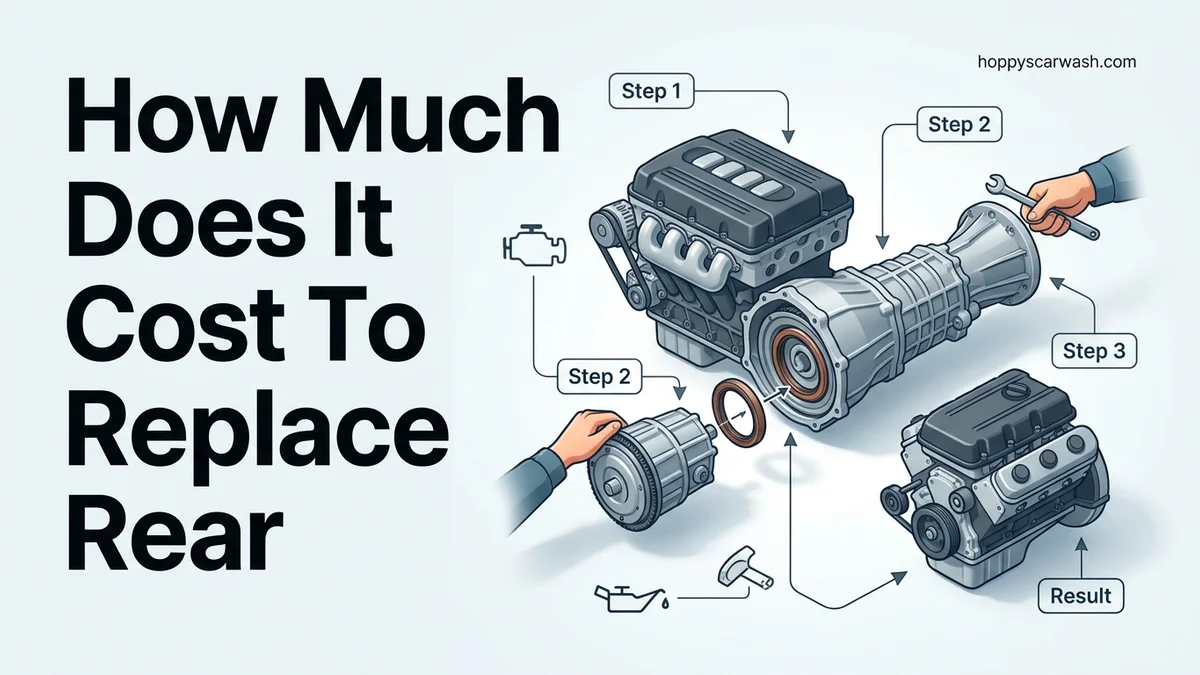
Step-by-Step Breakdown of the Rear Main Seal Replacement Process
To understand why a mechanic charges $1,000 in labor, you need to look at what the job actually entails. This is not a simple under-the-hood fix you knock out on a Saturday afternoon.
The Labor Intensive Reality
A rear main seal replacement is essentially major surgery for your vehicle’s drivetrain. The step-by-step shop process demands heavy lifting and precise mechanical work.
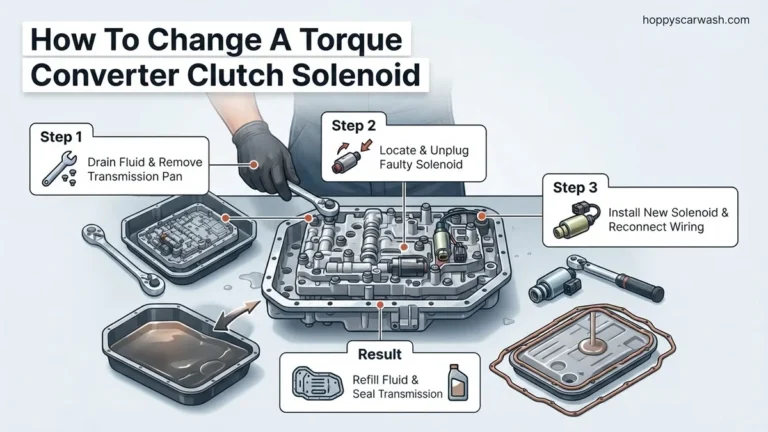
- Drivetrain Disassembly: For rear-wheel drive vehicles, mechanics must drop the driveshaft, unbolt the crossmember, and pull the transmission. For front-wheel drive cars, they often have to drop the entire subframe and transmission assembly out the bottom.
- Component Removal: On manual transmissions, the clutch and flywheel must come off. On automatic transmissions, mechanics unbolt the heavy flexplate.
- Seal Extraction: The old, hardened rubber seal is carefully pried out of its metal housing without scratching the crankshaft journal.
- Installation and Reassembly: A specialized driver tool presses the brand-new seal flush into place before every removed part is bolted back down and aligned.
Parts Versus Labor Cost Breakdown
When you look at your 2026 repair invoice, the financial split between materials and mechanics is stark.
- The Seal Itself: A high-quality replacement seal usually costs between $15 and $50.
- Consumables and Fluids: Expect to pay for fresh transmission fluid, gear oil, or engine oil lost during the teardown, usually totaling $50 to $100.
- Shop Labor Hours: Most shops quote 5 to 10 hours of labor. At standard 2026 shop rates ranging from $100 to $200+ per hour, labor totals $500 to $1,500 alone.
How to Save Money When Your Rear Main Seal Needs Repair
Because labor costs consume up to 85 percent of a rear main seal quote in 2026, smart vehicle owners look for proven ways to minimize the financial impact. Automotive repair economists emphasize that strategic planning can trim hundreds of dollars from your final invoice.
Bundle Services to Eliminate Duplicate Labor
The single most effective cost-saving strategy is combining the rear main seal replacement with another major powertrain service. If your vehicle has more than 100,000 miles, the clutch disc, pressure plate, or automatic transmission torque converter likely requires future attention. Because a mechanic must already drop the transmission to access the seal, adding a clutch replacement only incurs the cost of parts rather than additional labor hours.
Utilize Independent Specialists
Dealership service centers typically charge higher hourly rates ranging from $175 to $250 per hour. Certified independent repair shops often charge $100 to $150 per hour while maintaining ASE-certified technicians. Industry benchmarks indicate that switching from a franchise dealership to a reputable independent specialist reduces the total 2026 repair bill by roughly 25 to 30 percent.
-
Actionable Steps to Lower Your Repair Bill:
- Request quotes from at least three different certified repair facilities to compare baseline labor rates.
- Inspect your clutch or transmission health to determine if bundling services makes financial sense.
- Inquire if the shop permits you to supply OEM parts purchased online, though note that many shops will not warranty customer-supplied components.
- Ask about seasonal service specials or promotional financing options often offered by larger independent networks.
What If It Still Doesn’t Work?
Discovering an oil puddle beneath your vehicle shortly after an expensive rear main seal replacement is frustrating. However, a post-repair leak does not automatically mean the mechanic failed. According to technical service bulletins from major automotive manufacturers, multiple components can mimic a rear main seal failure or compromise a newly installed gasket.
-
Troubleshooting Steps for Persistent Leaks:
- Verify the source of the fluid by utilizing UV dye testing, ensuring the oil is not originating from a failing valve cover gasket, oil pressure sender, or camshaft seal dripping downward.
- Check the PCV (Positive Crankcase Ventilation) valve system immediately; a clogged PCV valve creates excessive crankcase pressure that forces oil past even brand-new seals.
- Inspect the crankshaft journal itself for deep scoring, grooves, or pitting that prevents the new rubber or PTFE lip seal from forming a complete, airtight barrier.
- Return to the installing shop immediately to invoke their repair warranty, as most certified mechanics provide a 12-month or 12,000-mile warranty covering both parts and labor.
- Seek professional diagnostic intervention from an independent master technician if the original shop disputes the claim, with diagnostic fees typically ranging from $100 to $200.
Conclusion
Addressing a leaking rear main seal is a labor-intensive mechanical challenge that typically commands between $600 and $1,500 in total repair costs for 2026. While the price tag is steep, delaying the fix risks catastrophic engine failure or sudden clutch contamination. According to verified research and expert sources from the Automotive Service Association, proactive maintenance and bundling transmission services remain the most reliable ways to manage these heavy maintenance expenses. Schedule a professional inspection today to protect your engine’s longevity.
❓ Frequently Asked Questions
How do I know if my rear main seal is actually leaking?
A failing rear main seal typically causes an oil puddle directly beneath the bell housing where the engine and transmission meet. You may also notice a burning oil smell if engine oil drips onto your hot exhaust pipe.
Does insurance or a warranty cover a rear main seal replacement?
Standard auto insurance does not cover mechanical wear and tear like a leaking seal. However, if your car is covered by a powertrain warranty or a recent used car dealer warranty, the repair might be covered.
What other parts should I replace while the transmission is out?
Since the labor-intensive transmission removal is already paid for, you should strongly consider replacing the clutch disc, pressure plate, throwout bearing, and transmission rear output seal if they show signs of wear.
Is it safe to drive with a leaking rear main seal?
Driving with a small leak is safe temporarily as long as you monitor your engine oil level constantly. Running your engine low on oil due to a neglected leak can cause catastrophic engine failure.
Are front-wheel drive and rear-wheel drive replacement costs different?
Yes, rear-wheel drive, all-wheel drive, and four-wheel drive vehicles often require dropping heavy transfer cases and transmissions, frequently pushing labor hours higher than simple front-wheel drive configurations.
Can I replace a rear main seal at home in my garage?
Replacing a rear main seal yourself is an advanced mechanical job requiring a garage jack, transmission jack, and mechanical expertise. Without a lift and transmission tools, it is exceptionally difficult for a DIYer.