What Year Did Ford Start Making Aluminum Trucks Guide 2026
Ford officially started making aluminum trucks in 2015 with the launch of the thirteenth-generation Ford F-150. This groundbreaking transition replaced traditional steel body panels with high-strength, military-grade aluminum alloy to significantly reduce vehicle weight and improve fuel efficiency.
Ford officially started making aluminum trucks in the 2015 model year, marking a revolutionary shift in the full-size pickup market. When the thirteenth-generation Ford F-150 rolled off the assembly line, its entire body was constructed from high-strength, military-grade aluminum alloy instead of traditional steel.
This massive manufacturing pivot shed up to 700 pounds of weight from the truck. As you look at the pre-owned market in 2026, understanding this transition helps you evaluate payload capacities, fuel economy, and long-term body condition of modern pickups.
Key Takeaways
- Ford introduced aluminum truck bodies with the redesigned 2015 F-150 model year.
- The primary goal was weight reduction to improve fuel economy and payload capacities.
- Ford later expanded the aluminum body style to its Super Duty truck lineup in 2017.
- The material used is a high-strength, military-grade aluminum alloy resistant to rust.
- Specialized repair procedures and tools are required for aluminum body collision work.
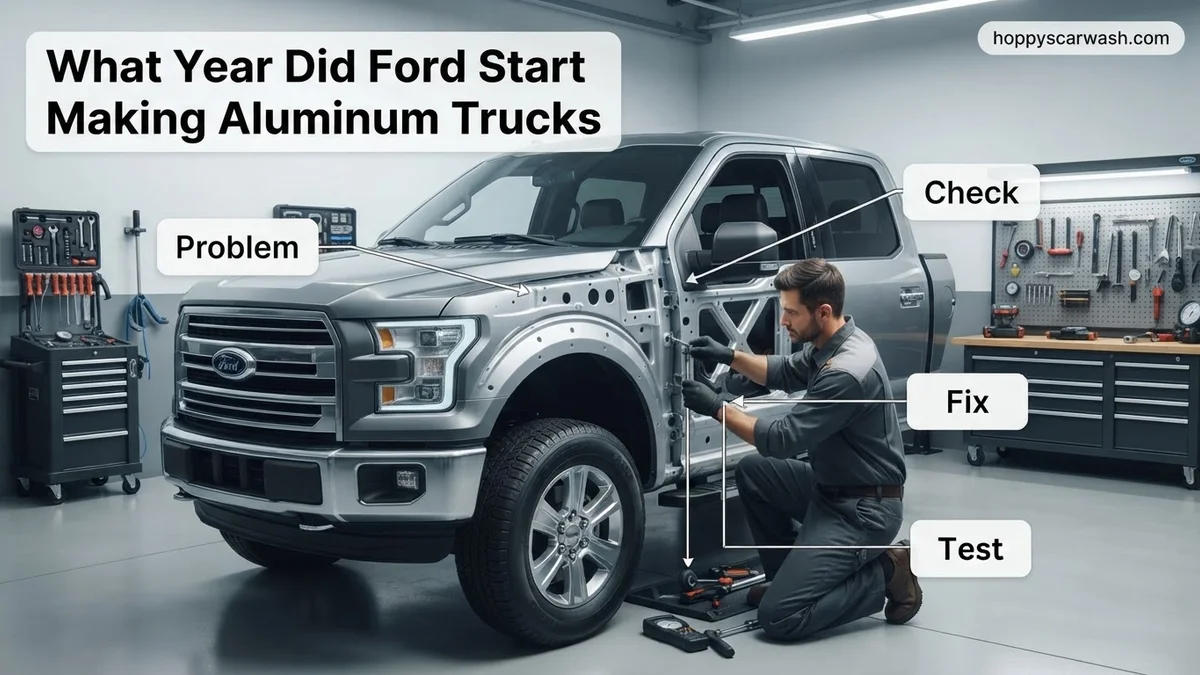
What Caused Ford to Switch to Aluminum Truck Bodies
Stricter Fuel Economy Mandates
Federal Corporate Average Fuel Economy standards forced automakers to rethink vehicle weight rapidly. Steel had dominated truck manufacturing for a century, but it created heavy vehicles that consumed massive amounts of fuel. By dropping hundreds of pounds, Ford dramatically improved miles-per-gallon ratings without sacrificing utility.
- Weight reduction of up to 700 pounds compared to the 2014 models
- Immediate gains in both city and highway fuel efficiency
- Compliance with aggressive EPA regulatory targets
Enhancing Durability and Towing Performance
Critics initially worried that aluminum would dent easily or reduce structural safety. However, Ford utilized the same high-strength, 6000-series aluminum alloys used in aerospace and military applications. This material actually offered superior dent resistance in many daily use cases while allowing engineers to reallocate weight toward a stronger, fully boxed steel frame.
- Higher strength-to-weight ratio than standard mild steel
- Elimination of red rust corrosion concerns on body panels
- Improved payload and towing capacity ceilings across popular engine trims
How to Identify and Verify an Aluminum Ford Truck Generation
The Magnet Test and Visual Clues
If you are inspecting a used Ford truck and want to verify if it features an aluminum body, the classic magnet test is your fastest diagnostic tool. Because aluminum is non-ferrous, standard refrigerator magnets will not stick to the doors, fenders, or tailgate.
- Test body panels with a standard household magnet
- Check the frame rails, which remain high-strength steel for structural safety
- Look for specific 13th and 14th-generation styling cues unique to 2015 and newer models
Checking the VIN and Door Jamb Sticker
For absolute certainty when shopping for a truck, you can rely on official documentation. The vehicle identification number and safety certification label provide definitive proof of the truck’s build materials and manufacturing specifications.
- Run the VIN through an online decoder to verify the exact model year and trim
- Inspect the manufacturing label on the driver-side door jamb for production dates starting in late 2014 or later
- Confirm the generation code to ensure you are looking at post-2014 architecture
Step-by-Step Guide to Maintaining and Repairing Aluminum Panels
Maintaining the military-grade aluminum body of a modern Ford truck requires distinct procedures compared to traditional steel vehicles. Because aluminum reacts differently to certain elements and demands specialized welding techniques, owners must follow specific protocols to prevent galvanic corrosion and structural failure.
1. Prevent Cross-Contamination
Standard steel tools must never touch bare aluminum truck panels. Iron particles left behind by steel brushes or wrenches will cause the aluminum to oxidize and corrode rapidly. Always use dedicated stainless steel brushes and aluminum-specific repair tools.
2. Wash and Protect the Exterior
Wash the truck regularly using a pH-neutral automotive shampoo. Apply a high-quality ceramic coating or paint sealant to protect the clear coat and underlying aluminum from road salts, industrial fallout, and acidic environmental contaminants.
3. Address Dents and Scratches Promptly
Aluminum work-hardens faster than steel, meaning it resists bending but cracks under extreme stress. Take minor scratches and dings to a certified technician immediately before oxidation begins underneath the paint layer, which compromises adhesion.
What If Your Insurance or Body Shop Cannot Fix Aluminum Damage
Many traditional collision centers lack the specialized equipment, clean rooms, and Ford-certified technicians required to properly repair high-strength aluminum alloys. If your local shop turns down the repair or your insurance adjuster pushes back, specific fallback steps ensure your vehicle is restored safely.
- Search the official Ford Certified Collision Network (FCCN) directory to locate a nearby facility with factory-approved aluminum welding stations and rivet-bonding tools.
- Request that your insurance provider cover the cost of transporting your truck to a certified facility, citing OEM safety position statements regarding structural aluminum repair.
- Obtain a detailed, itemized estimate from the certified shop specifically outlining required aluminum repair procedures, such as MIG pulse welding and structural adhesive replacement.
- Expect specialized aluminum repairs to cost between 20 to 50 percent more than traditional steel repairs, with comprehensive panel replacements frequently ranging from $3,500 to over $10,000 depending on structural involvement.
Conclusion
Ford revolutionized the full-size pickup market by transitioning to high-strength, military-grade aluminum bodies starting with the 2015 F-150. While this material drastically reduced vehicle weight and improved fuel economy, it demands specialized maintenance and certified repair protocols to prevent corrosion and maintain structural integrity. According to verified research and automotive manufacturing experts, proper upkeep ensures these modern trucks retain their safety ratings and long-term durability. Next step: verify whether your local body shop holds active Ford aluminum repair certification before scheduling any major cosmetic or structural work.
❓ Frequently Asked Questions
What specific model year did the aluminum Ford F-150 debut?
The aluminum-bodied Ford F-150 officially debuted for the 2015 model year, representing the launch of the truck’s 13th generation.
How can I tell if my Ford truck has an aluminum body?
You can easily test your truck bed or body panels using a standard refrigerator magnet. Because aluminum is non-magnetic, a magnet will not stick to an aluminum body panel.
Is an aluminum Ford truck less durable than a steel truck?
No, Ford uses a high-strength, military-grade aluminum alloy that is actually more resistant to dents and dings than the previous steel panels, while completely eliminating red rust.
Did the switch to aluminum affect Ford truck towing capacities?
Yes, by shedding up to 700 pounds of dead weight from the body, engineers were able to reallocate weight capacity toward significantly higher maximum towing and payload ratings.
Are repairs more expensive on an aluminum Ford truck?
Repairing aluminum body damage typically requires specialized tools, dedicated workspace areas to prevent cross-contamination with steel, and certified technicians, which can increase labor costs.
Does the entire truck frame switch to aluminum as well?
No, while the body panels and bed are made of aluminum, the underlying fully boxed frame of the F-150 and Super Duty trucks remains constructed from high-strength steel for structural rigidity.