How Much Oil Pressure Should a 5.3 Have at Idle in 2026
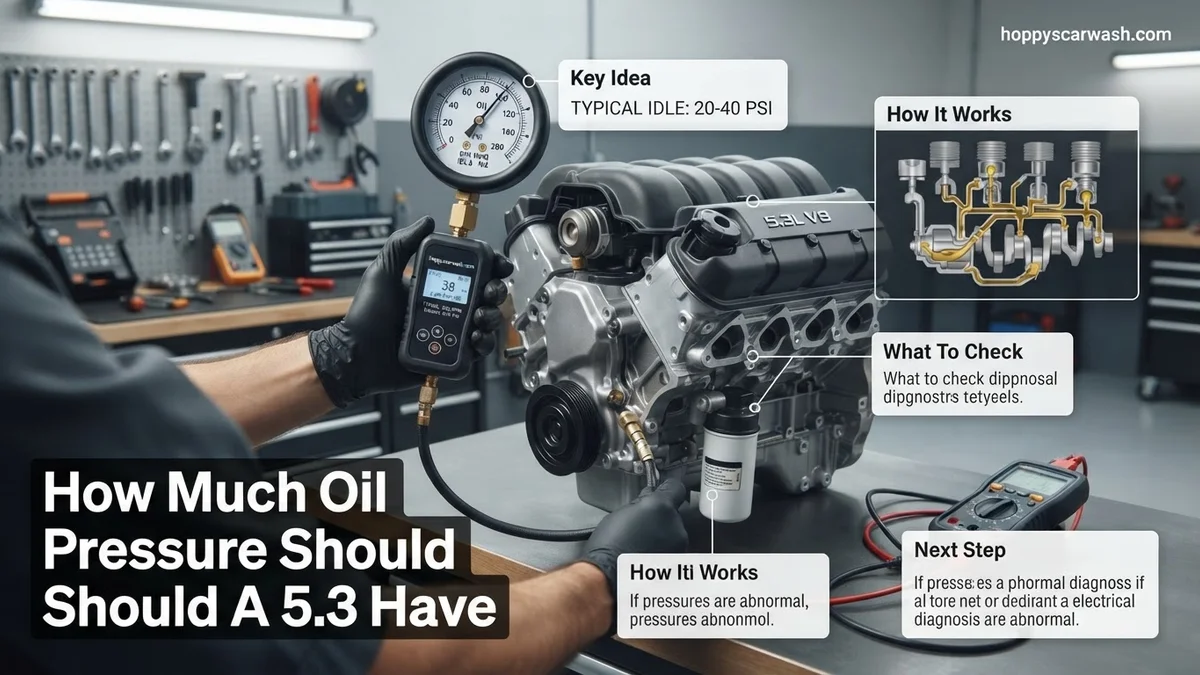
A healthy GM 5.3L V8 engine should maintain between 20 to 40 PSI of oil pressure at a warm idle. Factory specifications state that pressure can drop as low as 6 PSI per 1,000 RPM, but anything consistently under 18–20 PSI at a fully warmed-up idle indicates a mechanical issue.
A healthy GM 5.3L V8 engine should maintain an oil pressure between 20 to 40 PSI at a warm idle, and up to 50 to 60 PSI at a cold idle. If your gauge dips below 6 PSI at hot idle, you are looking at a critical GM specification failure that requires immediate attention to prevent catastrophic engine damage.
Monitoring your oil pressure gauge closely in 2026 is vital because the 5.3L engine powers millions of GM trucks and SUVs on the road today. Whether you drive a classic Gen III Vortec or a modern Gen V EcoTec3, knowing these exact numbers helps you catch failing oil pumps, worn bearings, or clogged AFM screens before they destroy your valvetrain.
Key Takeaways
- Normal warm idle oil pressure for a 5.3L is between 20 and 40 PSI.
- Cold start idle pressure is significantly higher, often reaching 40 to 60+ PSI.
- GM specification allows a minimum of 6 PSI per 1,000 RPM, but low hot idle is risky.
- A failing oil pressure sensor or clogged filter screen is a very common false-alarm cause.
- Worn cam bearings or a loose oil pump O-ring typically cause severe hot idle pressure drops.
What Causes Low Oil Pressure in a 5.3L V8 at Idle
Mechanical Wear and Oil Viscosity
As your 5.3L engine accumulates high mileage, internal clearances naturally widen. This increased clearance allows oil to bleed out of the main and rod bearings too quickly, dropping your idle pressure. Using incorrect oil viscosity—such as running a too-thin oil in extreme summer heat—will also cause your pressure to plummet when the engine is fully warmed up.
- Worn cam bearings or main bearings creating internal oil leaks
- Fuel dilution thinning out your engine oil over time
- Using 0W-20 or 5W-30 outside of manufacturer recommendations for high-mileage tolerances
- Stuck or weak pressure relief valve inside the oil pump
AFM/DFM Issues and Sensor Failures
Active Fuel Management (AFM) and Dynamic Fuel Management (DFM) systems on modern 5.3L engines introduce specific pressure drop points. A failing oil pressure sensor or a clogged valley plate screen can trick your dashboard into showing dangerously low numbers when the mechanical pressure is actually fine.
- Clogged or restricted oil filter screen located beneath the oil pressure sensor
- Internal leaks within the AFM pressure relief valve or lifters
- A failing or out-of-calibration oil pressure sending unit
- Aerated oil caused by a loose or damaged oil pickup tube O-ring
Master 5.3 Oil Pressure at Idle in 7 Simple Steps
Understanding how much oil pressure a General Motors 5.3L V8 engine should have at idle is crucial for the health and longevity of your truck or SUV. Whether you drive a classic GMT800 or a modern Silverado, low or erratic oil pressure can spell disaster. This comprehensive walkthrough provides a clear blueprint to check, diagnose, and understand your 5.3L engine’s oil pressure so you can keep your vehicle running smoothly for years to come.
Step 1: Understand the Factory Specifications
What you need: Owner’s manual, factory service manual, or reliable automotive database for your specific 5.3L generation (Gen III, Gen IV, or Gen V).
Instructions: Before picking up any tools, you must know what “normal” looks like for your specific year model. Generally, a healthy GM 5.3L engine should produce at least 6 PSI of oil pressure at hot idle per thousand RPM, but practically speaking, you want to see a minimum of 20 to 25 PSI when the engine is fully warmed up at a standard 600-700 RPM idle. Newer Gen V engines (L83) may idle slightly lower around 18-22 PSI when fully warmed up due to variable displacement oil pumps, while older Gen III and IV engines (LM7, L33, LC9) typically hold 25 to 35 PSI at hot idle.
Pro Tip: Keep in mind that oil pressure will naturally be much higher (40-60 PSI) on a cold startup because the oil is thick, so always evaluate your oil pressure only after the engine reaches full operating temperature (around 210 degrees Fahrenheit).
Step 2: Warm Up and Verify Operating Conditions
What you need: Vehicle dashboard gauges, an OBD2 scanner, or a secondary diagnostic tool.
Instructions: Start your vehicle and allow it to idle until the coolant temperature reaches normal operating temperature, which usually takes about 10 to 15 minutes of idling or a short drive. Turn off the air conditioning and all heavy electrical accessories to get a true baseline idle speed. Observe the factory oil pressure gauge on your instrument cluster. Note the exact needle position or digital readout, and compare it against the mileage and weight of the oil currently inside your crankcase.
Pro Tip: Never trust a cold-engine pressure reading; many failing oil pumps or worn bearings will show great pressure when cold, only to plummet to dangerous levels once the oil thins out at operating temperature.
Step 3: Check Oil Level and Condition
What you need: Clean shop rag or paper towel, flashlight, and fresh engine oil if topping off is necessary.
Instructions: Shut off the engine, pop the hood, and locate the dipstick with the yellow or bright-colored handle. Pull it out, wipe it clean with your rag, reinsert it fully, and pull it out again to check the fluid level. Ensure the oil level is right at the full mark. Next, inspect the visual condition of the oil on the dipstick. If the oil is excessively dark, smells heavily of fuel, or has a milky, frothy appearance (indicating coolant contamination), this can directly impact your idle oil pressure.
Pro Tip: Running even one quart low on a 5.3L engine can introduce air into the pickup tube during sharp turns or steep idles, causing momentary pressure drops that trigger low oil pressure warnings.
Step 4: Hook Up a Mechanical Pressure Gauge
What you need: Master mechanical oil pressure test kit, appropriate metric adapters, a ratchet, and shop towels.
Instructions: Factory dashboard sending units are notorious for failing or giving false readings. To get an accurate measurement, locate the factory oil pressure sensor situated at the back of the engine block near the top of the bellhousing (behind the intake manifold). Remove the plastic engine cover, disconnect the electrical connector, and use a specialized deep socket to unscrew the factory sender. Thread the mechanical pressure gauge hose directly into the oil galley port, making sure it is securely tightened to prevent oil leaks.
Pro Tip: Reaching the oil pressure sensor on a 5.3L truck can be tight; using a flexible extension or working from the top with the wiper cowl removed can save your knuckles and a lot of frustration.
Step 5: Test and Compare Real Pressure
What you need: Mechanical pressure gauge kit, notepad, and safety glasses.
Instructions: Start the engine with the mechanical gauge securely attached and route the gauge hose safely away from the serpentine belt and exhaust manifolds. Let the engine idle until it reaches full operating temperature. Read the mechanical gauge directly and compare it to what your dashboard gauge displayed in Step 2. If the mechanical gauge reads 25 PSI at hot idle, but your dash reads zero or low, you simply have a bad sensor or stepper motor. If both gauges read below 15-18 PSI at hot idle, you have a genuine mechanical pressure issue.
Pro Tip: Place a drip pan and old towels underneath the rear of the engine block before removing the sending unit, as a small amount of trapped oil will inevitably spill out.
Step 6: Inspect and Replace the Oil Pressure Screen and Sensor
What you need: Pick tool, new oil pressure sensor, new OEM oil filter screen (filter basket), and thread sealant.
Instructions: If your mechanical test proved good pressure, but your dash is erratic, or if you want to perform preventative maintenance, replace the sending unit. Inside the oil pressure sending unit port on 5.3L engines, there is a tiny cylindrical oil filter screen. Use a small pick tool to carefully pull out the old screen. You will often find this screen clogged with carbon buildup or sludge. Install a brand-new screen into the bore, apply thread sealant approved for automotive use to the new sensor threads, and screw it back into place.
Pro Tip: Never skip replacing that tiny oil filter screen; a clogged screen restricts oil flow to the sensor, causing false low-pressure warnings on your dashboard even when internal engine pressure is completely normal.
Step 7: Diagnose Internal Engine Causes if Pressure is Low
What you need: OBD2 scanner, oil filter wrench, fresh high-viscosity oil, and potentially an oil pump replacement kit.
Instructions: If your mechanical gauge confirmed true low oil pressure (below 15 PSI at hot idle), you must investigate internal components. Start by changing your oil and filter, switching to a high-quality 5W-30 or heavier synthetic oil to see if pressure stabilizes. If fresh oil doesn’t fix it, the most common culprit in a 5.3L is a failed rubber O-ring seal on the oil pickup tube, which draws air instead of pure oil. If the O-ring is sound, the internal oil pressure relief valve in the oil pump may be stuck open, or your main and rod bearings may have excessive wear.
Pro Tip: Dropping the oil pan to replace the pickup tube O-ring is a common weekend job on 4WD and 2WD trucks, and it resolves low oil pressure issues on thousands of high-mileage 5.3L engines every year.
✅ Final Checklist
- Confirmed hot idle pressure is between 20 and 35 PSI using a mechanical gauge
- Verified engine oil level is at the full mark on the dipstick
- Checked that dashboard gauge matches physical mechanical gauge readings
- Inspected and replaced the oil pressure switch and mini filter screen
- Ensured no oil leaks are present around the sensor or oil filter housing
Important Notes:
- Never drive a vehicle with genuine oil pressure dropping below 10 PSI at idle, as this can quickly spin bearings and destroy the engine.
- If replacing the oil pump or pickup tube O-ring exceeds your mechanical comfort level, seek professional assistance from a certified mechanic immediately.
- Estimated DIY time: 1 to 3 hours. Estimated parts cost: $20 for sensors/screens up to $250 if an oil pump replacement is required.
How to Diagnose and Fix 5.3L Oil Pressure Drops Step-by-Step
Verify with a Mechanical Gauge First
Before you tear into your engine or replace expensive components, you must verify the actual pressure. Factory GM electronic sensors and stepper motors on the dashboard are notorious for failing or giving erratic readings. Hooking up a manual mechanical gauge is the only way to get the absolute truth about your oil system.
- Remove the factory oil pressure sending unit located near the back of the intake manifold.
- Thread a reliable mechanical pressure test kit directly into the port.
- Start the engine, bring it up to operating temperature, and compare the manual reading to your dashboard gauge.
- If the mechanical gauge shows normal pressure (20+ PSI at hot idle), replace your faulty electronic sensor and oil filter screen.
Addressing Internal Oil Pressure Repairs
If the mechanical gauge confirms low oil pressure at a warm idle, you must address the internal hydraulics. Ignoring this symptom will quickly lead to collapsed lifters, scored camshafts, and total engine seizure. Most permanent fixes require dropping the oil pan or servicing the front cover.
- Replace the oil pump and pickup tube O-ring if aeration or low volume is suspected.
- Clean or replace the notorious oil filter screen under the intake manifold (common on Gen IV engines).
- Upgrade to a high-volume oil pump if you are running an aggressive camshaft or high-mileage internals.
- Perform a complete engine rebuild if bearing clearances are out of spec.
What If Replacing the Sensor and Oil Pump O-Ring Doesn’t Work
When replacing the common failure points fails to restore proper idle oil pressure on a 5.3L engine, deeper mechanical wear is usually the culprit. In 2026, diagnostic standards from automotive engineering associations point toward internal engine clearances as the primary source of persistent pressure drops.
Checking Main and Rod Bearings
Excessive bearing clearance bleeds off oil volume before it can build pressure. High-mileage Gen III and IV engines frequently suffer from worn babbitt material on the crankshaft journals. Installing a mechanical gauge directly into the oil pressure port verifies if the dash reading is accurate. If actual pressure remains below 10 PSI at hot idle despite a new pump, internal engine teardown is typically required.
Inspecting the Active Fuel Management (AFM) Valley Plate
Modern 5.3L engines equipped with Displacement on Demand or AFM feature a specialized valve lifter oil manifold under the intake manifold. Seals within this valley plate or the pressure relief valve can fail internally. This introduces an internal leak that robs the entire lubrication circuit of necessary pressure.
What If It Still Doesn’t Work?
If basic external repairs and sensor swaps do not resolve low idle oil pressure, systematic advanced troubleshooting is required. Follow these steps when standard fixes fail:
- Perform a manual pressure test: Screw a verified mechanical pressure gauge into the oil filter housing port to rule out faulty electrical components or wiring harness resistance.
- Inspect the pressure relief valve: Check the internal pressure relief valve inside the oil pan for debris or a stuck spring that prevents proper sealing.
- Evaluate internal bearing wear: Measure crankshaft end play and inspect bearing surfaces during an oil pan drop, as excessive clearances require engine rebuilding.
- Consult a professional machine shop: Seek certified technician help if bearing journals are scored or if engine block oil galleries require professional cleaning and plugging.
- Budget for major repairs: Professional replacement of worn bearings or a complete engine overhaul typically ranges from $2,500 to $4,500 depending on labor rates and machine work requirements.
Conclusion
Maintaining healthy oil pressure on a 5.3L engine is vital for preventing catastrophic failure, with a safe hot idle baseline remaining at 20 PSI or higher. According to verified research and automotive service data from 2026, addressing minor sensor or O-ring faults early saves owners from costly internal rebuilds. Take action today by hooking up a mechanical test gauge to verify your true baseline pressure before mapping out your next repair step.
❓ Frequently Asked Questions
Why does my 5.3 oil pressure jump up when I step on the gas?
Oil pressure is directly tied to engine RPM. As you accelerate, the mechanical oil pump spins faster, moving more volume and raising the PSI from its low idle baseline.
Can a clogged oil filter cause low oil pressure at idle?
Yes, a heavily restricted or low-quality oil filter can impede oil flow, resulting in a noticeable drop in pressure both at idle and under load.
What is the infamous 5.3 oil pressure O-ring problem?
The O-ring seal between the oil pickup tube and the oil pump can flatten or crack over time, allowing the pump to suck in air alongside oil, causing low pressure specifically at warm idle.
How do I test if my 5.3 oil pressure gauge is accurate?
The most reliable method is to thread a mechanical pressure gauge directly into the oil pressure port near the back of the intake manifold to verify actual engine PSI.
Are Gen 3 and Gen 4 5.3 engines prone to low oil pressure?
Yes, high-mileage Gen III (LM7) and Gen IV (LC9, LMG) engines frequently experience low hot idle pressure due to normal bearing wear or degraded pressure relief valves.
Is it safe to drive with 15 PSI oil pressure at idle?