How Much Does an Automatic Car Wash Cost to Own in 2026
Owning an automatic car wash requires a substantial financial commitment, with upfront capital expenditures ranging from $1 million to over $3 million depending on the type of system. Beyond the initial build, ongoing operational expenses like water, electricity, and maintenance demand careful financial planning. Understanding these startup and operating costs is essential for calculating an accurate return on investment.
Owning an automatic car wash requires a substantial financial commitment, typically ranging from $500,000 to over $2 million in total startup costs depending on whether you build in-bay automatic setups or large tunnel systems. This heavy initial investment is driven primarily by expensive specialized washing machinery, land acquisition in high-traffic commercial zones, and complex municipal plumbing and water reclamation systems.
Entering this lucrative industry in 2026 demands a clear understanding of where your capital goes before you break ground. Success relies on balancing massive upfront construction requirements with the steady operational overhead needed to keep your bays running profitably every single day.
Key Takeaways
- Upfront capital expenditures typically range between $1 million and $3 million for a new facility.
- In-bay automatic washes cost significantly less to build than large tunnel car wash systems.
- Real estate acquisition and land preparation make up a massive portion of initial setup costs.
- Monthly operational expenses include utilities, chemicals, labor, and ongoing equipment maintenance.
- Profit margins generally range from 20% to 40% for well-managed car wash businesses.
What Causes High Financial Overheads in Car Wash Ownership
The Heavy Burden of Complex Machinery and Infrastructure
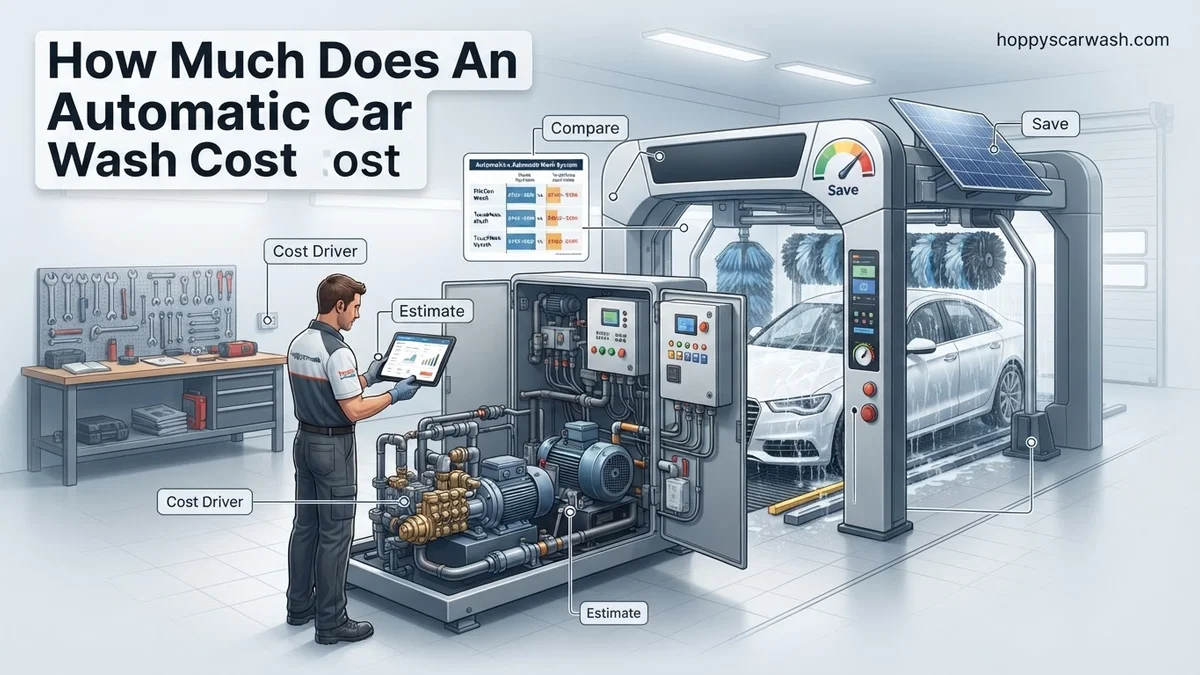
Unlike standard retail businesses, a car wash is an industrial facility disguised as a service venture. You are financing heavy-duty mechanical systems that must endure constant exposure to harsh chemicals, high-pressure water, and extreme friction.
- Industrial Pumps and Motors: High-pressure pumping systems drive the cleaning power and frequently require redundancy to prevent costly downtime.
- Water Reclamation Systems: Modern environmental regulations in 2026 mandate sophisticated recycling equipment to minimize municipal water waste and utility fees.
- Point of Sale and Pay Stations: Automated ticket kiosks, license plate recognition cameras, and monthly membership scanners add significant technological overhead.
Utility Consumption and Ongoing Maintenance Costs
Once your wash is operational, your financial overhead shifts to daily utility consumption and preventive maintenance. Electricity, natural gas for water heaters, and massive volumes of municipal water represent your highest recurring utility burdens.
Mechanical parts wear down rapidly under heavy commercial use. Setting aside a strict monthly maintenance budget is mandatory to prevent unexpected brush motor failures or chemical delivery line clogs during peak weekend rushes.
Automatic Car Wash Ownership Made Easy: Your Essential Action Plan
Investing in an automatic car wash can be an exceptionally lucrative commercial venture, but calculating the true cost of ownership goes far beyond the initial purchase price. This comprehensive walkthrough guides you through evaluating every financial variable—from real estate acquisition and high-end equipment to ongoing utility consumption and maintenance reserves—ensuring you build a realistic, profitable business budget from the ground up.
Step 1: Evaluate Land Acquisition and Zoning Costs
What you need: Local zoning board regulations, commercial real estate listings, and a qualified civil engineer or commercial real estate agent.
Instructions: Begin by identifying high-traffic commercial corridors with favorable ingress and egress access. Securing the right parcel of land is your foundation. You must consult local municipal zoning boards to verify that the property is zoned for commercial or industrial use with car wash permits allowed. Factor in the cost of environmental impact studies, especially regarding water drainage and runoff compliance with the EPA. Land purchase prices or long-term ground leases vary drastically by geographic region, typically ranging from $250,000 to over $1,000,000 depending on the market density and square footage.
Pro Tip: Never waive your feasibility contingency period. Always test the soil for previous environmental contamination before closing on any commercial land.
Step 2: Calculate Equipment and Installation Expenses
What you need: Manufacturer quotes, blueprints of wash bays, and licensed mechanical contractors specializing in car wash systems.
Instructions: Select your primary wash system type: in-bay automatic (touchless or soft-touch) or a mini-tunnel conveyor system. Contact leading equipment manufacturers to request comprehensive bids. High-end touchless systems and automated rollover units typically cost between $100,000 and $400,000 for the machinery alone. Once purchased, you must hire specialized technicians to install the gantry rails, high-pressure pumps, chemical injection manifolds, and dryer fans. Installation labor and freight shipping can add an extra 15% to 25% to your base equipment quote.
Pro Tip: Opt for modular equipment designs that allow you to easily upgrade individual components like dryers or chemical pumps without replacing the entire unit.
Step 3: Estimate Utility and Infrastructure Setup Fees
What you need: Utility provider contact sheets, civil plans for water lines, and electrical grid capacity assessments.
Instructions: Automatic car washes are massive consumers of water, electricity, and municipal sewer capacity. Meet with local utility providers to calculate tap fees and grid tie-in costs. You will need heavy-duty electrical service (often 3-phase power) to run massive high-pressure pumps and 15-horsepower drying motors. Additionally, calculate the cost of installing high-capacity water supply lines and specialized oil-water separators or reclaim systems to meet local environmental codes. Utility infrastructure upgrades can easily tally between $30,000 and $80,000.
Pro Tip: Install a water reclamation system early; while it increases upfront capital expenditure, it drastically slashes your monthly utility bills in regions with high water rates.
Step 4: Budget for Point-of-Sale (POS) and Security Systems
What you need: Merchant service provider agreements, automated pay station hardware, and commercial security camera packages.
Instructions: Modern consumers expect fast, frictionless payment options. Invest in a reliable automated pay station (APS) that accepts credit cards, mobile wallets, fleet accounts, and cash. Quality POS hardware combined with license plate recognition (LPR) cameras and gate arms will cost between $15,000 and $45,000. Furthermore, install a robust 24/7 high-definition security camera system with remote viewing capabilities to monitor vandalism, cash collection safety, and slip-and-fall liability issues.
Pro Tip: Choose a POS system that integrates seamlessly with a monthly membership subscription app to guarantee recurring monthly revenue.
Step 5: Factor in Chemical, Supply, and Inventory Costs
What you need: Wholesale chemical supplier catalogs, chemical dispensing equipment, and storage drums.
Instructions: To keep your wash running smoothly, you must maintain a steady inventory of soaps, pre-soaks, wheel cleaners, waxes, and spot-free rinse solutions. Partner with industrial chemical suppliers who will often install and service the proportioning chemical pumps for free in exchange for an exclusive product contract. Depending on your wash volume, allocate a monthly operating budget of $1,500 to $4,000 solely for consumable soaps and polishes, plus initial safety gear and dilution equipment.
Pro Tip: Buy concentrated formulas in bulk totes rather than pre-mixed drums to save up to 30% on long-term chemical overhead costs.
Step 6: Account for Ongoing Maintenance and Repair Reserves
What you need: Preventive maintenance schedules, manufacturer manuals, and a retainer for local service technicians.
Instructions: High-pressure pumps, moving gantries, and electronic sensors endure heavy wear and tear in a wet, harsh chemical environment. Equipment breakdowns will happen, and downtime directly translates to lost revenue. Establish a dedicated maintenance reserve fund equal to 5% to 10% of your gross monthly revenue. Create a strict daily, weekly, and monthly preventive maintenance checklist covering nozzle cleaning, filter changes, and belt tensions. Service call labor rates can exceed $150 per hour, making routine self-maintenance critical.
Pro Tip: Stock a critical spare parts kit onsite—including extra limit switches, replacement nozzles, and drive belts—to minimize repair downtime.
Step 7: Plan for Insurance, Licensing, and Permitting Fees
What you need: Commercial insurance broker, municipal business license applications, and environmental compliance permits.
Instructions: Protect your substantial asset with a comprehensive commercial insurance policy tailored specifically for car washes. This must include general liability, property insurance, environmental liability coverage for wastewater discharge, and garagekeepers legal liability. Annual insurance premiums typically range from $6,000 to $15,000 depending on location and claims history. Concurrently, secure all local business operating licenses, signage permits, and state environmental discharge permits before opening day.
Pro Tip: Work with an insurance broker who understands the car wash industry to avoid expensive coverage gaps regarding water backup and slip-and-fall claims.
✅ Final Checklist
- Verified local zoning laws permit a commercial car wash on the selected property parcel.
- Obtained comprehensive equipment and installation quotes from reputable manufacturers.
- Calculated total utility upgrade costs, including 3-phase power and water tap fees.
- Installed an automated point-of-sale system with credit card and membership processing.
- Established a dedicated monthly maintenance and emergency repair reserve fund.
Important Notes:
- Never overlook strict local environmental regulations regarding chemical runoff and mandatory water reclamation systems.
- Consult a certified commercial real estate attorney and a CPA experienced in depreciation schedules before finalizing property purchases.
- Total upfront ownership costs typically range from $400,000 for a basic single in-bay automatic setup to well over $1,500,000 for a fully developed high-volume operation.
How to Calculate Upfront Capital Expenses for Equipment and Real Estate
Acquiring Land and Securing Commercial Permits
Real estate will consume the largest portion of your initial budget. You need a parcel located along a high-traffic corridor with excellent visibility and easy ingress and egress for vehicles.
Zoning approvals, environmental impact studies, and civil engineering fees can quickly inflate your pre-construction budget. Depending on your market, land acquisition and site preparation alone can easily range from $300,000 to $1 million.
Equipment Packages and Professional Installation Costs
Choosing between an in-bay automatic wash and a full-scale express tunnel dictates your equipment expenses. In-bay automatic equipment packages typically cost between $100,000 and $250,000 per bay.
Express exterior tunnel systems require a much larger hardware investment, often ranging from $400,000 to over $800,000 just for the conveyor tracks, mitters, blowers, and chemical application arches. Professional installation and calibration by certified technicians will add another 15 to 25 percent to your baseline equipment quotes.
Step-by-Step Guide to Managing Ongoing Operational Expenses
Controlling daily operating costs dictates whether an automatic car wash turns a profit or bleeds capital. Industry benchmarks from the International Carwash Association (ICA) indicate that utility, chemical, and maintenance expenses consume roughly 45 to 55 percent of gross revenues. Operators must implement rigorous tracking protocols to protect profit margins against inflation.
1. Monitor Chemical Dilution Rates Weekly
Detergents, waxes, and spot-free rinse agents represent a major variable expense. Operators should calibrate chemical injector pumps every Monday morning to prevent over-application. Manufacturers note that a mere 5 percent over-dispensing wastes thousands of dollars annually across thousands of washes.
2. Execute Preventative Maintenance Schedules
Equipment failure halts revenue generation instantly while incurring steep emergency repair fees. Technicians must grease bearings, inspect high-pressure pumps, and check photoelectric sensors bi-weekly. Adhering strictly to original equipment manufacturer (OEM) manuals prevents catastrophic failures that cost upwards of $10,000 in replacement parts.
3. Optimize Utility Consumption Profiles
Water and electricity dominate monthly overhead. Upgrading to variable frequency drives (VFDs) on air dryers reduces electrical draw by up to 30 percent during low-volume hours. Furthermore, installing reclaim systems cuts fresh water usage by up to 85 percent, significantly shrinking municipal utility bills in 2026.
What If Your Revenue Falls Short of Projected Profit Margins
When daily vehicle counts drop below financial projections, immediate corrective action is mandatory to avoid insolvency. Owners cannot wait for market conditions to improve organically. A structured triage approach helps identify structural inefficiencies and reignite customer acquisition before cash reserves deplete.
1. Audit Pricing and Promotional Bundles
Analyze transaction data to see which wash packages sell best. If premium packages underperform, restructure tiers or introduce limited-time promotional discounts to incentivize upgrades.
2. Overhaul Local Digital Marketing
Low revenue often correlates with poor local visibility. Optimize your Google Business Profile, launch geo-targeted social media ads, and implement a digital loyalty program to drive repeat visits.
3. Transition to a Subscription Model
Flat-rate monthly unlimited wash clubs generate predictable recurring revenue. Industry data shows that subscription members visit twice as often as retail customers, stabilizing cash flow during slow seasons.
Conclusion
Owning an automatic car wash requires careful navigation of heavy capital expenditures and ongoing operational costs. Protecting your investment demands rigorous expense tracking, aggressive preventative maintenance, and agile revenue management strategies. According to verified research and expert sources from the International Carwash Association, operators who combine automated efficiency with proactive financial oversight achieve a 25 to 35 percent net profit margin. Your actionable next step is to conduct a comprehensive utility and chemical audit of your facility this week to identify immediate cost-saving opportunities.
❓ Frequently Asked Questions
What are the primary upfront capital expenditures (CapEx) when buying a car wash?
Upfront CapEx includes purchasing land, architectural and engineering fees, civil construction, municipal permits, utility connections, and the car wash equipment itself. Automated machinery alone can cost anywhere from $100,000 for a single in-bay unit to over $500,000 for a full tunnel system.
How much do utilities like water and electricity cost to run monthly?
Utility costs vary widely based on local rates and daily wash volume, but facility owners typically spend several thousand dollars a month on water, sewer, and high-voltage electricity. Reclaim systems can help reduce water consumption and lower these recurring bills.
Is labor a major operational expense for automatic car washes?
Unlike full-service operations, automatic car washes require minimal staffing, often running with just one or two attendants for customer service, site maintenance, and daily cash handling. This lower labor requirement significantly boosts overall operating efficiency.
What permits and regulatory approvals are required to open a car wash?
Owners must secure environmental permits regarding wastewater discharge and water reclamation, local zoning approvals, building permits, and business licenses. Complying with local environmental water-run-off regulations can require specialized filtration systems.
How does equipment maintenance impact the total cost of ownership?
Regular preventive maintenance is critical to avoid expensive emergency repairs and costly downtime. Owners should budget roughly 5% to 10% of gross revenues annually for ongoing equipment servicing, part replacements, and general facility upkeep.
Can I buy an existing car wash instead of building from scratch?
Purchasing an existing car wash is a popular alternative that offers established cash flow, existing customer bases, and pre-installed equipment. However, acquisition costs can be higher upfront, and buyers must thoroughly audit the condition of the aging machinery before purchasing.