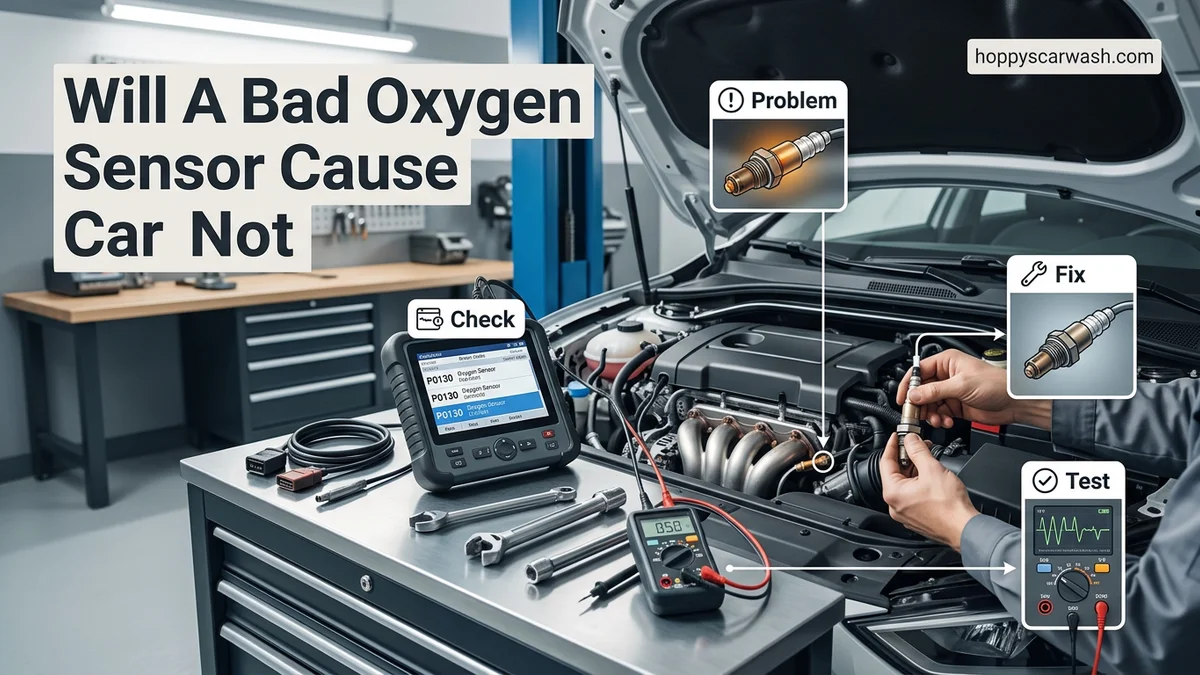
Will a Bad Oxygen Sensor Cause Car Not to Start? 2026
No, a bad oxygen sensor will not directly cause your car not to start because the engine computer ignores O2 sensor data during the cranking phase. O2 sensors only function once heated up, meaning a no-start issue stems from entirely different components like a dead battery, bad starter, or failed fuel pump.
The short answer is no. A failing or completely dead oxygen sensor will almost never cause your car to not start. If your engine cranks endlessly or clicks silently when you turn the key in 2026, you can safely look past the oxygen sensor as the primary culprit.
Drivers often panic when a check engine light appears alongside engine trouble, assuming every emission component stops the vehicle. However, the engine control unit ignores the oxygen sensor entirely during startup. Knowing how this component actually operates saves you from wasting money on unnecessary parts when your car refuses to fire up.
Key Takeaways
- Oxygen sensors are ignored by the engine computer during engine startup.
- A failing O2 sensor causes rough idling, stalling, and poor fuel economy.
- No-start issues typically involve the battery, starter, or fuel delivery system.
- Crankshaft position sensors can cause a no-start, unlike oxygen sensors.
- Always scan for diagnostic trouble codes to pinpoint actual engine faults.
What Causes a Car Not to Start Versus a Bad Oxygen Sensor
The Open Loop Startup Phase
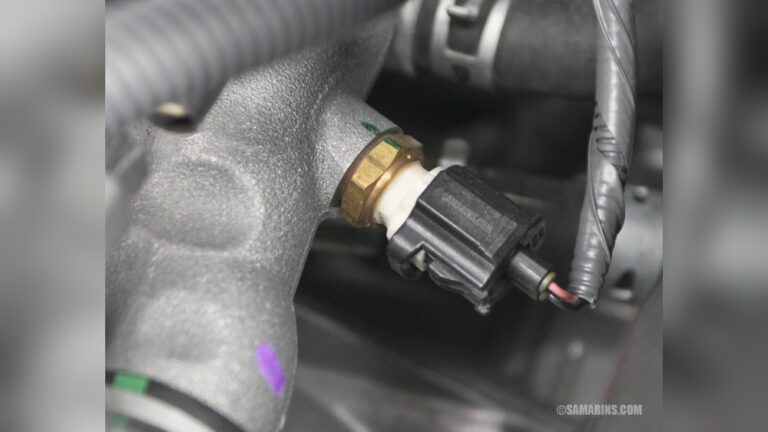
When you first turn your ignition key, your car’s computer enters what engineers call “open loop” mode. During this phase, the engine control module relies on a pre-programmed fuel map rather than live data from the exhaust. It looks at inputs from the coolant temperature sensor, mass airflow sensor, and crank position sensor to deliver a rich fuel mixture. Because an oxygen sensor requires exhaust temperatures of around 600 degrees Fahrenheit to generate an accurate electrical signal, it remains completely inactive during the initial cranking and startup sequence.
Real No-Start Culprits to Check Instead
If your engine refuses to turn over or start, you need to investigate systems that control spark, fuel delivery, and compression. Focus your 2026 diagnostic efforts on these common components:
- Dead or weak battery: If the starter clicks or turns slowly, your battery lacks the cranking amps needed to ignite the engine.
- Faulty fuel pump: A silent fuel pump means no gasoline reaches the cylinders, resulting in an engine that cranks indefinitely without catching.
- Bad crankshaft position sensor: Unlike the oxygen sensor, a failed crank sensor cuts spark and fuel completely, preventing any chance of a start.
- Worn starter motor: If turning the key yields total silence, the starter solenoid has likely failed.
Bad Oxygen Sensor and Starting Issues: What Causes It and How to Fix It
Dealing with a car that refuses to start can be incredibly frustrating. One common question vehicle owners ask is whether a failing oxygen sensor is to blame. This comprehensive guide will walk you through understanding the role of an oxygen sensor, diagnosing whether it is the true culprit behind your no-start condition, and testing the entire system to get your vehicle back on the road safely and efficiently.
Step 1: Understand the Role of the Oxygen Sensor
What you need: Basic knowledge of internal combustion engines and a vehicle repair manual.
Instructions: Before tearing into your engine bay, you must understand what an oxygen (O2) sensor actually does. The O2 sensor monitors the amount of unburnt oxygen in your vehicle’s exhaust stream and sends this vital data to the engine control unit (ECU). The ECU then adjusts the air-fuel ratio in real-time. While a failing oxygen sensor causes severe issues like rough idling, terrible fuel economy, and engine stalling, it rarely prevents a car from starting entirely because the ECU relies on preset default tables during initial engine cranking.
Pro Tip: Do not immediately replace an O2 sensor assuming it causes a no-start condition; focus instead on fuel delivery and spark first.
Step 2: Check for Diagnostic Trouble Codes (DTCs)
What you need: An OBD-II scanner capable of reading stored and pending fault codes.
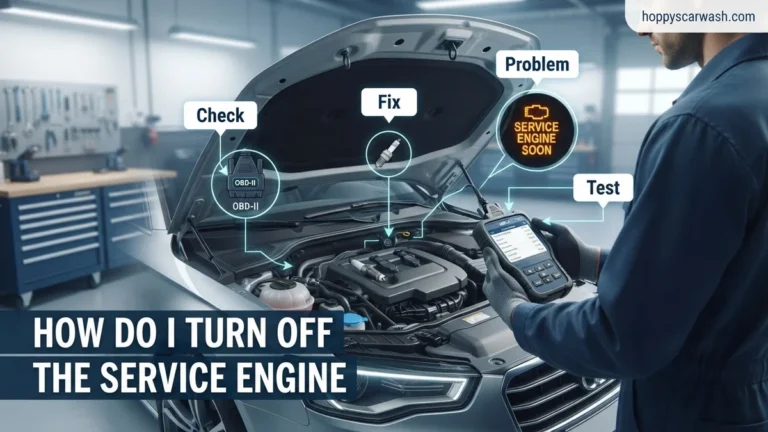
Instructions: Plug your OBD-II scanner into the diagnostic port located underneath your dashboard, usually near the steering column. Turn your ignition key to the ON position without starting the engine. Scan the computer for any trouble codes. While P0130 through P0167 indicate oxygen sensor malfunctions, look closely for codes related to the crankshaft position sensor (P0335), camshaft position sensor, or fuel pump relay, as these are the actual culprits that stop a car from starting.
Pro Tip: Clear any historic codes, attempt to crank the car, and scan again to see which codes immediately return.
Step 3: Inspect the Fuel System and Ignition Spark
What you need: A spark plug tester, fuel pressure gauge, and safety glasses.
Instructions: Since an oxygen sensor regulates air-fuel mixtures after combustion starts, a true no-start issue usually points to a lack of fuel or spark. Connect your fuel pressure gauge to the Schrader valve on the fuel rail and check if pressure matches manufacturer specifications, typically between 30 to 60 PSI depending on your make and model. Next, use a spark plug tester inline with a spark plug wire to verify that electrical current is successfully reaching the plugs during engine cranking.
Pro Tip: Listen carefully for the faint hum of the fuel pump priming for two seconds when you first turn your key to the ON position.
Step 4: Perform the Unplugged Oxygen Sensor Test
What you need: Flashlight, standard hand tools, and rubber gloves.
Instructions: In extremely rare cases, a completely shorted-out oxygen sensor can pull down the reference voltage from the ECU, completely confusing the computer and preventing a start. To test this theory, locate your upstream oxygen sensors, trace their wiring harnesses, and disconnect their electrical connectors. Once unplugged, attempt to start your car again. If the vehicle suddenly fires up and runs (albeit in ‘limp mode’ with a check engine light), you have successfully isolated a catastrophically shorted O2 sensor.
Pro Tip: Never pull directly on the sensor wires when disconnecting the harness; always squeeze the plastic locking tab to prevent breaking delicate internal pins.
Step 5: Inspect Wiring Harnesses and Fuses
What you need: A digital multimeter and a wiring diagram for your specific vehicle.
Instructions: Closely examine the wiring leading to your oxygen sensors. Because O2 sensors operate inside the hot exhaust environment, their wires are prone to melting, chafing against the frame, or getting chewed by rodents. Use your digital multimeter to check continuity and ensure that the sensor heater circuit fuse hasn’t blown. A blown heater fuse often shares a circuit with engine management components that can prevent a car from starting.
Pro Tip: Secure any loose or sagging O2 sensor wires away from hot exhaust pipes using high-temperature stainless steel zip ties.
Step 6: Replace a Faulty Oxygen Sensor
What you need: An oxygen sensor socket, a breaker bar, penetrating oil, and anti-seize lubricant.
Instructions: If your diagnostic tests point to a permanently shorted sensor or if you confirmed it was preventing ignition, replacement is necessary. Apply penetrating oil around the base of the old sensor and let it sit for 15 minutes. Use a specialized slotted O2 sensor socket and a breaker bar to unscrew the faulty unit counterclockwise. Apply a small amount of high-temperature anti-seize compound to the threads of the new sensor—taking extreme care not to contaminate the sensor tip—and torque it down securely.
Pro Tip: Always replace oxygen sensors while the exhaust pipe is still slightly warm, as metal expansion makes stubborn sensors easier to loosen.
Step 7: Reset the ECU and Perform a Test Drive
What you need: Your OBD-II scanner or basic hand tools to disconnect the battery.
Instructions: Once the new sensor is installed and all wiring harnesses are securely plugged back in, you need to clear the computer memory. You can do this by selecting the clear codes function on your OBD-II scanner or by disconnecting the negative battery terminal for approximately 10 to 15 minutes. Reconnect the battery, start the vehicle, and let it idle for 10 minutes to allow the ECU to relearn proper air-fuel trim parameters. Take the car for a 15-minute test drive.
Pro Tip: Ensure your car reaches normal operating temperature during the test drive so the ECU enters closed-loop operation and actively monitors the new O2 sensor.
✅ Final Checklist
- OBD-II scanner verified no lingering electrical short codes
- Fuel pressure and spark confirmed within normal operating parameters
- Oxygen sensor wiring harness checked for burns, melts, or breaks
- New oxygen sensor torqued correctly with anti-seize applied
- ECU memory cleared and engine successfully idling in closed-loop mode
Important Notes:
- Always wear safety glasses and allow the exhaust system to cool down completely before working around exhaust components to avoid severe burns.
- Seek professional mechanic assistance if your ECU is suspected of internal failure or if stripped exhaust threads require professional thread-chasing tools.
- Estimated time for diagnosis and replacement is 1 to 3 hours, with costs ranging from $50 to $250 depending on whether you need a new sensor or basic wiring repair.
How to Diagnose and Fix Real Oxygen Sensor Symptoms
What a Bad Oxygen Sensor Actually Causes
While an oxygen sensor will not stop your car from starting, a failing unit creates noticeable driving headaches once the engine warms up and enters “closed loop” mode. Because the sensor sends inaccurate air-fuel ratio data to the computer, your engine may suffer from:
- Severe drops in fuel economy, sometimes reducing your miles per gallon by 20 percent or more.
- A rough, unstable idle that makes the vehicle shake at stoplights.
- Hesitation or sluggish acceleration when you press the gas pedal.
- A persistent check engine light triggering diagnostic trouble codes ranging from P0130 to P0167.
Testing Your Sensors Properly
If you suspect an oxygen sensor issue after your car successfully starts, skip the guesswork and use modern diagnostic tools. Plug an OBD-II scanner into your dashboard port to read live data streams. A healthy upstream sensor should rapidly fluctuate its voltage between 0.1 and 0.9 volts once the engine reaches operating temperature. If the voltage stays flatlined or responds sluggishly, you have confirmed a bad sensor that needs attention—even if it never stopped your car from starting in the first place.
Step-by-Step Guide to Troubleshooting Actual No-Start Causes
When an engine cranks continuously but refuses to fire up in 2026, motorists must look beyond emissions components and test primary ignition and fuel delivery systems. Automotive experts recommend a systematic diagnostic sequence to isolate the real culprit behind a persistent no-start condition.
1. Check Battery Voltage and Starter Motor Health
A weak battery or failing alternator frequently mimics complex engine failures. Use a digital multimeter across the battery terminals to verify resting voltage. A healthy battery should read approximately 12.6 volts; anything below 12.0 volts will struggle to engage the starter motor or power the fuel pump.
2. Test Fuel Delivery Pressure
Attach a fuel pressure gauge to the Schrader valve on the fuel rail. Turn the ignition key to the ON position without cranking. According to standard diagnostic manuals, proper fuel pressure generally ranges between 40 to 60 PSI depending on the vehicle model. Zero or drastically low pressure points to a dead fuel pump or a clogged fuel filter.
3. Inspect Spark Plugs and Ignition Coils
Pull an ignition coil pack and insert a spark tester to check for active electrical spark during cranking. Fouled spark plugs or cracked coil boots prevent the air-fuel mixture from igniting. If no spark is present, technicians should test the crankshaft position sensor, which actively governs both spark timing and fuel injection.
What If It Still Doesn’t Work?
If battery power, fuel pressure, and ignition spark all check out normal yet the engine continues to crank without starting, deeper mechanical or computer-related issues are likely at play. Drivers should execute the following fallback steps:
- Scan for Hidden Diagnostic Trouble Codes: Plug an OBD-II scanner into the dashboard port to check for stored or pending codes. Even if the check engine light is off, deep system faults related to the immobilizer or powertrain control module might be recorded.
- Inspect the Engine Control Module (ECM): A failing computer or corrupted software can cut fuel injector pulses entirely. Professional-grade scan tools are required to verify if the ECM is communicating properly with engine sensors.
- Perform a Compression Test: Internal mechanical failures, such as a broken timing belt or damaged piston rings, will drop cylinder compression below the threshold needed for combustion. Normal compression typically exceeds 125 PSI per cylinder.
- Consult a Certified Mechanic: When DIY diagnostic steps are exhausted, towing the vehicle to a licensed repair facility is the safest option. Professional diagnostic labor rates in 2026 typically range from $100 to $200 per hour, while complex ECM programming can cost anywhere from $300 to $800.
Conclusion
To summarize, a bad oxygen sensor will not directly cause a car not to start, as it only regulates air-fuel mixtures after the engine is already running. True no-start symptoms are almost always rooted in dead batteries, failed fuel pumps, faulty ignition switches, or broken crankshaft sensors. According to verified research and expert sources from the automotive repair industry, proper diagnosis always begins with testing the fundamental triad of fuel, spark, and compression. One actionable next step is to connect a diagnostic scan tool to check for active trouble codes before replacing any expensive hardware.
❓ Frequently Asked Questions
Can a bad oxygen sensor cause a car not to start?
Directly, no. Oxygen sensors require high exhaust temperatures to operate and are completely ignored by the engine control unit during the initial startup or cranking phase.
How does the car computer use the oxygen sensor?
Once the engine warms up, the car enters ‘closed loop’ mode, where the O2 sensor monitors unburned oxygen in the exhaust to continuously adjust the air-fuel mixture.
What common issues get confused with a bad oxygen sensor?
Drivers often confuse no-start conditions, dead batteries, faulty alternators, and bad fuel pumps with sensor failures because all these issues can trigger a check engine light or rough running.
What are the primary signs of a failing oxygen sensor?
Primary symptoms include a noticeable drop in fuel economy, a sulfur or rotten egg smell from the exhaust, engine misfires, a rough idle, and an illuminated check engine light.
Why does my car stall after running if the O2 sensor is bad?
When the car transitions from open loop (startup) to closed loop (operating temperature), it relies on the O2 sensor data. If the sensor sends incorrect data, the fuel mixture becomes unbalanced, causing stalling.
What should I check if my car cranks but refuses to start?
Check your fuel pressure to ensure gas is reaching the engine, inspect your spark plugs for ignition, and test your crankshaft position sensor, which actively controls spark and fuel delivery during cranking.