What Happens If You Don’t Get a Wheel Alignment 2026 Guide
Skipping routine wheel alignments leads to rapid and uneven tire wear, forcing you to replace expensive tires much sooner than necessary. Furthermore, driving with misaligned wheels compromises your vehicle’s handling, safety, and fuel efficiency while straining critical suspension components.
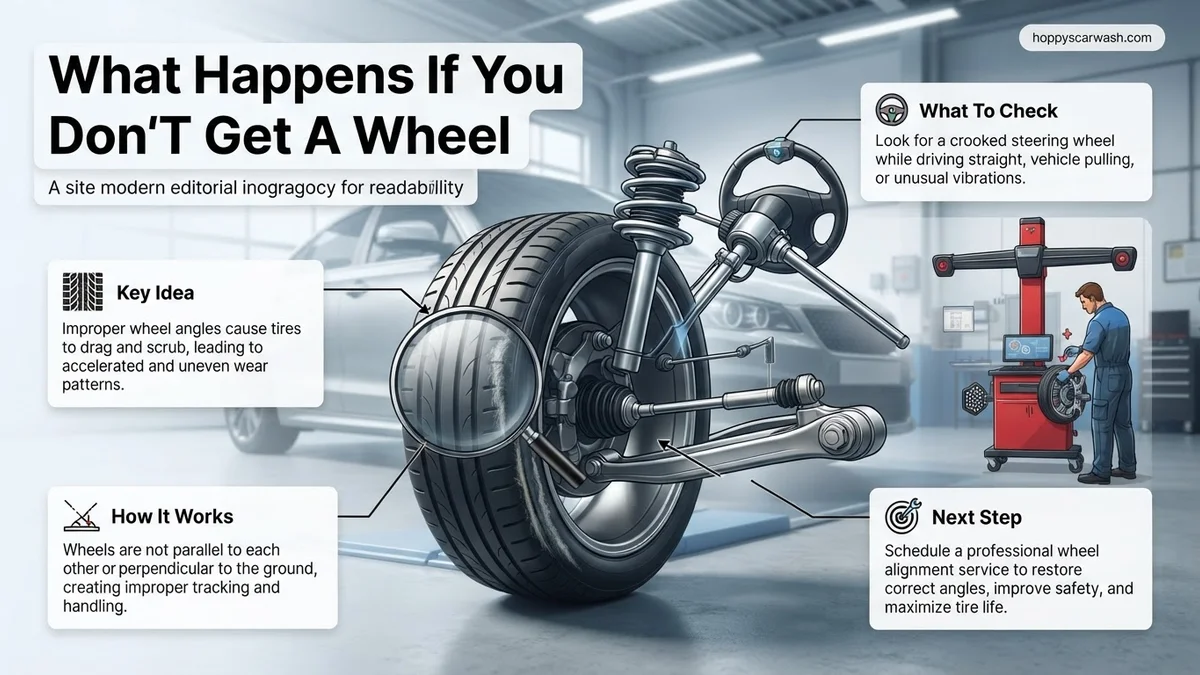
Skipping a regular wheel alignment forces your car’s suspension and tires out of manufacturer specifications, triggering rapid tread destruction, poor fuel economy, and dangerous handling issues. When your wheels point in slightly different directions instead of running parallel, they drag against the pavement rather than rolling smoothly, instantly accelerating wear.
By 2026, modern driver-assist systems and increasingly expensive tire compounds mean that ignoring a simple alignment check creates a massive financial penalty. Understanding the physical consequences of driving out of alignment will save you hundreds of dollars in ruined tires and suspension repairs.
Key Takeaways
- Misaligned wheels cause rapid tread wear and force premature tire replacements.
- Your vehicle may pull to one side, reducing steering control and safety.
- Poor alignment increases rolling resistance, lowering your overall fuel economy.
- Constant vibrations through the steering wheel lead to driver fatigue.
- Ignored alignment issues eventually damage expensive suspension and steering parts.
What Causes Wheel Misalignment and Bad Angles
Your vehicle’s suspension angles—camber, caster, and toe—are precisely calibrated at the factory. Over time, normal driving forces knock these angles out of place. When you skip routine alignments, your tires absorb the brunt of this geometric failure, leading to structural damage and uneven contact patches.
Everyday Road Hazards and Impact Damage
Hitting a deep pothole, slamming into a curb, or driving over rough construction zones on 2026 commuter roads can instantly shift your suspension components. Even minor impacts compromise tie rods, control arms, and bushings. Once these metal components bend or shift by even a fraction of a millimeter, your wheels lose their intended alignment.
Suspension Wear and Sagging Springs
Normal mechanical aging also causes misalignment. As your vehicle accumulates mileage, suspension parts naturally wear down, stretch, or sag. Key contributors to gradual angle changes include:
- Worn-out shock absorbers and struts that fail to maintain ride height
- Degraded rubber bushings that allow excessive play in control arms
- Weakened coil springs that cause the chassis to sag on one side
- Loose steering rack mountings that disrupt the tracking angle
How to Diagnose Misalignment Symptoms While Driving
Your car constantly communicates its alignment health through physical feedback. Ignoring these warning signs turns a minor adjustment into a costly tire replacement emergency. Learning to spot the early indicators keeps you safe on the highway and protects your wallet.
Steering Wheel Vibration and Pulling
If your car drifts to the left or right when you briefly let go of the steering wheel on a straight road, your toe or camber angles are compromised. You might also notice the steering wheel feels off-center even when driving straight. Other noticeable handling traits include:
- A steering wheel that vibrates or shakes at highway speeds
- A spongy or loose steering response when initiating turns
- The vehicle fighting your input or wandering across lanes
Uneven Tire Wear Patterns
The most expensive consequence of misalignment is hidden in plain sight on your tire treads. When angles are out of spec, the tire’s contact patch distorts. This creates distinct wear patterns that ruin a brand-new set of tires in less than 10,000 miles. Look out for feathering, where tread ribs are smooth on one side and sharp on the other, or excessive inner-shoulder baldness caused by negative camber.
Step-by-Step Guide to Getting a Professional Wheel Alignment
Securing a professional service ensures your vehicle operates within factory specifications. Modern 2026 alignment racks utilize high-definition 3D camera technology to measure angles down to a fraction of a degree.
1. Pre-Alignment Inspection
Technicians first evaluate suspension components, steering linkages, and tire pressure. Worn ball joints or tie rods prevent proper adjustments and must be replaced beforehand.
2. Mounting Laser Sensors
Reflective targets attach to each wheel. High-resolution cameras mounted on the alignment bay calibrate these targets relative to the vehicle frame and gravity.
3. Computerized Adjustment
The technician uses specialized wrenches and hydraulic jacks to adjust the camber, caster, and toe angles according to the manufacturer data loaded into the 2026 diagnostic software.
According to automotive service data from the Car Care Council, standard professional alignments take between 45 to 60 minutes and cost between $100 and $200 depending on vehicle drivetrain complexity.
What If Your Car Still Pulls After an Alignment?
Sometimes a vehicle continues to drift to one side even after a computerized adjustment. This frustrating issue typically points to mechanical factors outside standard alignment geometry. Drivers dealing with persistent pulling should consider the following fallback steps:
- Check for Tire Conicity: Unevenly worn tires can create a permanent directional pull known as tire pull. Swap the front tires left to right to see if the pull reverses direction.
- Inspect Brake Drag: A stuck caliper or collapsed brake hose applies constant friction to one wheel. Feel the wheel rims carefully after driving to check for abnormal heat buildup.
- Verify Steering Torque Steer: Front-wheel-drive and all-wheel-drive vehicles under heavy acceleration may naturally drift if drive shafts are uneven or worn.
- Consult Suspension Specialists: If standard adjustments fail, request a specialized chassis check for frame damage or sagging coil springs. Professional diagnostic diagnostics for persistent steering issues generally range from $150 to $300.
Conclusion
Neglecting a wheel alignment accelerates tire wear, diminishes fuel economy, and compromises steering safety. Investing in routine adjustments preserves your vehicle suspension and extends tire life significantly. According to verified research and expert sources from the Automotive Service Association, scheduling an alignment check annually or every 12,000 miles is the most effective way to prevent costly premature repairs. Take action today by booking an inspection at a certified service center to protect your investment on the road.
❓ Frequently Asked Questions
What are the most common signs that my car needs a wheel alignment?
Common symptoms include your vehicle pulling to the left or right, a crooked steering wheel when driving straight, rapid or uneven tire tread wear, and steering wheel vibrations.
Will bad wheel alignment damage my suspension components?
Yes, persistent misalignment forces steering and suspension parts like tie rods, ball joints, and struts to work under abnormal stress, leading to premature component failure.
Can I perform a wheel alignment myself at home?
While temporary makeshift adjustments using string or laser tools are possible, a precise alignment requires specialized laser rack equipment operated by a trained technician.
How much does a standard wheel alignment cost?
A standard front-end or four-wheel alignment typically costs between $75 and $150, making it a minor expense compared to buying an entirely new set of tires.
How long does a professional wheel alignment service take?
Most professional wheel alignment procedures take between 45 minutes to an hour to complete in a shop setting.
Is it dangerous to drive with a bad wheel alignment?
Driving with severe misalignment reduces vehicle responsiveness and braking stability, increasing the risk of losing control during emergency maneuvers on wet or slick roads.