Where Can I Sell My Car With A Bad Transmission Sell 2026
Selling a vehicle with major mechanical failure is entirely possible through specialized buyers. Online junk car buyers, local salvage yards, and select dealerships actively purchase non-running vehicles. Knowing your options ensures you maximize your cash return.
Selling a car with a bad transmission is entirely possible, and you have several lucrative options ranging from specialized online junk car buyers to private part-outs. When your transmission slips, fails to engage, or leaves you stranded with a massive repair estimate that exceeds the vehicle’s actual worth, fixing it rarely makes financial sense.
In 2026, the market for broken and non-running vehicles is more streamlined than ever, allowing you to secure fast cash without hauling the car to a traditional dealership. This guide breaks down where to sell your transmission-damaged vehicle, how to maximize your payout, and which buyers will take it off your hands as-is.
Key Takeaways
- Online junk car buyers offer fast, free towing and instant cash offers.
- Local salvage yards pay based on scrap metal and usable parts weight.
- Dealership trade-ins accept broken cars, but reduce the offer significantly.
- Always gather your car title and remove personal items before selling.
- Private party sales rarely work for vehicles with dead transmissions.
What Causes the Transmission Failure and How It Affects Value
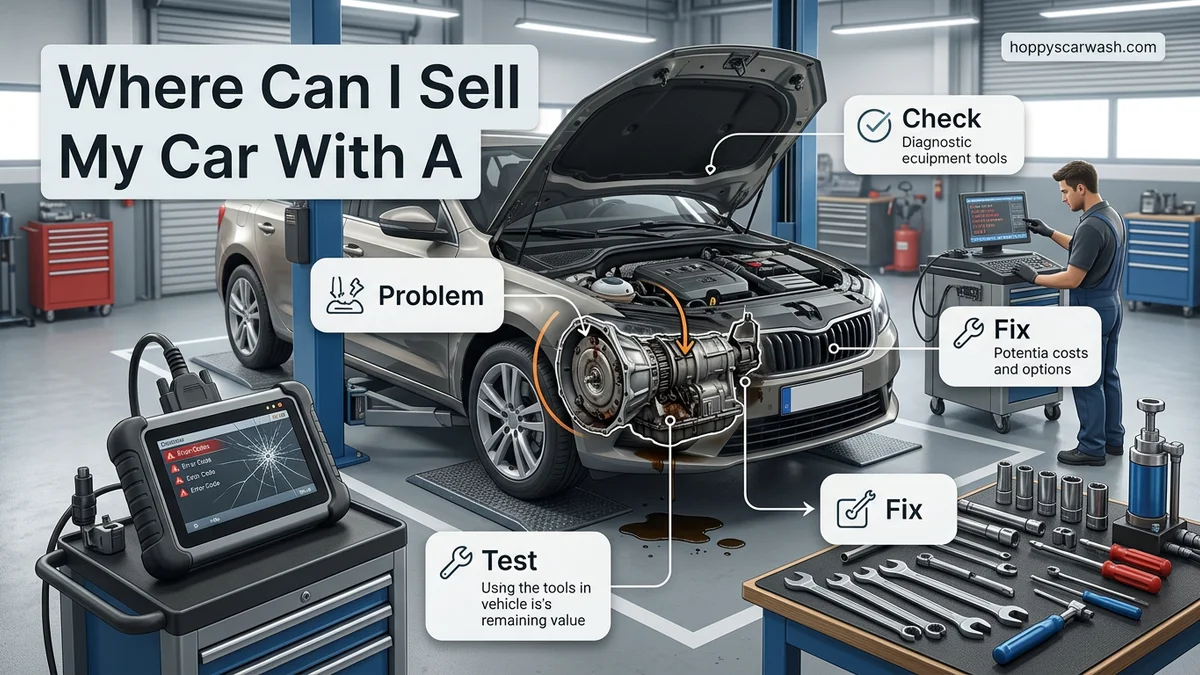
Before you list your car, you need to understand how the extent of the mechanical damage directly impacts your final offer. Buyers—whether they are salvage yards or online brokers—calculate their purchase price based on the scrap weight, salvageable parts, and the labor required to process the vehicle.
Common Types of Transmission Failures
- Complete Mechanical Failure: Internal gears stripped, severe metal shavings in the pan, or a cracked housing rendering the unit completely dead.
- Electronic and Sensor Issues: Bad shift solenoids, faulty control modules (TCM), or wiring harness failures that mimic mechanical failure but might be cheaper to fix.
- Fluid Leaks and Slippage: Worn clutches or blown seals causing low pressure, resulting in delayed engagement or complete failure to move.
How Damage Severity Changes Your Payout
If your car only has a slipping transmission or minor fluid leaks, a private buyer might still purchase it as a fixable project car. However, if the transmission has completely seized or dropped metal throughout the drivetrain, expect offers to reflect strict scrap or salvage value. In 2026, online valuation tools factor in the exact year, make, model, and zip code to determine the remaining value of functional components like the engine, catalytic converter, and body panels.
Selling a Car with a Broken Transmission Made Easy: Your Essential Action Plan
Dealing with a vehicle suffering from a failing or completely dead transmission can feel like a massive financial burden. However, a broken-down car is far from worthless. Whether the gears are slipping, the torque converter is shot, or the transmission is leaking fluid onto your driveway, you still have viable options to turn that metal weight into cash. This guide covers everything you need to know to accurately assess your vehicle’s value, choose the right sales channel, and successfully finalize the transaction without getting scammed.
Step 1: Assess and Document the Damage
What you need: OBD2 scanner, notepad, flashlight, and your vehicle’s maintenance records.
Instructions: Before listing your car, you need to know exactly what is wrong with it. Plug an OBD2 scanner into your car’s port under the dashboard to pull any diagnostic trouble codes (DTCs) related to the transmission, such as P0700 or P0730. Note whether the car is drivable in “limp mode,” completely stuck in park, or won’t engage any gears at all. Take clear photographs of the vehicle from all angles, specifically documenting any body damage, interior wear, and a close-up of the odometer. Having transparent, honest details about the mechanical failure will save you time and build trust with potential buyers.
Pro Tip: Never try to hide the transmission issue by adding heavy-duty stop-leak additives right before a buyer arrives; reputable buyers will test-drive or inspect the vehicle and honesty yields a smoother transaction.
Step 2: Calculate the Repair Cost vs. Resale Value
What you need: Quotes from local mechanics, Kelly Blue Book (KBB) or Edmunds valuation tools.
Instructions: Look up your car’s estimated value in good, working condition using online pricing guides. Next, call two or three local transmission repair shops to get an estimate for a rebuild or a replacement transmission. Subtract the estimated cost of repairs from the car’s working market value. For example, if your car is worth $6,000 in working order and a new transmission costs $3,500, a private buyer looking for a project might pay around $1,500 to $2,000 for it. Knowing these numbers helps you set a realistic baseline and ensures you do not accept a ridiculously low-ball offer from predatory junk buyers.
Pro Tip: If your car is older and has high mileage, repairing the transmission almost never makes financial sense because the repair cost will likely exceed the total value of the vehicle.
Step 3: Decide Between Parting Out, Junking, or Selling to Private Buyers
What you need: A pen and paper to list your priorities (speed vs. maximum profit).
Instructions: Evaluate your personal situation to determine the best sales avenue. If you need cash within 24 hours, selling to a junk yard or a cash-for-cars service is your fastest route, though it yields the lowest payout. If you have time, space to store the car, and mechanical knowledge, parting out the vehicle (selling the doors, engine, interior, and wheels separately online) can net you the highest return. Alternatively, listing the car on platforms like Facebook Marketplace as a “mechanic special” or a “project car” sits right in the middle, giving you a fair cash price without the tedious labor of dismantling the entire vehicle yourself.
Pro Tip: Weigh the hassle of having a non-running car sitting in your driveway or HOA-regulated neighborhood against how much extra money you might make by parting it out.
Step 4: Contact Specialized Online Junk Car Buyers
What you need: Vehicle Identification Number (VIN), mileage, and details of the damage.
Instructions: Reach out to reputable national junk car buyers and instant-offer platforms such as Peddle, Copart, or CarBrain. Visit their websites and input your car’s exact specifications, including your zip code and the condition of the transmission. Within minutes, these platforms will generate an automated, guaranteed cash offer. Compare at least three different quotes to ensure you are getting the highest market value for your specific make and model. Most of these services specialize in broken and salvage vehicles and will factor in the weight of the car as well as the value of salvageable components like the engine and catalytic converter.
Pro Tip: Always verify that the online quote includes free towing. You should never pay out-of-pocket to have a non-running vehicle hauled away from your property.
Step 5: Craft an Honest and Detailed Online Listing
What you need: Smartphone camera, computer, and access to classified sites like Craigslist or Facebook Marketplace.
Instructions: If you decide to sell the car privately to a DIY mechanic or enthusiast, write a bulletproof description. Clearly state in the headline and the first sentence: “SOLD AS-IS: TRANSMISSION NEEDS REPAIR OR REPLACEMENT.” Do not beat around the bush; describe the exact symptoms—such as “slips in third gear” or “won’t shift out of park.” Detail the good points of the car as well, such as “brand new tires, ice-cold A/C, clean interior, and a strong engine that runs perfectly.” Set a firm price, but include “OBO” (Or Best Offer) if you are willing to negotiate reasonably with serious buyers.
Pro Tip: Expect dozens of low-ball messages asking if the car runs. Save your energy by ignoring unrealistic offers and only communicating with buyers who acknowledge that the transmission is broken.
Step 6: Prepare the Paperwork and Title
What you need: The vehicle title (free of liens), a bill of sale, and a black pen.
Instructions: Gather your state’s required legal documents before the buyer arrives. Ensure the vehicle title is in your name and sign it in the designated “Seller” section only when the transaction takes place. Draft a simple Bill of Sale that states the vehicle is being sold “AS-IS” with a broken transmission, recording the exact mileage, sale price, date, and both parties’ signatures. This legally protects you from liability if the buyer tries to hold you responsible for mechanical failures after the purchase. Check your local DMV guidelines regarding whether you need to submit a release of liability form online.
Pro Tip: Keep copies or photos of the signed bill of sale and the signed-over title for at least a year to protect yourself against parking tickets or tolls incurred after the sale.
Step 7: Complete the Transaction Safely
What you need: Cash, a cashier’s check (verified at a bank during business hours), or a secure mobile payment app.
Instructions: Meet the buyer in a safe, well-lit public location or at your home if you feel comfortable. If using a cash-for-cars towing service, the driver will typically inspect the title, hand you a check or cash on the spot, and load the car onto a flatbed truck. If selling to a private party, insist on cash or meet them at their bank to witness a cashier’s check being printed. Remove your license plates from the vehicle immediately upon sale completion, as you are responsible for them in most jurisdictions until officially deregistered.
Pro Tip: Never accept personal checks, and be extremely cautious with digital wire transfers from unverified private buyers to avoid falling victim to common peer-to-peer payment scams.
✅ Final Checklist
- Diagnostic trouble codes pulled and transmission symptoms accurately documented
- Repair estimates obtained to establish a realistic baseline valuation
- Vehicle title located, verified, and free of any active financial liens
- Honest listing created or instant online quotes compared for the best payout
- Free towing arranged and license plates removed prior to vehicle pickup
Important Notes:
- Never allow a buyer to test-drive a vehicle with a severely damaged transmission on public roads where it could stall and cause a dangerous traffic accident.
- If the vehicle has extensive fluid leaks, place a drip pan underneath to protect your driveway and the environment while it is waiting to be sold.
- Estimated timeframe to sell a car with a bad transmission ranges from 1 to 7 days, and expected financial return typically ranges from $300 to $2,500 depending on the vehicle’s make, model, and overall condition.
How to Fix Your Selling Strategy for a Broken Car
You cannot sell a car with a bad transmission the same way you sell a reliable daily driver. Traditional buyers looking for dependable transportation will scroll right past your listing. You need a targeted strategy that appeals to cash buyers, salvage operations, and mechanics looking for project vehicles.
Targeting the Right Buyer Categories
- Online Damaged Car Buyers: Companies like Peddle, CarBrain, and Copart specialize in purchasing non-running vehicles, offering instant online quotes and free towing.
- Local Salvage and Junkyards: Traditional yards will buy your car for its metal and parts weight, often paying cash on the spot when they pick it up.
- Private Project Buyers: Listing on platforms like Facebook Marketplace targeting DIY mechanics who have the tools and time to swap a transmission themselves.
Adjusting Your Expectations and Pricing
Do not invest money into a transmission flush or temporary additives right before selling, as savvy buyers will immediately spot the underlying issue. Instead, be transparent about the bad transmission in your listing or quote form. Transparency speeds up the transaction and prevents buyers from backing out when they arrive to tow the car away. Price the vehicle slightly below the Kelley Blue Book (KBB) fair trade-in value minus the average cost of a rebuilt transmission to attract fast offers.
Step-by-Step Guide to Selling Your Car With a Bad Transmission
Maximizing your return when offloading a damaged vehicle requires a structured approach. Industry data from automotive marketplace analysts indicates that sellers who prepare their documentation beforehand secure up to 15% higher offers than those who do not. Follow this sequential workflow to ensure a smooth transaction in 2026.
1. Gather All Necessary Documentation
Locate the vehicle title, maintenance logs, and a valid photo ID. According to state Department of Motor Vehicles regulations, having a clean title on hand accelerates the transfer process by an average of 48 hours. If you still hold a loan on the vehicle, contact your lender to obtain a current payoff amount.
2. Obtain Multiple Digital Quotes
Leverage online car-buying platforms to secure at least three independent baseline offers. Reputable aggregators use algorithmic valuation engines that evaluate your vehicle’s make, model, and mileage against live salvage market data. Comparing these quotes ensures you do not accept an artificially deflated price from a single buyer.
3. Disclose Mechanical Faults Honestly
Provide a transparent description of the transmission failure, including whether the car is drivable or requires towing. Consumer protection laws mandate accurate disclosures; withholding known major mechanical issues can lead to legal liability or canceled transactions upon final inspection.
4. Schedule Free Towing and Finalize the Sale
Coordinate with your chosen buyer to arrange complimentary vehicle removal. Most professional junk and salvage networks include towing services at zero cost to the seller. Sign over the title, collect your payment via cash or certified check, and immediately notify your insurance provider to cancel your policy.
What If It Still Does Not Sell and Alternative Options Remain
If online buyers pass on your vehicle or local salvage yards offer sub-optimal payouts, alternative monetization strategies exist. According to automotive recycling studies, parting out a vehicle manually yields higher overall financial returns, though it demands significantly more time and labor.
- List the Vehicle as a Part-Out Special: Market the car directly to DIY mechanics on peer-to-peer platforms. Functional body panels, interior components, and catalytic converters often command strong individual prices.
- Donate to a Charitable Organization: Many non-profits accept non-running vehicles, handling free towing while providing the donor with a tax deduction based on the fair market salvage value.
- Consult a Mobile Mechanic: If you suspect the issue might be an external sensor or low fluid rather than catastrophic internal damage, pay for a professional diagnostic evaluation. Minor repairs can sometimes cost between $150 and $400, instantly restoring standard trade-in value.
- Engage Local Scrap Yards Directly: Visit physical scrap metal facilities to weigh the vehicle and sell it strictly by weight, ensuring you capture base commodity value when all other consumer channels fail.
Conclusion
Selling a car with a bad transmission does not mean walking away empty-handed, as specialized buyers, salvage networks, and part-out options provide viable pathways to clear garage space and recoup cash. According to verified research and expert automotive sources, transparency and multi-platform quoting remain the most effective tools for maximizing your final payout. The most actionable next step is to submit your VIN to three online junk car buyers today to establish your baseline market value for 2026.
❓ Frequently Asked Questions
Where can i sell my car with a bad transmission for the most money?
Online junk car buyers typically offer the most competitive bids because they factor in reusable parts value rather than just scrap metal weight. Comparing quotes from multiple platforms ensures the highest payout.
Is it worth fixing the transmission before selling the car?
In most cases, replacing a transmission costs more than the added resale value of an older vehicle. Selling it as-is usually saves you time, stress, and out-of-pocket repair costs.
How do online junk car buyers handle towing?
Reputable online services include free towing as part of their offer. They will schedule a pickup time that fits your schedule and hand you payment on the spot.
Can I sell a car with a bad transmission to a private buyer?
It is very difficult to sell a non-running car to a private party unless the buyer is a mechanic looking for a project. Most everyday buyers want reliable transportation immediately.
What documents do I need to prepare before the sale?
You will need the vehicle title signed over to the buyer, a valid photo ID, and the keys. It is also wise to cancel your auto insurance and license plates immediately after the sale.
Will a dealership buy my car if it has to be towed onto the lot?
Yes, volume dealerships will often take any vehicle on trade, but you should expect a low valuation since they will wholesale it to an auction or scrap yard.