Can a Weak Battery Affect Transmission Shifting? 2026
Yes, a weak or failing battery can directly cause transmission shifting problems in modern vehicles. Because electronic automatic transmissions rely heavily on stable voltage to power the Transmission Control Module (TCM) and shift solenoids, low electrical supply leads to erratic behavior, delayed engagement, and even limp mode.
Yes, a weak or failing battery can directly cause rough, delayed, or erratic automatic transmission shifting. Modern vehicles rely heavily on computer-controlled systems to manage gear changes, making a stable electrical supply more critical than ever in 2026.
When battery voltage drops below optimal thresholds, the onboard computers and internal transmission components fail to receive the steady power they need. This technical mismatch frequently leads drivers to misdiagnose expensive mechanical failures when the root cause is simply an aging electrical source.
Key Takeaways
- Modern computer-controlled transmissions require stable voltage to operate sensors and solenoids properly.
- Low battery voltage often triggers false transmission fault codes in the vehicle’s computer.
- Erratic shifting, hard shifts, and delayed engagement can all stem from electrical power issues.
- Always test the battery and alternator before paying for expensive mechanical transmission repairs.
- Clearing codes and resetting the TCM may be necessary after installing a new battery.
Why a Weak Battery Causes Transmission Shifting Problems
The Transmission Control Module (TCM) and Voltage Dependency
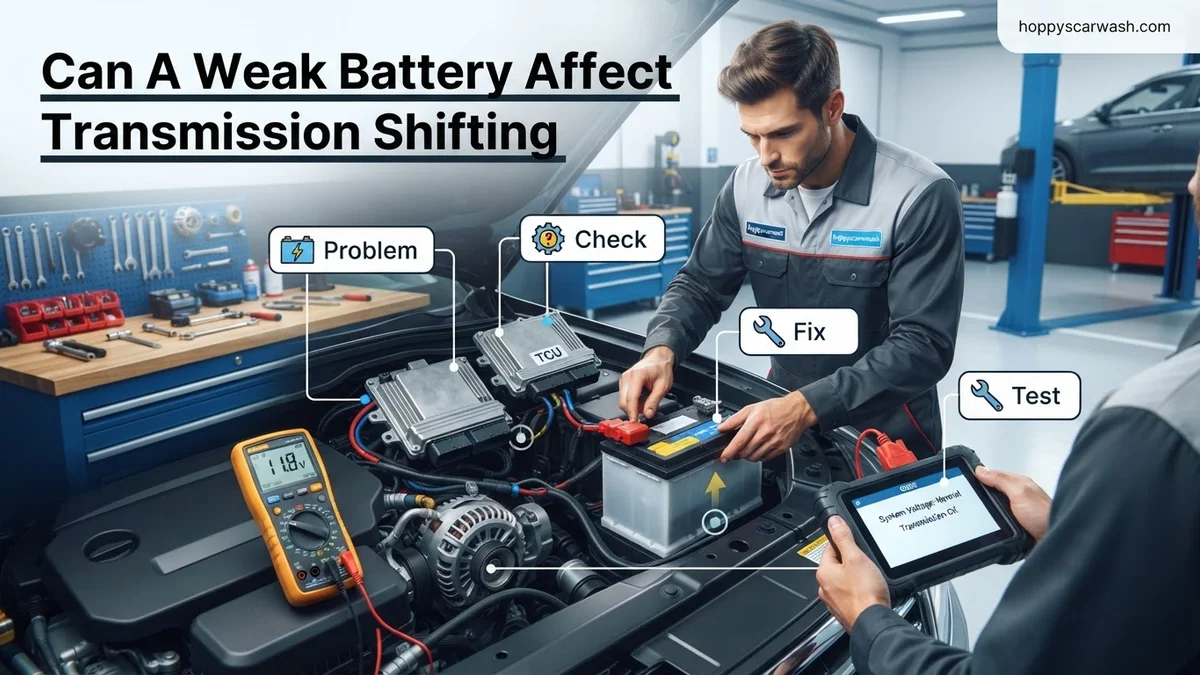
Your vehicle’s transmission is no longer a purely hydraulic and mechanical assembly. Modern automatic transmissions are managed by the Transmission Control Module (TCM), which often integrates with the Powertrain Control Module (PCM). These computers continuously monitor vehicle speed, engine load, and throttle position to calculate the exact millisecond a shift should occur.
If your battery is weak, it cannot maintain the stable 12.6 volts (or higher while running) required by sensitive microprocessors. When system voltage dips—especially during acceleration or electrical accessory use—the TCM may experience logic resets, data corruption, or sluggish processing times. This directly translates to delayed engagement or harsh gear slams as hydraulic pressures fall out of sync with computer commands.
Electromechanical Solenoid Starvation
Inside your transmission housing, a series of electronic solenoids act as gatekeepers, directing pressurized transmission fluid through the valve body to apply specific clutches and bands. These solenoids operate via electrical current supplied directly through the vehicle charging and battery network.
- Low Amperage Draw: A degrading battery struggles to deliver the precise amperage needed to actuate solenoids instantly.
- Pressure Drops: Sluggish solenoid response causes fluid pressure to build too slowly or too quickly, resulting in delayed shifts or harsh engagement.
- Limp Mode Trigger: Severe voltage drops will cause the TCM to register a fault code, intentionally locking the transmission into a single safe gear (usually second or third) to prevent internal damage.
Step-by-Step Guide to Diagnosing Electrical vs Mechanical Shifting Issues
Performing a Rapid Voltage and Charging System Test
Before you pay for a transmission rebuild or replacement, you must rule out electrical anomalies. A simple digital multimeter or an advanced 2026 automotive battery analyzer can save you thousands of dollars in misdiagnosed repairs.
- Check Resting Voltage: With the engine completely off, place your multimeter leads on the battery terminals. A healthy battery should read 12.4 to 12.6 volts. Anything below 12.2 volts indicates a weak or discharged battery.
- Monitor Voltage Drop During Cranking: Have a helper start the car while you watch the multimeter. If the voltage drops below 9.6 volts during cranking, your battery lacks the capacity to support vehicle electronics properly.
- Test the Alternator Output: With the engine running, your system voltage should jump to between 13.5 and 14.5 volts. A failing alternator starves the battery, indirectly causing transmission shifting symptoms.
Interpreting Intermittent Symptoms vs Hard Failures
Distinguishing between an electrical glitch and a mechanical failure comes down to symptom consistency. Electrical shifting issues are notoriously erratic and often disappear temporarily after a jump-start or a long highway drive that charges the battery.
- Electrical Indicators: Shifting problems that vanish when the engine is warm, issues that accompany dimming headlights, or transmission faults that clear after replacing an old battery point directly to low voltage.
- Mechanical Indicators: Slipping gears accompanied by a burning smell, metal flakes in the transmission fluid, or grinding noises in specific gears indicate internal clutch pack wear that a new battery cannot fix.
How to Test and Replace Your Battery to Fix Transmission Glitches
Modern vehicle computers require steady, precise voltage to operate electronic shifting actuators without failure. When erratic gear selection points toward an electrical root cause, verifying battery health is the most cost-effective first step before visiting a transmission shop in 2026.
Step-by-Step Battery Testing Procedure
- Perform a visual inspection: Inspect the battery terminals for heavy corrosion, loose connections, or physical case swelling. A compromised terminal can drop system voltage even if the battery cell is healthy.
- Measure resting voltage: Use a digital multimeter set to direct current. Touch the probes to the battery posts with the engine off; a fully charged automotive battery should read approximately 12.6 volts or higher.
- Conduct a load test: Utilize a carbon-pile load tester or request a free diagnostic check at a local auto parts store. The battery must maintain a minimum of 9.6 volts under a heavy load for 15 seconds at normal room temperature.
- Check the alternator output: Start the engine and measure the voltage across the terminals again. A properly functioning charging system should register between 13.7 and 14.7 volts.
Replacing and Relearning
If the battery fails diagnostic benchmarks, install a replacement unit matching your vehicle’s exact Cold Cranking Amps and Group Size specifications. According to automotive service data from AAA, replacing a standard flooded battery costs between $150 and $250, while advanced AGM batteries for start-stop vehicles range from $200 to $350. Following installation, many 2026 vehicles require a transmission adaptive relearn procedure. This process allows the TCM to recalibrate shift points based on stable, optimal electrical current.
What If It Still Doesn’t Work?
If you have installed a fresh battery and completed an electronic reset, but your vehicle still experiences delayed engagement or harsh gear drops, the issue likely resides within the mechanical or hydraulic components of the transmission itself. Try these prioritized troubleshooting steps:
- Check transmission fluid condition: Pull the dipstick or inspect the undercarriage fill plug. Low fluid levels or burnt, dark-colored fluid indicates internal wear that electricity cannot fix.
- Scan for diagnostic trouble codes: Connect an advanced OBD-II scanner capable of reading proprietary transmission codes (such as P0700 series codes). This isolates failing internal solenoids or sensor faults.
- Inspect wiring harnesses: Look closely at the main wiring harness leading to the transmission control module for melted insulation, rodent damage, or fluid contamination.
- Seek professional diagnosis: If fluid and codes check out, book an appointment with a certified transmission specialist. Professional diagnostic labor typically costs between $100 and $200, while internal repairs or rebuilds can range from $1,500 to $4,500 depending on the severity of the mechanical failure.
Conclusion
A weak battery can indeed disrupt transmission shifting by starving the Transmission Control Module of the clean, steady voltage it requires to actuate electronic solenoids accurately. Testing and replacing a failing 12-volt power source resolves erratic shifting symptoms efficiently and economically. According to verified research and expert sources from leading automotive service associations, proactive electrical maintenance prevents premature component wear across all onboard computers. Your actionable next step is to test your battery’s resting voltage today to rule out simple electrical starvation before pursuing expensive internal transmission overhauls.
❓ Frequently Asked Questions
How does voltage affect the Transmission Control Module (TCM)?
The TCM relies on a steady flow of 12-14 volts to process sensor data and actuate shift solenoids. When voltage drops due to a weak battery, the computer may misread sensor inputs or fail to supply enough current to open and close valves, causing delayed or erratic shifting.
What are the common symptoms of low voltage in an automatic transmission?
Common symptoms include delayed engagement when shifting from Park to Drive or Reverse, sudden harsh gear engagement, getting stuck in a single gear (limp mode), and erratic shifting behavior while driving.
How can I tell if my transmission issue is electrical or mechanical?
An electrical issue often appears suddenly, is accompanied by other electrical glitches like dimming lights, and may disappear after charging the battery or clearing codes. Mechanical issues usually present with slipping gears, burning fluid odors, or metal shavings in the transmission pan.
Can a weak battery put a car into limp mode?
Yes, if the TCM experiences a severe voltage drop, it may trigger a safety protocol known as limp mode. This locks the transmission into a single forward gear (usually second or third) to prevent damage while restricting vehicle speed.
Will driving with a bad battery ruin my transmission?
Driving long-term with low voltage can cause excessive wear on transmission solenoids and clutches due to improper hydraulic pressure regulation. It is best to resolve electrical issues immediately to prevent secondary mechanical damage.
Do I need to reprogram my transmission after getting a new battery?
Most modern vehicles do not require reprogramming, but they do require a brief ‘relearn’ period. Driving under normal conditions for 15 to 30 minutes allows the TCM to recalibrate its shift points based on stable power.