How Many Miles Before Change Transmission Fluid Guide 2026
Most vehicles require a transmission fluid change every 30,000 to 100,000 miles, depending on transmission type and driving conditions. Ignoring this maintenance can lead to severe mechanical failure and costly repairs. Always check your vehicle owner manual for exact manufacturer specifications.
Most modern vehicles require a transmission fluid change every 60,000 to 100,000 miles for automatic transmissions, while manual gearboxes often need fresh fluid every 30,000 to 60,000 miles. However, if your daily driving routine involves heavy city gridlock, mountain climbing, or frequent towing, you may need to cut those mileage intervals down to 30,000 to 50,000 miles.
Ignoring this maintenance schedule in 2026 can lead to catastrophic gearbox failure, slipping gears, and repair bills that easily exceed a few thousand dollars. Knowing your specific vehicle requirements saves you from unexpected breakdowns and keeps your powertrain shifting smoothly for years to come.
Key Takeaways
- Standard automatic transmissions typically need fluid changes every 30,000 to 60,000 miles.
- Manual transmissions generally require fluid replacement every 30,000 to 60,000 miles.
- Sealed transmissions may last up to 100,000 miles or more without service.
- Severe driving conditions require cutting the standard mileage interval in half.
- Dark fluid, burning smells, and slipping gears indicate an immediate need for service.
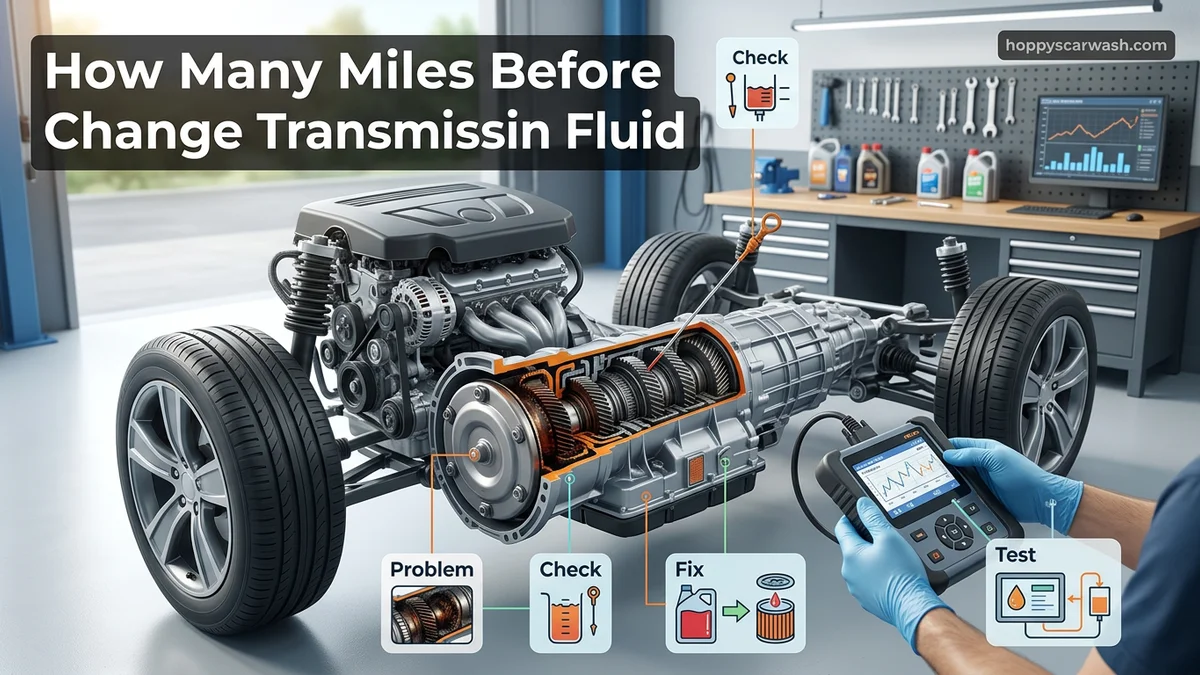
What Causes Transmission Fluid to Degrade and When to Change It
Transmission fluid is the lifeblood of your vehicle’s gearbox. It provides vital hydraulic pressure, lubricates moving metal parts, and cools down internal components. Over thousands of miles of driving, this fluid breaks down under intense heat and mechanical shear.
Normal Driving Conditions vs. Severe Driving Conditions
- Normal Driving (60,000 to 100,000 miles): Mostly highway cruising, moderate climate conditions, minimal stop-and-go traffic, and no heavy cargo hauling.
- Severe Driving (30,000 to 50,000 miles): Frequent heavy towing, driving in mountainous terrain, idling for long hours in city traffic, or operating in extreme sub-zero or desert heat.
How Heat and Friction Destroy Fluid Quality
As you drive, microscopic metal shavings from gears and clutches mix with the fluid. High operating temperatures cause the fluid additives to oxidize and burn. Once the fluid loses its viscosity and cleaning detergents, it turns dark brown or black and smells burnt. At this stage, it can no longer protect your transmission valves and gear sets from premature wear.
Master Transmission Fluid Change Intervals in 7 Simple Steps
Figuring out exactly how many miles before changing your transmission fluid can feel like solving a mystery, as manufacturer recommendations vary wildly. This comprehensive guide helps you determine the exact mileage threshold for your specific vehicle, inspect your fluid’s current condition, and establish a reliable maintenance schedule to protect your car’s transmission from premature and costly failure.
Step 1: Consult Your Vehicle Owner’s Manual
What you need: Your car’s physical owner’s manual or access to the digital database on the manufacturer’s official website.
Instructions: Open the manual and navigate to the maintenance schedule or fluid capacities section. Look specifically for automatic or manual transmission fluid replacement intervals. Traditional vehicles often recommend changes every 30,000 to 60,000 miles, while modern cars equipped with synthetic fluids might claim intervals of 100,000 miles or even a “lifetime” fill. Write down this baseline mileage figure so you can compare it with your current odometer reading.
Pro Tip: Do not blindly trust the “lifetime fluid” label. Most mechanics define a car’s “lifetime” as the duration of the factory warranty, meaning you should still change it around 100,000 miles.
Step 2: Evaluate Your Driving Habits and Conditions
What you need: An honest assessment of your daily commute, climate, and vehicle usage.
Instructions: Compare your driving style against the “severe service” criteria listed in your manual. Severe conditions include frequent stop-and-go city traffic, extreme ambient temperatures, towing trailers, driving on hilly terrain, or operating commercial delivery vehicles. If you frequently drive in these conditions, you must slash the standard mileage recommendation in half—usually changing the fluid every 30,000 to 45,000 miles instead of waiting until 60,000+ miles.
Pro Tip: Most drivers actually fall under the “severe service” category due to daily gridlock traffic and extreme weather shifts.
Step 3: Locate and Inspect the Transmission Dipstick
What you need: A clean shop rag or paper towel, and a flashlight if working in a dim garage.
Instructions: Pop your car’s hood and locate the transmission fluid dipstick (often featuring a brightly colored handle or labeled clearly, distinct from the engine oil dipstick). Pull the dipstick out, wipe it clean with a rag, reinsert it fully, and pull it out again to check the level and color. Fresh fluid is typically translucent bright red or pink. If the fluid is dark brown or black, or smells intensely burnt, you are past due for a change regardless of the mileage on your odometer.
Pro Tip: Many modern vehicles lack a dipstick entirely and require checking fluid levels from underneath via a fill plug on the transmission pan.
Step 4: Check for Common Symptoms of Degraded Fluid
What you need: Sensory awareness while driving and a notepad to record mechanical behaviors.
Instructions: Take your car for a brief test drive and pay close attention to how it shifts gears. Note whether you experience delayed engagement when shifting into Drive or Reverse, rough or jerky gear shifts, sudden slipping where the engine revs without accelerating, or strange whining noises coming from underneath the vehicle. If your car exhibits any of these symptoms and you have surpassed 50,000 miles since the last service, your transmission fluid is likely degraded and needs immediate replacement.
Pro Tip: Addressing shifting issues early with a simple fluid and filter change can prevent the need for a complete transmission rebuild later.
Step 5: Differentiate Between a Drain-and-Fill and a Flush
What you need: Basic understanding of transmission service types and vehicle service history records.
Instructions: Determine which type of service your vehicle needs based on its mileage history. A standard drain-and-fill replaces only about 40% to 50% of the fluid trapped in the pan, making it ideal for regular maintenance every 40,000 miles. A complete fluid flush uses a specialized machine to push out nearly 100% of the old fluid. However, if a high-mileage transmission (over 100,000 miles) has never had its fluid changed, a high-pressure flush can dislodge sludge and ruin the transmission; stick to a gentle drain-and-fill instead.
Pro Tip: Always consult a trusted mechanic before requesting a high-pressure fluid flush on a high-mileage, neglected vehicle.
Step 6: Gather Supplies and Schedule the Service
What you need: Vehicle-specific transmission fluid, a replacement pan gasket, a new filter, a drain pan, and hand tools.
Instructions: Once you determine you’ve reached your target mileage (typically every 50,000 miles for optimal longevity), buy the exact fluid specification required by your automaker—using the wrong fluid type can permanently damage internal clutches. Decide whether you will DIY the project or book an appointment at a certified service center. If doing it yourself, ensure you have a safe hydraulic jack, sturdy jack stands, and a proper disposal container for the old fluid.
Pro Tip: Never mix different fluid types or use generic “universal” fluids unless explicitly certified for your specific transmission model.
Step 7: Reset Your Maintenance Log and Set a Future Reminder
What you need: A digital car maintenance tracking app, a physical notebook, or a window sticker.
Instructions: After the transmission fluid is successfully changed, document the exact mileage and date in your records. Calculate your next service interval based on your findings (for instance, adding 50,000 miles to your current odometer reading). Stick a reminder sticker on the inside of your glove box or set an alert in your smartphone calendar so you never have to guess when your next transmission service is due.
Pro Tip: Keeping detailed service records significantly increases your vehicle’s resale value by proving you maintained critical drivetrain components.
✅ Final Checklist
- Verified the specific mileage interval recommended in the physical owner’s manual
- Assessed local driving habits against severe service guidelines
- Checked transmission fluid color, smell, and level via dipstick or access plug
- Observed gear-shifting smoothness and noted any mechanical slipping or delays
- Selected the correct fluid type, filter, and service method (drain-and-fill vs. flush)
Important Notes:
- Always engage your emergency brake and use rated jack stands before getting underneath any vehicle.
- Seek professional help immediately if you notice metallic shavings in your drained fluid, as this indicates internal mechanical failure.
- Estimated professional service cost ranges from $150 to $300 for a standard drain-and-fill, taking about 1 to 2 hours to complete.
How to Check Your Transmission Fluid Mileage Interval and Condition
Determining your exact maintenance schedule requires looking beyond generic online estimates. Vehicle engineering changes rapidly, and even modern 2026 models feature vastly different internal tolerances depending on whether you drive a traditional automatic, a dual-clutch transmission (DCT), or a continuously variable transmission (CVT).
Consulting Your Owner Manual and Maintenance Schedule
- Check the physical manual: Look at the scheduled maintenance guide, usually found in the glove box, and locate the alternative table for severe service intervals.
- Use manufacturer apps: Most automotive brands in 2026 provide digital companion apps that track your exact mileage and alert you when fluid services are due based on your driving habits.
- Understand CVT and DCT specifics: Continuously variable and dual-clutch systems are much more sensitive to fluid degradation and often strictly mandate fluid changes every 40,000 miles.
Inspecting the Fluid Dipstick Yourself
Pop your hood and pull the transmission dipstick (if your vehicle is equipped with one, as many modern models feature sealed units). Wipe the fluid onto a clean white paper towel. Healthy fluid is bright red or pink and translucent. If the fluid is dark brown, opaque, or contains visible metallic particles, you need a fluid change immediately, regardless of what the odometer reads.
Step-by-Step Guide to Planning Your Transmission Fluid Replacement
Planning your next maintenance interval prevents catastrophic mechanical failure. Modern vehicle manufacturers emphasize proactive scheduling, especially with advanced 2026 powertrain designs. Follow this structured approach to execute your fluid replacement correctly.
Step 1: Verify Your Manufacturer Specifications
Consult your owner manual or official manufacturer portal for exact fluid grades. Using incorrect viscosity ratings causes internal component degradation. Modern transmissions require specific synthetic formulations that standard multi-vehicle fluids cannot replicate.
Step 2: Inspect Fluid Condition and Level
Locate the transmission dipstick or check plug underneath the vehicle. Wipe a small amount of fluid onto a clean white paper towel. Healthy fluid appears bright red or amber, while degraded fluid looks dark brown or black and emits a burnt odor.
Step 3: Choose Between Drain-and-Fill or Flushing
Determine whether your vehicle needs a simple drain-and-fill procedure or a complete system flush. A standard drain replaces roughly 40 to 50 percent of the total fluid volume trapped in the torque converter. Professional fluid exchange machines extract up to 95 percent of old fluid using specialized pressure loops.
Step 4: Execute the Service and Reset Adaptation Values
Perform the service when the transmission is warm to ensure contaminants drain completely. Replace the transmission pan gasket and filter element during the process. Finally, use an advanced OBD-II diagnostic scanner to clear transmission adaptation values so the computer recalibrates shift points for the fresh fluid.
What If Your Transmission Still Slips After a Fluid Change
Fresh fluid resolves minor hydraulic pressure drops, but severe mechanical wear requires advanced intervention. If your transmission continues to slip, shudder, or hesitate after a complete fluid replacement, consider these fallback steps:
- Check for Electronic and Solenoid Faults: Scan the powertrain control module for diagnostic trouble codes. Failing shift solenoids or erratic input speed sensors mimic mechanical slippage by restricting hydraulic pressure to individual clutch packs.
- Inspect Internal Clutch Disks and Bands: If friction material has completely worn away from the internal clutches, fluid changes cannot restore grip. A physical teardown or complete transmission rebuild becomes necessary at this stage.
- Evaluate Torque Converter Integrity: Internal turbine failure inside the torque converter causes severe acceleration lag and persistent slippage. Replacing the torque converter typically requires removing the entire transmission assembly.
- Seek Professional Diagnostics: Consult a certified transmission specialist for a detailed line-pressure test. Expect professional diagnostic labor to cost between $150 and $250, while a complete transmission replacement or rebuild ranges from $3,500 to $6,500 depending on vehicle make and model.
Conclusion
Maintaining clean transmission fluid is essential for protecting complex gear sets and hydraulic control modules against premature wear. Sticking to recommended intervals prevents expensive mechanical failures down the road. According to verified research and automotive engineering data from the Society of Automotive Engineers, proactive fluid maintenance extends automatic transmission lifespans by up to 70 percent. Take action today by checking your fluid condition against manufacturer specifications and scheduling your next service appointment.
❓ Frequently Asked Questions
How many miles before change transmission fluid in older high-mileage cars?
For older vehicles that have never had a fluid change past 100,000 miles, changing it completely can sometimes cause slipping. It is often safer to perform a gentle drain and fill rather than a complete flush.
What are the warning signs that my transmission fluid needs to be changed immediately?
Key symptoms include delayed engagement when shifting into gear, strange grinding or whining noises, surging, and a distinct burning smell from beneath the car.
Is a transmission flush better than a drain and fill?
A drain and fill replaces only a portion of the old fluid, while a flush removes almost all of it. However, a drain and fill is generally considered safer for high-mileage or older transmissions.
What happens if you never change your transmission fluid?
Over time, fluid breaks down and collects metal shavings and debris, causing excessive friction, overheated components, and eventual catastrophic transmission failure.
How can I find my specific vehicle maintenance schedule?
Check the maintenance section of your physical owner manual or visit the official manufacturer website using your vehicle identification number (VIN).
Does towing heavy loads change the transmission fluid service interval?
Yes, heavy towing generates high heat which breaks down transmission fluid much faster, requiring service every 30,000 miles or less.