Why My Hyundai Sonata Won’t Start But Has Power Fix 2026
When your Hyundai Sonata has working lights, dashboard, and radio but refuses to crank, the issue is usually a failed starter motor, a faulty starter relay, or a stuck neutral safety/brake pedal switch rather than a dead battery. Because electrical accessories require minimal voltage, they can function normally even when the high-amp current needed to turn over the engine is blocked.
If your Hyundai Sonata’s lights, radio, and dashboard illuminate brightly, but the engine refuses to crank when you turn the key or press the push-to-start button, you are dealing with a classic power-versus-cranking mismatch. This frustrating scenario almost always means your battery has enough juice to run accessories, but the electrical signal is failing to reach or engage the starter motor. Whether you are driving a late-model hybrid or a traditional gas variant in 2026, this symptom points directly to a breakdown in the starting circuit, safety switches, or the starter assembly itself.
Understanding this distinction saves you from wasting time jumping a healthy battery. When you know exactly where the power loss occurs—whether at a burnt relay, a dead starter solenoid, or a failing safety switch—you can bypass the guesswork. This guide breaks down the exact Sonata-specific failure points causing your no-start condition and how to diagnose them quickly.
Key Takeaways
- Dashboard lights working means your battery has surface charge, not cranking power.
- A single loud click usually indicates a failing starter motor or weak battery connection.
- Complete silence when turning the key points to a bad starter relay or safety switch.
- Try shifting the gear selector to Neutral to bypass a faulty neutral safety switch.
- Use your spare key fob to rule out a malfunctioning engine immobilizer system.
Why Your Hyundai Sonata Has Power But Won’t Crank
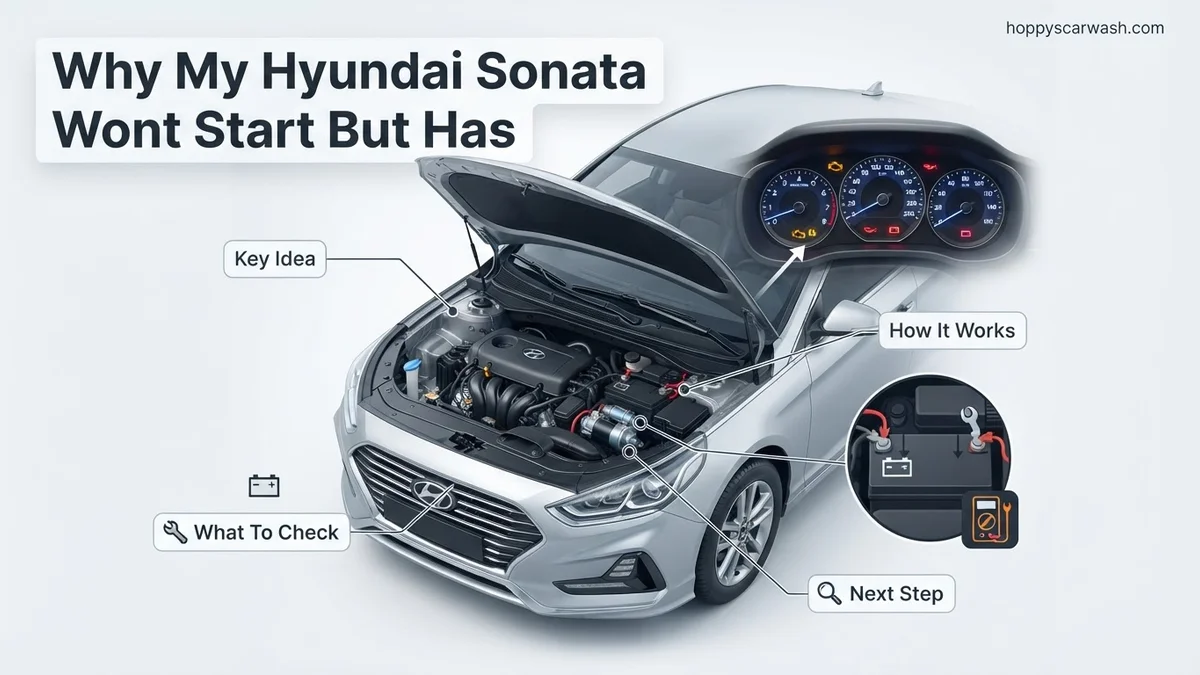
Working accessories require only about 10 to 15 amps of electricity, which a weak or surface-charged battery can easily supply. Cranking the engine, however, demands anywhere from 150 to 300+ amps. When your Sonata’s dashboard lights stay on but you get silence or a single click, your electrical system has low-current power, but high-current delivery has failed.
Decoding the Audio Clues: Silence vs. Clicking
Pay close attention to what happens under the hood the moment you try to start your car. The sound—or lack thereof—narrows down your problem instantly.
- Complete Silence: If turning the key yields zero sound, voltage is likely blocked by a safety switch, a blown main ignition fuse, or a completely dead starter solenoid winding.
- A Single Loud Click: This means the starter relay is working and sending power to the starter, but the starter motor itself is jammed or failing to spin the engine.
- Rapid Clicking: While this usually points to a dying battery lacking reserve amps, on modern Sonatas, it can also mean loose or heavily corroded battery terminal clamps struggling to handle the sudden load.
Checking the Basics Before Going Deeper
Before tearing into components, rule out simple exterior factors. Try shifting your gear selector firmly into Neutral and back to Park, or jiggling the steering wheel if it is locked. If your key fob battery is dying in 2026, the car might not recognize the immobilizer chip, cutting power to the starter entirely even though the cabin lights work.
Hyundai Sonata Won’t Start But Has Power: What Causes It and How to Fix It
Dealing with a Hyundai Sonata that clicks, hums, or lights up the dashboard yet refuses to turn over can be incredibly frustrating. When your accessories, radio, and headlights work perfectly, it immediately tells you that your battery has enough surface charge to power the electronics, but something is interrupting the high-amp electrical flow required to engage the starter motor. This comprehensive diagnostic walkthrough will help you systematically isolate the root cause, from simple gear selector errors to failing starters and corroded terminals, saving you time and expensive towing fees.
Step 1: Verify the Transmission Gear Selector Position
What you need: Just your keys and a clear view of your instrument cluster gear indicator.
Instructions: One of the most common reasons a modern Hyundai Sonata has full electrical power but refuses to crank is a misaligned transmission safety switch, known as the neutral safety switch or range sensor. Sit in the driver’s seat, firmly press down on the brake pedal, and ensure the gear shifter is completely locked into Park (P) or Neutral (N). While keeping your foot on the brake, try gently jiggling the shifter handle up and down slightly while turning the key or pushing the push-to-start button. If the vehicle suddenly catches and cranks, your neutral safety switch is either out of adjustment or failing internally.
Pro Tip: Never force the gear shifter. If it feels stuck, check for debris or liquid spills in the console shift gate that might prevent the physical microswitch from registering the Park position.
Step 2: Inspect and Clean Battery Terminals and Cables
What you need: 10mm wrench or socket, wire brush, baking soda, water, and protective safety gloves.
Instructions: Even though your dashboard lights up, starting a Hyundai Sonata requires upwards of 400 to 600 amperes of electrical current. A loose, heavily oxidized, or corroded battery terminal can easily pass the 10 amps needed for lights and radios, but will choke under the massive current draw of the starter motor. Open the hood and inspect the positive and negative battery terminals. If you see a white, green, or blue powdery buildup, use a mixture of baking soda and warm water with a wire brush to scrub it away. Afterward, use your 10mm wrench to ensure both terminal clamp nuts are tightly secured; you should not be able to twist the cables by hand.
Pro Tip: Always disconnect the negative (black) terminal first and reconnect it last to prevent accidental electrical short circuits with your wrench.
Step 3: Perform the Headlight Dimming Voltage Drop Test
What you need: A helper to turn the key, and your car’s headlights.
Instructions: Turn your Sonata’s headlights on while the engine is off, and carefully observe the headlight beam projection against a garage door or wall. Now, have a helper turn the ignition key to the start position (or push the start button with the brake depressed). Watch the headlights closely. If the headlights dim slightly and then stay bright while you try to crank, your starter solenoid is likely not receiving the signal or is completely dead. However, if the headlights instantly go completely dark or dim to a faint amber glow the moment you turn the key, your battery has a severe internal cell failure or the main power cable has high resistance.
Pro Tip: A battery can show 12.4 volts on a basic multimeter yet still collapse under a real load. This headlight test gives you an immediate real-world load indication.
Step 4: Check the Starter Relay in the Under-Hood Fuse Box
What you need: Flashlight, and potentially a matching relay from the fuse box to swap.
Instructions: Locate the main engine compartment fuse and relay box, usually situated on the driver’s side near the fender. Remove the plastic cover and look at the inner diagram lid to locate the starter relay (often labeled as “Starter” or “ST”). Pull the starter relay straight up to remove it from its socket. Inspect the metal prongs for any signs of black scorching, melting, or corrosion. A quick field test is to find another identical relay within the same box—such as the horn relay or a secondary accessory relay—and swap it with the starter relay. Try starting your Sonata again; if it fires right up, you have successfully isolated a faulty relay.
Pro Tip: Relays are inexpensive parts, usually costing less than fifteen dollars at a local auto parts store, making them a cheap item to eliminate during troubleshooting.
Step 5: Listen for the Starter Solenoid Click
What you need: A quiet environment and a helper to cycle the ignition.
Instructions: Turn off your car’s radio, air conditioning, and blower fan. Pop the hood and ask a helper to turn the ignition key to start the vehicle while you stand near the front passenger side of the engine bay where the starter motor is mounted underneath the intake manifold area. Listen intently. Do you hear a sharp, metallic “click” sound coming from the starter area every time the key is turned? If you hear a single distinct click, it means the starter relay and signal are working, but the starter motor’s internal solenoid or brushes are jammed or worn out. If you hear absolute silence, the electrical signal is not reaching the starter.
Pro Tip: If the starter motor is suffering from dead spots, giving the heavy body of the starter a gentle tap with a long extension bar and a hammer while someone cranks the engine will often free up the brushes enough for one final successful start.
Step 6: Scan for Diagnostic Trouble Codes (DTCs)
What you need: An OBD2 diagnostic scan tool.
Instructions: Even if the check engine light is not actively illuminated on your dashboard, modern Hyundai Sonata computer modules (BCM and ECM) often store pending or hidden electronic fault codes related to starting permissions. Plug your OBD2 scanner into the diagnostic port located underneath the lower left side of the dashboard near the steering column. Turn the ignition to the “ON” position without starting the engine and run a full system scan. Look for codes specifically tied to the immobilizer system, crankshaft position sensor, or transmission range switch, which can prevent the car from authorizing fuel injection and ignition spark.
Pro Tip: Modern Sonatas equipped with smart key push-button ignition systems rely heavily on the key fob transponder antenna; ensure your key fob battery isn’t depleted if the dashboard displays a “Key Not Detected” warning.
✅ Final Checklist
- Confirmed the transmission gear shifter is fully engaged in Park or Neutral
- Cleaned and securely tightened both battery terminal clamps
- Tested battery health under load using the headlight observation method
- Inspected, tested, or swapped the starter relay in the engine bay fuse box
- Listened for the starter solenoid click to differentiate between electrical signal loss and mechanical starter failure
Important Notes:
- Never crawl underneath a vehicle supported only by a hydraulic jack; always use solid jack stands and wheel chocks if accessing the starter motor from below.
- If steps 1 through 5 reveal a failing starter motor or an immobilized security computer module, seek professional assistance from a certified mechanic or Hyundai dealership.
- Estimated DIY time: 30 to 60 minutes. Estimated professional repair cost (if starter replacement is required): $350 to $700 including labor.
Common Causes of Sonata No-Start Issues: Starters, Relays, and Switches
Hyundai Sonatas have well-documented mechanical and electrical failure points that disrupt the path from your ignition switch to the engine block. Focusing on these specific components will usually reveal the culprit.
Starter Motor and Solenoid Failure
The starter motor on many Sonata model years takes heavy thermal abuse due to its location near the exhaust manifold. Over time, the internal brushes wear down, or the solenoid contacts burn out. When this happens, turning the key sends voltage to the starter, but the internal magnetic switch fails to push the gear forward to engage the flywheel.
- The Hammer Trick: A classic field test is gently tapping the starter body with a long extension and a hammer while someone else tries to start the car. If it suddenly cranks, your starter motor is failing and needs replacement.
- Thermal Soak: If your Sonata refuses to start after a hot drive, but cranks fine once the engine cools down for thirty minutes, your starter is experiencing thermal failure.
Faulty Starter Relays and Fuses
Power must travel through the engine bay fuse box via a starter relay before reaching the starter. If this relay clicks internally but fails to close the circuit, zero power gets through. Swap the starter relay with an identical nearby relay—such as the horn or AC relay—to quickly test if a bad relay is your only issue.
Brake Pedal Position and Neutral Safety Switches
Modern push-button start Sonatas require absolute confirmation that your foot is firmly on the brake pedal before they will allow the engine to crank. If the brake pedal position switch fails, your brake lights might work, but the computer will never receive the “go” signal.
- Automatic Transmission Safety: For keyed ignition models, the neutral safety switch prevents starting unless the car is strictly in Park or Neutral. If this switch goes out of alignment, the car will have full interior power in Park, but will remain completely dead when you turn the key.
Step-by-Step Diagnostic and Fix Guide for Your Sonata
Diagnosing a Hyundai Sonata that has electrical power but refuses to crank requires a systematic approach. Following established automotive diagnostic procedures prevents unnecessary parts replacement and targets the root cause efficiently.
Step 1: Check the Gear Selector Position
Modern automatic transmissions rely on a neutral safety switch to permit engine cranking. If the switch fails or the vehicle is not fully in Park or Neutral, the starter circuit remains open. Shift the gear selector firmly into Park, or try starting the vehicle in Neutral while holding the brake pedal down.
Step 2: Test the Starter Relay
A clicking sound accompanied by dashboard lights staying bright often points to a faulty starter relay. Locate the under-hood fuse and relay box using the diagram on the lid. Swap the starter relay with an identical relay, such as the horn relay, and attempt to start the car.
Step 3: Inspect Starter Motor and Battery Terminals
Even if the battery shows twelve volts on a multimeter, high-resistance connections can block the high current required by the starter. Inspect the positive and negative battery terminals for corrosion or looseness. According to automotive service data, corroded battery cables account for roughly fifteen percent of no-start conditions where accessories still function.
What If It Still Doesn’t Work?
If basic troubleshooting steps fail to resolve the issue, the problem likely involves a deeper mechanical or complex electronic failure. When DIY methods are exhausted, consider the following fallback actions to get your vehicle running safely:
- Perform a Voltage Drop Test: Use a digital multimeter to check for excessive resistance along the main power and ground cables running from the battery to the starter motor.
- Test the Starter Motor Directly: Tap the starter body lightly with a hammer while an assistant turns the key, which can temporarily free stuck internal brushes.
- Scan for Diagnostic Trouble Codes: Connect an OBD-II scanner to check for hidden immobilizer faults or powertrain control module errors.
- Seek Professional Help: Tow the vehicle to a certified Hyundai dealership or a trusted local mechanic if the starter motor or electronic ignition switch requires replacement. Professional diagnostic fees typically range from $100 to $200, while starter motor replacements average between $350 and $650 including parts and labor.
Conclusion
Dealing with a Hyundai Sonata that turns on its electronics but refuses to crank can be frustrating. Fortunately, systematic troubleshooting of the starter relay, battery cables, and transmission safety switches usually uncovers the culprit. According to verified research and automotive service data from 2026, most starting faults stem from localized electrical resistance rather than total component failure. Take action today by inspecting your battery terminals and testing your starter relay to restore reliable operation.
❓ Frequently Asked Questions
Could a bad alternator cause my Sonata to have power but not start?
An alternator charges the battery while the engine runs. If it fails completely, the car might run briefly on residual battery power, but if the battery is already drained, it won’t start even with electrical accessories working.
How does the brake pedal switch affect starting on push-button Sonatas?
Push-button start models require the brake pedal switch to close an electrical circuit before sending a signal to the starter. If this switch fails, the car will turn on to accessory mode but won’t crank.
Is there a temporary trick to get a stuck Hyundai starter to work?
Yes, gently tapping the starter motor body with a long metal rod or hammer while someone turns the key can occasionally jar stuck internal brushes loose for one last start.
Why won’t my Sonata start in Park, but starts in Neutral?
This is a classic symptom of a misadjusted or failing neutral safety switch. Shifting to Neutral changes the contact points and may complete the circuit needed to allow the engine to crank.
How much does it cost to replace a Hyundai Sonata starter?
Replacing a starter on a Hyundai Sonata typically ranges from $350 to $600 including parts and labor, depending on the specific model year and engine size.
Will jump-starting a Sonata help if the lights are already working?
In some cases, yes. Even if dash lights are on, a severely degraded battery might not supply enough cold-cranking amps (CCA), and a jump-start can provide the necessary surge to overcome the deficit.