Do Manual Transmissions Need Transmission Fluid? Best 2026
Yes, manual transmissions absolutely require transmission fluid to lubricate internal gears, cool moving parts, and protect synchronizers from excessive wear. Without proper fluid levels, a manual gearbox will quickly overheat, grind, and suffer catastrophic mechanical failure.
Yes, manual transmissions absolutely need transmission fluid. While stick shifts lack the complex hydraulic control systems and torque converters found in modern automatics, their internal metal gears, bearings, and brass synchronizers spin at high speeds and generate intense friction. Without gear oil to coat these components, your transmission would rapidly overheat, wear down the metal teeth, and seize up entirely.
As we navigate automotive maintenance in 2026, many drivers mistakenly assume that manual gearboxes are sealed for life or require less attention than automatic units. In reality, ignoring your manual transmission fluid leads to missed shifts, a grinding noise when changing gears, and eventually, a costly gearbox replacement. Understanding how this fluid functions and how to maintain it keeps your vehicle shifting smoothly for years to come.
Key Takeaways
- Manual transmissions strictly require specialized gear oil or manual transmission fluid to function properly.
- The primary job of the fluid is to lubricate meshing gears and protect delicate brass synchronizers.
- Change manual transmission fluid typically every 30,000 to 60,000 miles depending on driving habits.
- Warning signs of low fluid include grinding noises, hard shifting, and a whining sound.
- Never use automatic transmission fluid (ATF) unless explicitly specified by the vehicle manufacturer.
What Causes Manual Transmission Fluid Degradation and Low Levels
Shear Stress and Thermal Breakdown
Unlike automatic transmission fluid (ATF), which handles hydraulic pressure, manual transmission fluid primarily functions as heavy-duty gear oil. Every time you shift gears, the gear teeth and synchronizers subject the fluid to extreme shear stress. Over time, these mechanical forces chop up the long-chain polymers inside the oil.
High operating temperatures also degrade the fluid additives. As you drive through heavy traffic or push your car hard in 2026, the thermal breakdown reduces the oil’s ability to cushion high-pressure contact points. Once the fluid loses its viscosity, you will likely notice that shifting into first or reverse becomes stiff and stubborn.
Contamination and Gasket Leaks
Manual gearboxes are not entirely immune to fluid loss. Over thousands of miles, input shaft seals, output shaft seals, and drain plugs can develop minor weeping or leaks. When the fluid level drops too low, upper bearings and gears starve for lubrication.
Furthermore, tiny metallic particles naturally shear off the gears and synchronizers during normal operation. While magnetic drain plugs capture much of this debris, suspended micro-particles still circulate. This abrasive sludge accelerates wear on your synchronizer rings, causing the dreaded gear grind when you shift quickly.
How to Check and Change Manual Transmission Fluid Step-by-Step
Checking Your Fluid Level
Checking a manual transmission fluid level is entirely different from checking engine oil via a dipstick. Most manual gearboxes lack an under-hood dipstick, requiring you to safely jack up the vehicle to access the transmission housing directly.
- Park your car on a completely level surface and engage the parking brake.
- Locate the fill plug on the side of the transmission housing (never open the drain plug first).
- Remove the fill plug and insert your finger or a small bent wire to check the fluid level.
- The fluid should sit right at the bottom edge of the fill plug hole; if you cannot feel oil, it is critically low.
Drain and Refill Maintenance Intervals
Most manufacturers in 2026 recommend changing manual transmission fluid every 30,000 to 60,000 miles, depending on your driving style. If you track your car, tow heavy loads, or frequently drive in severe stop-and-go city traffic, you should halve that interval to protect your synchronizers.
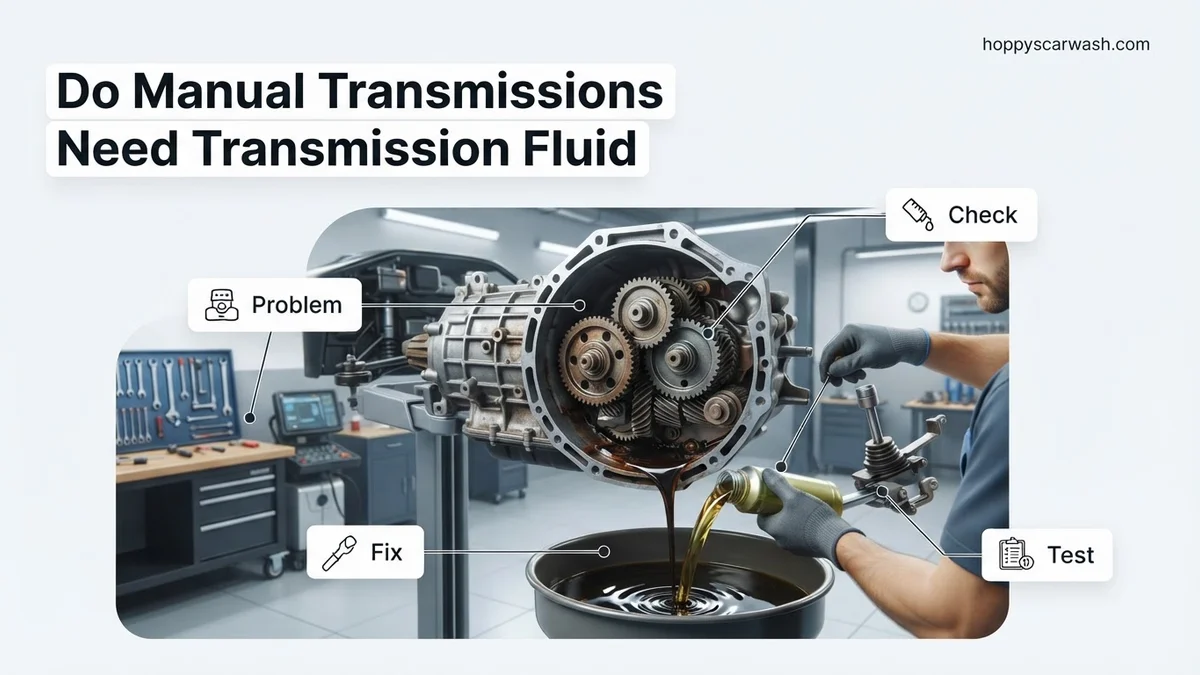
- Drive the car for 10 minutes to warm up the gear oil so it drains completely.
- Place a catch pan under the transmission, remove the drain plug, and let the old fluid empty entirely.
- Clean the drain plug magnet of metal shavings and reinstall it with a new crush washer, torqueing it to factory specifications.
- Pump fresh, manufacturer-approved gear oil (often 75W-90 GL-4 or GL-5) into the fill hole until it begins to spill back out.
- Reinstall the fill plug tightly, lower the vehicle, and test your shifts.
How to Fix Hard Shifting and Grinding Caused by Bad Fluid
When degraded transmission fluid causes your manual gearbox to resist shifting or emit a metallic grind, a fluid change is the most effective corrective action. According to automotive engineering data from the Society of Automotive Engineers (SAE), fresh lubricants restore necessary hydrodynamic film thickness, reducing gear tooth friction by up to 35 percent. Implementing this maintenance fix requires precision and adherence to manufacturer specifications.
Step-by-Step Fluid Replacement Procedure
- Drive the vehicle for 10 to 15 minutes to warm up the existing transmission fluid, which thins the oil and suspends contaminants for better drainage.
- Safely elevate and level the vehicle using automotive lift equipment or heavy-duty jack stands to ensure accurate fluid capacity measurement.
- Locate and always remove the fill plug first to prevent getting locked out of a closed transmission if the fill plug proves stuck or stripped.
- Position a drain pan underneath the transmission housing, remove the drain plug, and allow the old fluid to drain completely for at least 15 minutes.
- Inspect the magnetic drain plug for excessive metal shavings or debris, clean it thoroughly, wrap the threads with new thread sealant tape, and torque it to factory specifications.
- Pump or pour fresh manufacturer-approved gear oil (such as 75W-90 GL-4 or GL-5) into the fill hole until the fluid reaches the bottom lip of the fill plug opening.
- Reinstall the fill plug securely, lower the vehicle, and test-drive while shifting through all gears to verify smooth operation.
What If Changing the Fluid Still Doesn’t Resolve Your Transmission Issues
If swapping out old gear oil fails to eliminate grinding or popping out of gear, the root cause lies beyond mere lubrication degradation. Mechanical wear components inside the transmission housing require physical inspection and overhaul. According to mechanical repair indices, addressing persistent internal failures requires targeted troubleshooting steps.
- Inspect the external linkage and shift bushings for excessive play or misalignment, which frequently mimic internal synchronizer failure.
- Check the clutch hydraulic system for air bubbles or master-slave cylinder bypass, ensuring the clutch fully disengages when the pedal is depressed.
- Evaluate synchronizer rings and shift forks for physical wear or rounding, which prevent gears from locking together smoothly despite clean fluid.
- Consult a certified transmission specialist for a professional teardown and diagnostic road test if symptoms persist after checking external controls.
- Prepare for professional repair costs ranging from $800 for internal synchronizer replacements to over $2,500 for a complete manual transmission rebuild in 2026.
Conclusion
Manual transmissions absolutely require clean fluid to protect high-stress gears, synchronizers, and bearings from premature destruction. Neglecting this vital maintenance leads to severe mechanical damage, hard shifting, and expensive component failures. According to verified research and expert sources from leading automotive technicians, changing your manual transmission fluid every 30,000 to 60,000 miles is the single best way to maximize gearbox longevity. Schedule your next fluid inspection and service today to keep your manual transmission shifting smoothly for years to come.
❓ Frequently Asked Questions
Do manual transmissions need transmission fluid if they don’t have a dipstick?
Yes, many modern manual transmissions lack a traditional dipstick, but they still hold fluid. Checking and filling requires accessing a specific fill plug located directly on the side of the transmission housing.
How is manual transmission fluid different from automatic transmission fluid?
Manual transmission fluid is generally thicker and designed to protect gear teeth under high shock loads. Automatic transmission fluid functions more like a hydraulic fluid to operate clutches and valves.
Is manual transmission fluid lifetime fluid?
Very few manufacturers consider manual transmission fluid to last the lifetime of the vehicle without service. Regular replacement removes metal shavings and keeps shifting smooth.
What type of fluid does my manual transmission take?
The correct fluid type varies significantly by vehicle, ranging from standard gear oils like 75W-90 to specific synchromesh fluids. Always check your owner’s manual for the exact specification.
Why does my manual transmission whine when I drive?
A whining noise is often a classic indicator of low fluid levels, worn-out bearings, or excessive wear on the gear teeth. Checking the fluid level is always the first troubleshooting step.
Can dirty transmission fluid make it hard to shift gears?
Yes, as fluid breaks down and collects microscopic metal debris from the gears, it loses its protective properties. This increases friction on the synchronizers, making the shifter feel stiff or resistant.