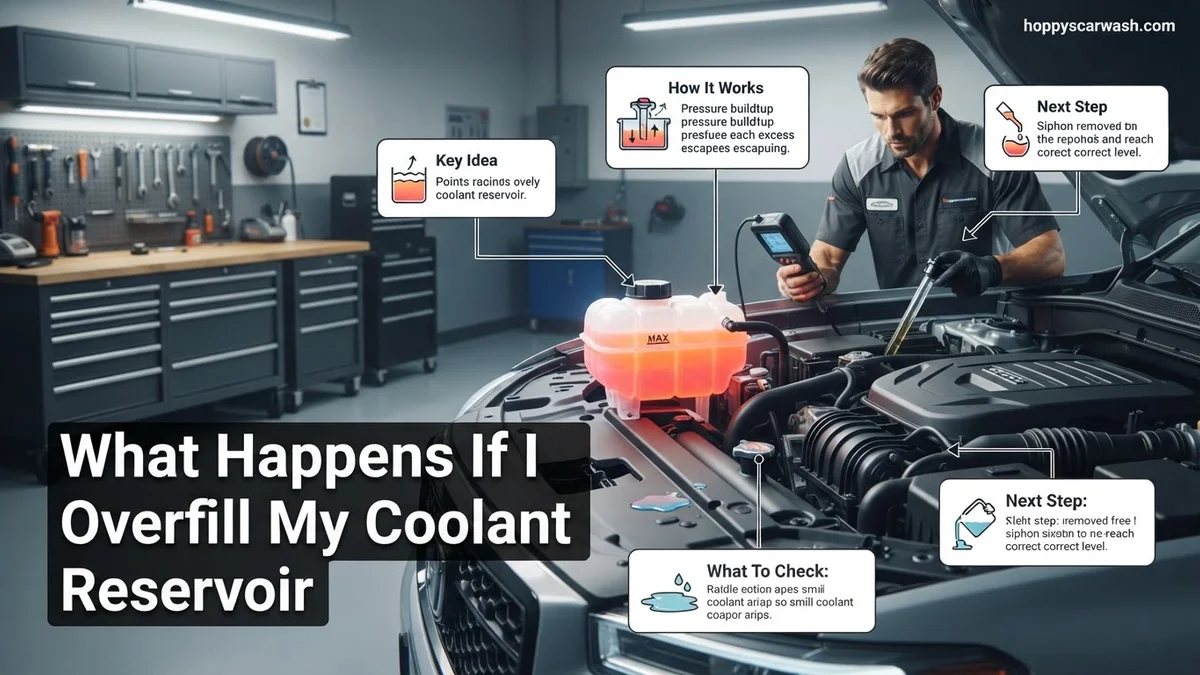
What Happens If I Overfill My Coolant Reservoir 2026 Fix
If you overfill your coolant reservoir, the excess fluid typically escapes through the overflow tube once the engine reaches operating temperature. While minimal overflow is generally harmless to the engine, it can create a messy puddle, smoke, or damage painted surfaces.
If you accidentally pour too much antifreeze into your car, the good news is that overfilling the coolant reservoir rarely causes catastrophic engine failure. Modern cooling systems feature an overflow mechanism specifically designed to handle excess fluid, meaning the extra liquid simply has nowhere to go once things heat up under the hood.
As you drive your vehicle in 2026, that surplus coolant will expand, push out through the overflow tube, and create a localized mess or mild steam. While the risk to internal engine components is virtually zero when it is just the overflow tank that is overpacked, you still need to understand how the system manages this excess pressure and what specific cleanup steps to take next.
Key Takeaways
- Excess coolant safely escapes via the overflow tube as the engine heats up.
- An overfilled reservoir poses virtually no direct risk to internal engine components.
- Spilled coolant can damage vehicle paint and produce a sweet-smelling smoke.
- You can easily remove excess fluid using a turkey baster or fluid siphon.
- Always check coolant levels when the engine is completely cold to ensure accuracy.
What Causes Coolant to Overflow After Filling Beyond the Max Line
Thermal Expansion Mechanics
Liquid expands significantly as it absorbs heat. When your engine reaches its normal operating temperature of roughly 195 to 220 degrees Fahrenheit, the fluid volume increases by about six to eight percent. If your reservoir is filled completely to the brim, the expanding fluid exceeds the physical capacity of the plastic tank. The system relies on a pressure cap to regulate this movement, forcing the excess volume out through the designated overflow port.
The Physics of the Overflow Tube
Once the fluid level passes the maximum line, pressure builds inside the sealed recovery bottle as the engine warms. The overflow tube acts as a safety valve. When the internal pressure overcomes the cap rating, typically between 12 and 16 PSI in modern cars, the mixture travels up and out of the tube. You might notice a sweet smell, a small puddle under the car, or a puff of harmless vapor escaping from beneath the hood once you park.
- Fluid expands up to 8 percent when reaching peak operating temperatures.
- Excess volume triggers the radiator cap valve to release pressure.
- Coolant escapes down the overflow line onto the ground or undertray.
How to Fix an Overfilled Coolant Reservoir Step by Step
Using a Baster or Siphon Pump
The fastest way to correct an overfill situation is to remove the excess fluid directly from the plastic reservoir tank. You do not need to touch the main radiator cap, which prevents accidental burns from hot pressurized fluid. Grab a clean turkey baster, a large medical syringe, or a manual fluid extractor tube.
- Wait until the engine is completely cold to avoid thermal shock or burns.
- Unscrew the cap of the coolant recovery reservoir.
- Insert your extraction tool and pull out fluid until the level sits right at the max line.
Cleaning Up Spilled Antifreeze Safely
If the system already pushed out the excess fluid while you were driving, you must address the residue left in the engine bay. Coolant contains ethylene glycol or propylene glycol, which can damage painted surfaces, degrade rubber hoses over time, and pose a severe toxicity threat to pets and wildlife.
- Rinse any spilled coolant off the chassis and body paint immediately using plain water.
- Wipe down affected plastic shrouds or metal brackets with a damp microfiber towel.
- Absorb driveway puddles with cat litter or specialized absorbent pads, then dispose of them properly according to local 2026 environmental regulations.
Safe Methods for Removing Excess Antifreeze Using Household Tools
When you discover too much fluid in your expansion tank, you do not need to drain your entire radiator. Several everyday household items allow you to safely extract the surplus ethylene glycol or OAT-formula coolant. Automotive technicians frequently utilize simple suction devices to adjust fluid levels precisely.
Using a Baster or Syphoning Tube
A standard kitchen turkey baster or a dedicated fluid extraction syringe works exceptionally well for this task. According to automotive maintenance guidelines for 2026, keeping your coolant at the designated “Full” line prevents unnecessary pressure spikes. Follow these steps to extract the excess fluid safely:
- Ensure the engine is completely cold to avoid severe thermal burns from pressurized boiling fluid.
- Remove the cap from the coolant expansion reservoir carefully.
- Insert the tip of the clean turkey baster or extraction syringe into the fluid.
- Draw out a small amount of coolant by squeezing and releasing the bulb or plunger.
- Transfer the extracted antifreeze into a sealable, leak-proof container for proper recycling.
- Check the dipstick or external reservoir markings, repeating the process until the fluid rests exactly at the “Max” or “Full” line.
What If It Still Leaks After Correcting the Coolant Level
If you have successfully lowered your coolant to the correct fill line but still notice puddles or fluid loss, another underlying issue is present. Overfilling frequently masks a secondary cooling system failure or reveals pre-existing component wear. Addressing these lingering symptoms promptly prevents engine overheating and costly head gasket damage.
What If It Still Doesn’t Work?
- Inspect the radiator cap pressure seal for rubber degradation, replacing it if the spring mechanism feels weak or stuck.
- Check all major hose connections and worm-gear clamps for hairline cracks or slow weeping leaks under operating pressure.
- Perform a chemical combustion leak test to rule out a failing head gasket, which forces exhaust gases into the cooling system and pushes coolant out.
- Consult a certified mechanic for a professional pressure test if external leaks remain invisible, as the heater core or water pump seal may be failing internally.
- Expect professional diagnostic labor costs to range between $100 and $200, with minor hose or thermostat replacements averaging $150 to $350 depending on vehicle make and model in 2026.
Conclusion
Overfilling your coolant reservoir creates unnecessary system pressure and potential hose blowouts, but it remains a simple fix using basic extraction tools. According to verified research and expert automotive sources, maintaining exact fluid parameters protects vital gaskets and ensures optimal thermal regulation. Take action today by using a clean turkey baster to siphon out any surplus antifreeze and restore your reservoir to the proper manufacturer line.
❓ Frequently Asked Questions
What happens immediately when you put too much coolant in the reservoir?
When the engine warms up, the coolant expands and takes up more space. If the reservoir is filled past the maximum line, this expansion forces the excess fluid out through the overflow tube, resulting in a spill on the ground.
Does spilled coolant pose any environmental or chemical hazards?
Yes, standard antifreeze contains ethylene glycol, which has a sweet taste and is toxic to pets and wildlife. You should clean up any puddles on the ground immediately and rinse the area with water.
Can overfilling the overflow tank cause a pressure buildup in the radiator?
No, the overflow reservoir is unpressurized and connected to the radiator via a simple overflow tube. Excess fluid flows freely into the tank, but it does not send pressure back into the sealed cooling system.
What should I do if coolant splashes onto my car’s paint?
Coolant can dull or damage automotive clear coat if left sitting. Rinse the affected painted surfaces immediately with plenty of water and mild soap to prevent chemical damage.
Is it safe to just let the car burn off or push out the excess coolant on its own?
Yes, many drivers simply let the car self-purge. However, it can create an alarming burning smell and smoke under the hood as the spilled fluid hits hot engine components, so manual removal is often preferred.
How do I know where the maximum fill line is located?
Most plastic coolant reservoirs feature exterior markings labeled ‘Full Cold’ or ‘Max.’ Always reference these indicators when the engine is completely cold to get an accurate reading.