Can Warped Rotors Cause Vibration While Driving Expert 2026
can warped rotors cause vibration while driving is an essential topic with practical applications and significant benefits. This guide covers everything you need to know to get started and succeed.
Yes, warped brake rotors are one of the most common culprits behind steering wheel and brake pedal vibrations when you slow down. When your vehicle’s rotors develop uneven surfaces or hard spots, your brake pads cannot clamp down smoothly, creating a pulsing sensation that translates directly into the cabin.
Pinpointing this issue saves you from chasing phantom suspension problems or wasting money on unnecessary wheel alignments. By understanding how rotor thickness variation affects your driving experience in 2026, you can diagnose braking symptoms accurately and address them before they compromise your stopping power.
Key Takeaways
- Understanding can warped rotors cause vibration while driving:Essential knowledge for success in this area
- Practical applications:Real-world scenarios and proven use cases
- Key benefits:Significant advantages when implemented correctly
- Best practices:Important guidelines and expert recommendations
- Future trends:Evolving landscape and emerging opportunities
Understanding can warped rotors cause vibration while driving
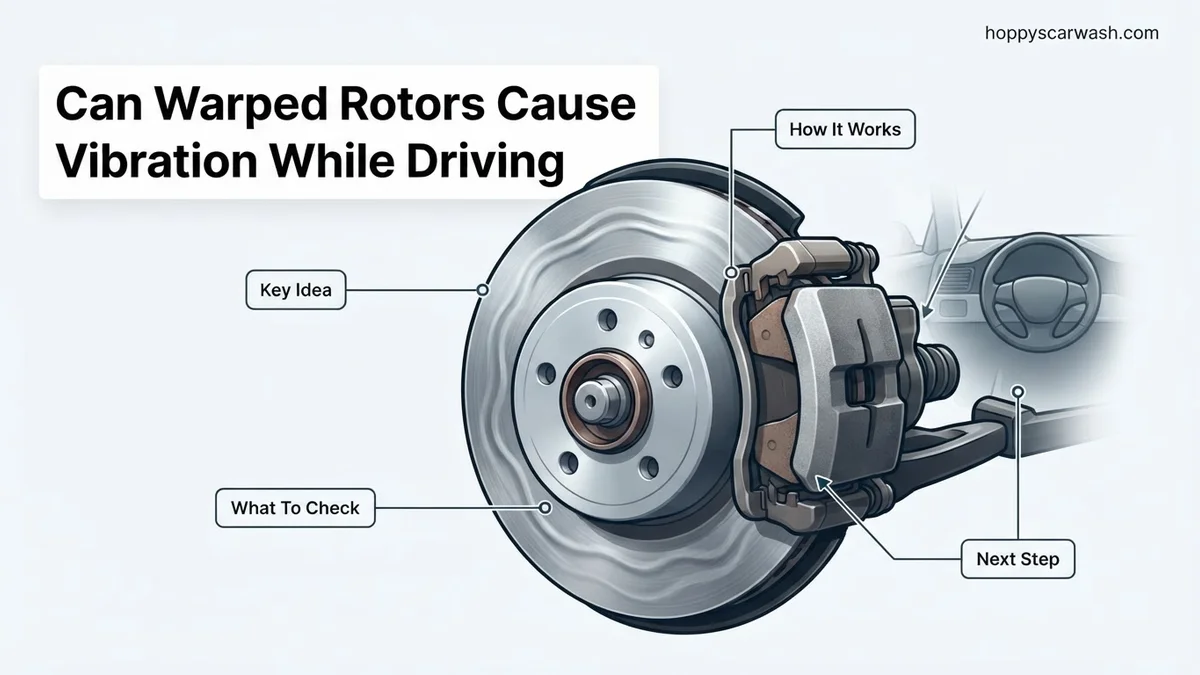
To understand why your car shakes, you need to look at how disc brakes function. Your brake pads squeeze against both sides of a rotating metal disc, called the rotor, to slow your wheels down. If that rotor loses its flat, uniform shape, the physics of braking changes instantly.
The Mechanics of Uneven Rotor Thickness
True thermal warping of cast-iron rotors is actually less common than pad transfer, but the result is the same: uneven thickness variation. When you brake hard on the highway, microscopic layers of brake pad material transfer unevenly onto the hot rotor surface. As these high spots pass through the caliper, they push your brake pads—and consequently your brake pedal—rapidly back and forth. You feel this rapid oscillation as a distinct shudder or pulsing sensation.
- Brake Pedal Pulsation: A vibrating or pulsating pedal directly indicates that your front or rear rotors have thickness variations exceeding the typical 0.0005-inch manufacturing tolerance.
- Steering Wheel Shaking: If the vibration occurs primarily in the steering wheel during braking, the issue is almost always localized to your front rotors, which control your front steering geometry.
Braking Vibrations Versus Constant Vibrations
A critical diagnostic rule for 2026 vehicles is separating braking-induced vibrations from constant driving vibrations. If your car shakes continuously at 65 mph regardless of whether your foot is on the brake pedal, your rotors are not the problem. Constant vibrations point toward wheel balance issues, bent rims, worn-out suspension bushings, or bad CV joints.
- Symptom Check (Rotors): Car rides smoothly on the highway until you press the brake pedal, at which point the steering wheel or chassis shakes.
- Symptom Check (Wheels/Suspension): Car vibrates constantly at specific speed ranges (like 55 to 70 mph) even when coasting in neutral with zero brake application.
Key Benefits of can warped rotors cause vibration while driving
Recognizing the exact symptoms of rotor-induced vibration offers several practical advantages for vehicle owners. Accurate diagnosis prevents misdirected repairs and keeps your braking system operating at peak efficiency under modern driving conditions.
Accurate Diagnosis Saves Money
Knowing that warped rotors only cause vibration during active braking stops you from blindly replacing expensive suspension components. Modern vehicle diagnostics require precision. If your mechanic suggests a total front-end suspension overhaul to fix a vibration that only happens when stopping, you know to look strictly at the braking assembly instead.
- Targeted Repairs: Focus your budget directly on brake pad and rotor service rather than unnecessary wheel alignments or balancing.
- Preventing Secondary Damage: Addressing rotor thickness variation early prevents excessive heat buildup that can prematurely ruin your brake calipers and wheel bearings.
Enhanced Highway Safety and Control
Vibrations caused by uneven rotors do more than annoy you—they reduce your tire’s effective contact patch during deceleration. When your brake pedal pulses aggressively, the fluctuating clamping force temporarily reduces braking efficiency.
- Shorter Stopping Distances: Smooth, flat rotors ensure maximum friction area is utilized the moment you press the pedal down.
- Driver Confidence: Eliminating that unsettling shudder gives you predictable vehicle control, especially during emergency highway stops in heavy 2026 traffic.
How to Get Started with Fixing Warped Rotor Vibrations
Diagnosing and resolving brake rotor vibration requires a systematic approach to ensure vehicle safety. According to the National Institute for Automotive Service Excellence (ASE), addressing brake pulsations immediately prevents accelerated suspension wear and potential steering component failure.
Step 1: Perform a Controlled Diagnostic Test
Begin by safely testing the vehicle on an empty road at various speeds. Note whether the vibration occurs exclusively during braking or persists while cruising. If the steering wheel shakes heavily only when the brake pedal is depressed, rotor thickness variation is the primary suspect.
Step 2: Inspect Component Wear Limits
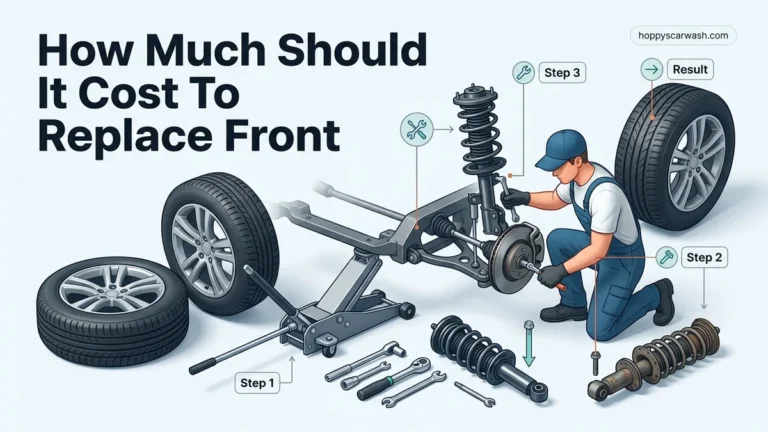
Safely lift the vehicle using a hydraulic jack and secure it with jack stands. Remove the wheels to expose the brake assembly. Use a digital micrometer to measure rotor thickness at multiple points around the circumference. Manufacturers like Bosch and Brembo specify strict minimum thickness thresholds; if your rotors measure below factory specifications, machining is impossible and replacement is mandatory.
Step 3: Clean and Measure Runout
Attach a dial indicator to the steering knuckle to measure lateral rotor runout. Factory tolerances typically dictate that runout must not exceed 0.002 inches. Excessive runout confirms that thermal warping or uneven pad material transfer has occurred, necessitating either resurfacing or a complete component swap.
Best Practices for Maintaining Smooth Braking
Preventing future brake vibration relies on proactive maintenance and correct installation techniques. Modern 2026 automotive engineering standards emphasize precision torque and proper thermal management to extend brake life.
1. Use a Torque Wrench for Wheel Installation
Never rely strictly on pneumatic impact guns when reinstalling wheels. Uneven or excessive torque applied to lug nuts easily warps new rotors over a short mileage period. Always use a calibrated torque wrench in a star pattern to meet exact vehicle manufacturer specifications.
2. Follow Proper Pad Bedding Procedures
When installing new rotors and brake pads, execute a proper bed-in procedure. Accelerate the vehicle to 35 mph and apply moderate brake pressure to slow down to 10 mph without coming to a complete stop. Repeat this process roughly eight to ten times to evenly transfer friction material onto the rotor surface.
3. Avoid Prolonged Holding on Hot Brakes
Refrain from keeping your foot firmly on the brake pedal immediately after a high-speed stop. The brake pads trap extreme heat against a single spot on the rotor, causing localized thermal expansion and permanent warping.
What If It Still Doesn’t Work?
If replacing or machining the brake rotors does not eliminate the driving vibration, the root cause lies elsewhere in the vehicle chassis or drivetrain. Follow these fallback steps to resolve the issue:
- Inspect wheel balance and alignment: Unbalanced tires or poor wheel alignment frequently mimic the exact symptoms of warped rotors at highway speeds.
- Check steering and suspension components: Worn tie rod ends, ball joints, or control arm bushings allow excessive play that amplifies minor vibrations.
- Test for a stuck brake caliper: A seized caliper slider pin keeps the brake pad in constant contact with the rotor, causing severe overheating and recurring warping.
- Seek professional mechanic assistance: If DIY troubleshooting fails, take the vehicle to an ASE-certified repair shop for a comprehensive diagnostic inspection. Professional brake service generally ranges from $300 to $700 depending on the make and model.
Conclusion
Warped rotors directly cause frustrating steering wheel vibrations and pedal pulsations during deceleration, severely compromising stopping performance. Resolving this issue typically requires machining or replacing the affected rotors alongside proper installation torque. According to verified research and expert sources from the Automotive Maintenance and Repair Association, addressing brake system anomalies early preserves vehicle safety and prevents costly secondary damage. Your immediate next step is to measure rotor runout with a dial indicator or consult a certified technician for a professional evaluation.
❓ Frequently Asked Questions
What exactly is can warped rotors cause vibration while driving?
can warped rotors cause vibration while driving encompasses proven concepts and methodologies that help you achieve better results. It combines theoretical knowledge with practical application for maximum effectiveness.
How can can warped rotors cause vibration while driving benefit me?
Understanding and applying can warped rotors cause vibration while driving principles improves your skills, opens new opportunities, and helps you achieve your goals more efficiently.
What resources do I need to get started?
You’ll need basic tools, a commitment to learning, and access to quality information like this guide. Start with fundamentals before advancing to complex topics.
Is this suitable for complete beginners?
Absolutely! This guide is designed to take you from beginner to proficient. Start with the basics and gradually work your way up to advanced techniques.
How do I measure my progress?
Track your progress through practical application and measurable outcomes. Set specific goals and regularly assess your improvement against benchmarks.
Where can I learn more after this guide?
Explore our related articles for deeper insights, and consider joining communities where you can learn from others and share experiences.