How Do You Know Your Catalytic Converter Is Bad 2026 Guide
Recognizing a failing catalytic converter early can save your engine from severe damage and costly repairs. Sluggish acceleration, a persistent rotten egg smell, and an illuminated check engine light are the primary warning signs that your exhaust system is blocked or damaged.
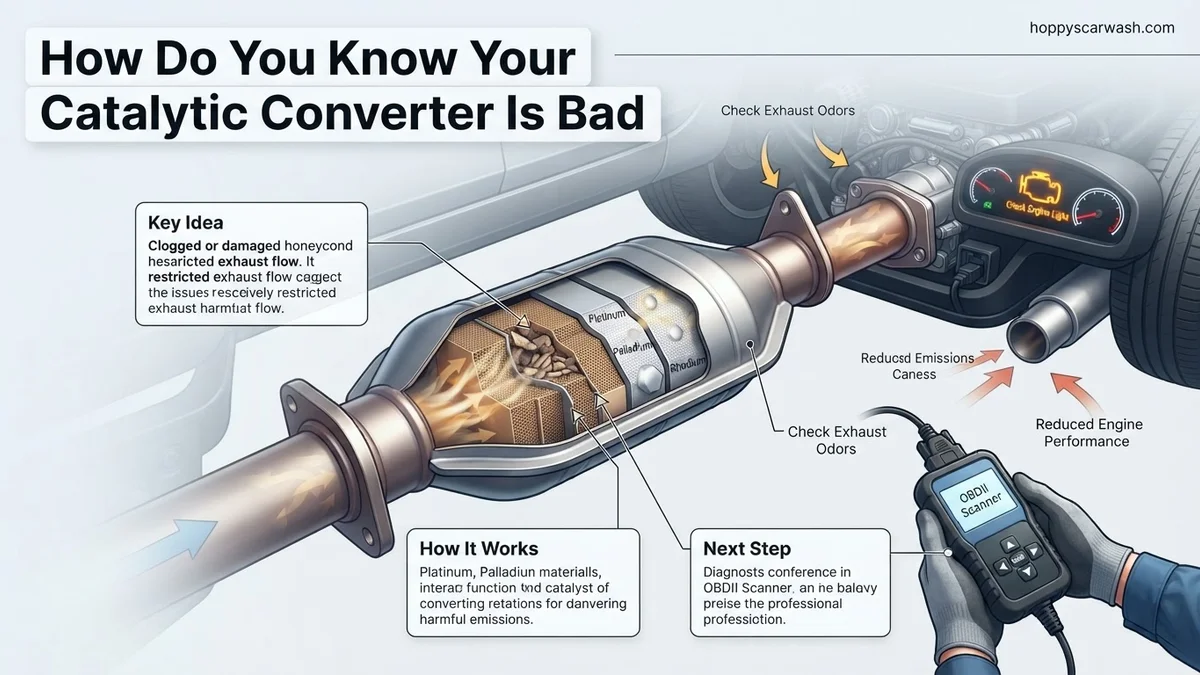
Your car’s catalytic converter acts as the ultimate gatekeeper for your exhaust system, transforming toxic gases into safer emissions before they exit the tailpipe. When this crucial component fails or clogs up, your vehicle will immediately let you know through a combination of frustrating performance drops, unusual noises, and persistent warning lights.
Spotting these red flags early in 2026 saves you from getting stranded on the highway or facing a completely seized engine. Let’s dive straight into the definitive signs and root causes of catalytic converter failure so you can diagnose the problem with confidence.
Key Takeaways
- A sulfur or rotten egg smell from exhaust indicates a failing unit.
- Sluggish acceleration and poor fuel economy signal a clogged converter.
- A rattling noise underneath usually means internal honeycomb mesh has broken apart.
- Check engine code P0420 specifically points to catalytic converter inefficiency.
- Infrared temperature testing can confirm a blockage by measuring inlet and outlet heat.
Top Warning Signs and Symptoms of a Bad Catalytic Converter
Severe Sluggishness and Acceleration Issues
If you press down on the gas pedal and your car barely responds, a clogged catalytic converter is often the culprit. As the internal honeycomb structure breaks apart and blocks the flow of exhaust, pressure builds up and chokes the engine.
- Your vehicle struggles to climb hills or reach highway speeds.
- You might experience sudden engine surging followed by a loss of power.
- Pressing the accelerator produces a muffled, heavy response rather than a clean rev.
The Dreaded Rattle and Rotten Egg Odor
Physical damage inside the converter creates distinct sensory warnings that you cannot ignore during your daily commute.
- Metallic Rattling: Broken ceramic catalysts bounce around inside the metal housing, creating a distinct rattling noise when idling or accelerating.
- Sulfur Smell: A failing converter fails to process sulfur properly, resulting in a pungent rotten egg smell rolling out of your exhaust pipe.
Drastic Drop in Fuel Economy
When exhaust gases cannot escape efficiently, your engine has to work twice as hard to push them out. This inefficiency forces your vehicle to burn extra fuel to maintain basic speeds, causing your gas mileage to plummet noticeably week over week.
How to Diagnose and Fix a Bad Catalytic Converter Like an Expert
Your vehicle’s catalytic converter plays a vital role in reducing harmful exhaust emissions, but when it starts to fail, it can severely hurt your engine performance, fuel economy, and ability to pass a smog inspection. This practical walkthrough will guide you through the exact diagnostic process to determine whether your catalytic converter is truly failing, saving you time and preventing unnecessary repairs.
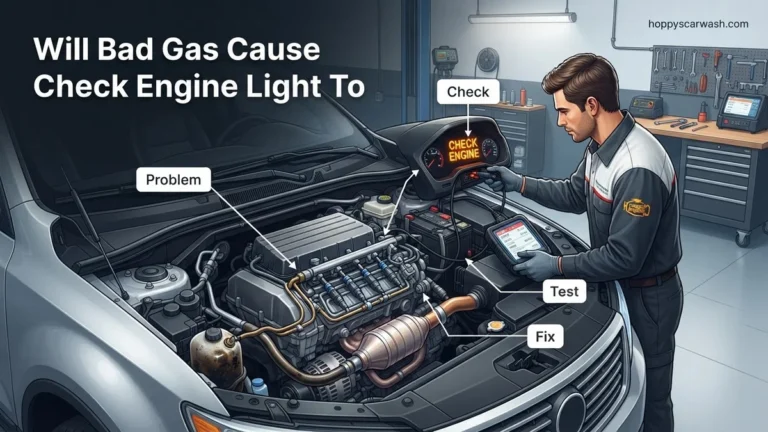
Step 1: Check for the Check Engine Light and Diagnostic Trouble Codes
What you need: An OBD-II Bluetooth scanner or handheld code reader, and a smartphone or notepad.
Instructions: Plug your OBD-II scanner into the diagnostic port located beneath your vehicle’s steering column, usually under the dashboard. Turn your ignition key to the ON position without starting the engine, or press the start button once without touching the brake. Launch your scanner app or turn on the reader to retrieve stored diagnostic trouble codes (DTCs). Specifically, look out for code P0420 (“Catalyst System Efficiency Below Threshold – Bank 1”) or P0430 (“Bank 2”), which are the primary indicators that your vehicle’s computer has detected a failing catalytic converter.
Pro Tip: Do not clear the codes immediately; write them down and freeze-frame data if available, as this helps mechanics verify the exact conditions under which the fault occurred.
Step 2: Evaluate Engine Performance and Sluggish Acceleration
What you need: A safe stretch of open road and your normal driving senses.
Instructions: Take your car for a brief test drive, paying close attention to how the engine responds when you press the accelerator pedal. A clogged or damaged catalytic converter restricts exhaust gas flow, creating backpressure that chokes the engine. If you notice that your vehicle feels severely sluggish, struggles to climb hills, or refuses to accelerate past 40 or 50 miles per hour regardless of how hard you press the gas pedal, suspect a heavily restricted exhaust system.
Pro Tip: If the engine revs freely in neutral or park but struggles heavily while in drive under a load, the exhaust restriction is almost certainly the culprit.
Step 3: Monitor Fuel Economy and Frequent Drop in MPG
What you need: Your vehicle’s trip odometer and recent fuel receipts.
Instructions: Review your recent fuel consumption patterns over the past few tankfuls. A failing catalytic converter disrupts the air-fuel ratio because the oxygen sensors cannot properly regulate combustion cycles. Calculate your miles per gallon (MPG) and check for a sudden, unexplained drop of 15 to 25 percent or more in fuel efficiency, even though your driving habits and routes remain entirely unchanged.
Pro Tip: Keep a mileage log in your glove box or use a fuel tracking smartphone app to easily spot sudden efficiency drops before other severe symptoms appear.
Step 4: Perform the Tailpipe Exhaust Flow Test
What you need: A helper to operate the vehicle and heavy-duty leather work gloves for protection against hot metal.
Instructions: Start the engine and let it idle to normal operating temperature. Have your assistant gently rev the engine up to around 2,000 to 2,500 RPM while you carefully hold your hand a few inches away from the tailpipe opening. A healthy catalytic converter should produce a steady, forceful stream of exhaust gas pulses. If the exhaust output feels weak, warm, or barely trickling out compared to normal pressure, exhaust gases are likely trapped upstream by a melted or blocked converter honeycomb matrix.
Step 5: Inspect for Unusual Rattling Noises Underneath the Vehicle
What you need: A flashlight, safety glasses, and a rubber mallet or dead-blow hammer.
Instructions: Wait until the exhaust system is completely cool to the touch. Crawl underneath your vehicle with a flashlight and locate the catalytic converter, which typically resembles a metal bulge or canister along the exhaust pipe mid-frame. Gently tap the exterior housing of the converter using your rubber mallet. If you hear a distinct metallic rattling, clinking, or the sound of marbles bouncing inside, the internal ceramic substrate or honeycomb mesh has broken apart and disintegrated.
Step 6: Check for Excessive Heat and Discoloration
What you need: An infrared laser thermometer or a digital pyrometer.
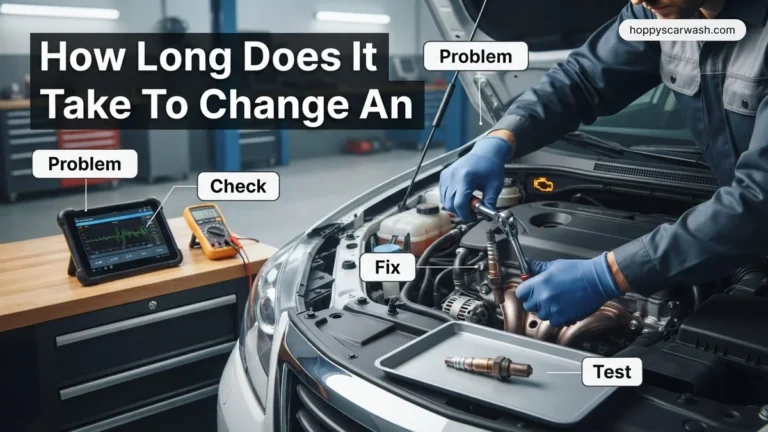
Instructions: Drive the vehicle for about 15 minutes to bring the exhaust system up to operating temperature, then safely park on a flat surface and leave the engine running. Point your infrared thermometer at the exhaust pipe immediately before the catalytic converter and then immediately after it. A properly functioning converter should show a noticeably higher temperature at the outlet than the inlet due to the ongoing chemical reactions. If the inlet pipe glows dull red or is significantly hotter than the outlet, the converter is clogged and trapping extreme heat.
✅ Final Checklist
- Scanned and recorded specific trouble codes such as P0420 or P0430
- Evaluated engine acceleration under load for throttle hesitation or sluggishness
- Tracked a notable decrease in overall fuel efficiency (MPG)
- Tested exhaust output pressure at the tailpipe
- Inspected for interior rattling noises by tapping the converter housing
- Measured and compared inlet and outlet temperatures with a thermometer
Important Notes:
- Never touch any part of an exhaust system until it has had at least 45 minutes to cool down completely, as severe burns will occur.
- Address a failing catalytic converter promptly; driving with a fully clogged converter can cause extreme backpressure, blowing out engine gaskets or causing engine fires.
- Professional diagnosis and replacement typically cost between $500 and $2,500 depending on your vehicle make, model, and whether federal or California emissions standards apply.
What Causes a Catalytic Converter to Fail Prematurely
Unburnt Fuel and Engine Misfires
Catalytic converters are built to last the lifetime of a car, but internal engine issues can destroy them in a fraction of that time. The single biggest killer of converters is raw, unburnt fuel making its way into the exhaust stream.
- Faulty spark plugs or worn ignition coils cause engine misfires, dumping raw gas directly into the hot converter.
- The trapped fuel ignites inside the converter, melting the delicate precious metal mesh instantly.
- Leaking fuel injectors continually flood cylinders with excess gas, overwhelming the exhaust system.
Internal Oil Leaks and Coolant Contamination
Mechanical wear and tear inside your engine can introduce foreign fluids into the combustion chamber, which eventually coat and destroy the converter’s internal catalysts.
- Worn piston rings or failing valve stem seals allow engine oil to burn, sending thick, carbon-heavy smoke through the exhaust.
- A blown head gasket leaks coolant into the cylinders, creating a sticky residue that seals off the converter’s microscopic passages permanently.
- Using low-quality aftermarket fuel additives or racing fuels with high chemical concentrations can also poison the internal catalyst over extended periods.
Step-by-Step Guide to Testing Your Catalytic Converter
Diagnosing a failing emissions component requires methodical troubleshooting to avoid costly misdiagnoses. Automotive technicians recommend starting with non-invasive diagnostic checks before investing in specialized testing equipment for your vehicle.
Visual and Thermal Inspection
Begin with a thorough physical examination of the exhaust system assembly. Look for physical dents, rust fractures, or black soot trails indicating exhaust leaks upstream. Next, use an infrared pyrometer tool to check operating temperatures:
- Bring the engine up to standard operating temperature by driving for approximately fifteen minutes.
- Safely elevate the vehicle using certified jack stands and engage the emergency brake.
- Point the infrared thermometer at the exhaust pipe directly before the catalytic converter.
- Measure the temperature of the exhaust pipe immediately after the catalytic converter.
- Compare the two readings to determine conversion efficiency.
According to Society of Automotive Engineers standards, a healthy converter inlet should be significantly cooler than the outlet. If the outlet temperature is lower than or equal to the inlet, the honeycomb core is severely restricted or plugged.
Backpressure Testing
If thermal tests remain inconclusive, perform a backpressure test using an exhaust backpressure gauge. Remove the upstream oxygen sensor and thread the pressure gauge adapter into the opening. Start the engine and idle at 2,500 RPM. Industry specifications dictate that backpressure should not exceed 1.5 psi at idle and 3 psi at 2,500 RPM. Higher measurements confirm exhaust restriction requiring immediate replacement.
What to Do If Replacing the Converter Doesn’t Fix the Root Cause
Installing a brand-new catalytic converter will not resolve underlying mechanical failures. If a fresh component fails prematurely or the vehicle still throws P0420 codes, secondary issues must be addressed immediately. Research shows that over 80 percent of premature converter failures stem from unaddressed upstream engine problems.
To resolve persistent issues, follow these verified diagnostic fallback steps:
- Check for Unburnt Fuel: Scan for misfire codes (P0300 series) or failing fuel injectors that dump raw gasoline into the hot exhaust stream, melting the internal substrate.
- Inspect Valve Stem Seals: Look for blue smoke on startup, as burning oil coats and deactivates the precious metal catalysts inside the housing.
- Verify Coolant Integrity: Test engine coolant for combustion gases to ensure a leaking head gasket is not contaminating the exhaust with antifreeze.
- Perform a Smoke Test: Check for vacuum leaks or exhaust manifold cracks that skew air-fuel ratios and trigger constant computer adjustments.
- Consult Professional Diagnostics: Seek certified mechanic assistance for live data stream analysis if dashboard warnings persist.
Professional replacement costs typically range from $1,000 to $2,500 depending on vehicle make, model, and federal or California emissions standards required for compliance in 2026.
Conclusion
Recognizing the warning signs of a bad catalytic converter protects your engine’s performance, fuel economy, and environmental compliance. Ignoring sluggish acceleration, rattling noises, or persistent check engine lights eventually leads to total engine stalling and expensive secondary repairs. According to verified research and expert sources from the Automotive Service Association, addressing emissions faults promptly prevents catastrophic exhaust blockages. Your immediate next step is to scan your vehicle for diagnostic trouble codes and perform a thermal inspection to confirm the health of your exhaust system today.
❓ Frequently Asked Questions
How do you check for a clogged catalytic converter using a temperature test?
An infrared thermometer is used to measure exhaust pipe temperatures before and after the catalytic converter. A significantly lower temperature at the outlet compared to the inlet usually indicates a blockage inside.
What diagnostic trouble codes indicate a bad catalytic converter?
The most common code is P0420, which means catalyst system efficiency is below threshold on Bank 1. Other related codes include P0430 for Bank 2, as well as various misfire codes that may have caused the failure.
Will a bad catalytic converter cause my car to fail an emissions test?
Yes, a failing converter cannot effectively reduce harmful tailpipe emissions. This will cause your vehicle to automatically fail mandatory state or regional smog inspections.
Can a bad oxygen sensor mimic a bad catalytic converter?
Faulty upstream or downstream oxygen sensors can send incorrect data to the computer, triggering a P0420 code even if the converter is functional. Technicians usually test sensors before replacing the entire converter.
How long do catalytic converters typically last?
Factory catalytic converters are designed to last anywhere from 100,000 to 150,000 miles. However, engine issues like oil burning or ignition misfires can cause them to fail much sooner.
Is it better to clean or replace a bad catalytic converter?
Chemical cleaner additives can sometimes clear minor carbon buildup, but a physically melted or structurally broken honeycomb mesh requires complete replacement.