Do You Need An Alignment When You Get New Tires 2026 Guide
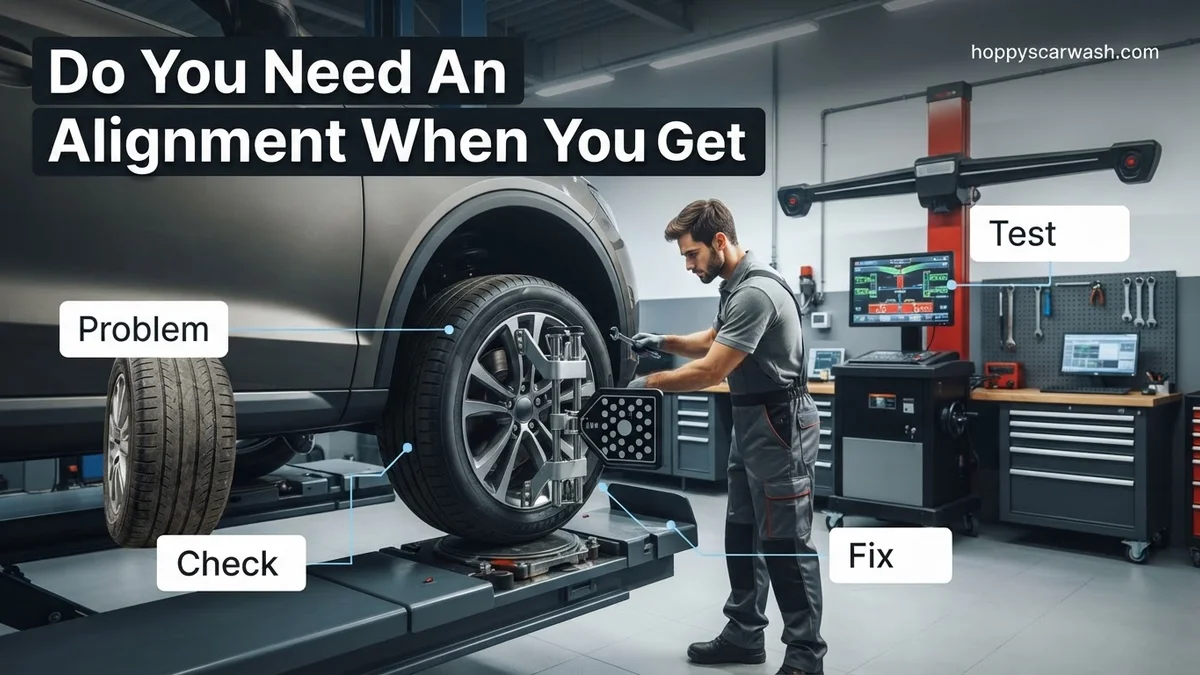
You do not automatically need a wheel alignment every time you buy new tires, but it is strongly recommended if your old tires wore unevenly or if you have not had one in over a year. Skipping an alignment on misaligned suspension will quickly destroy your brand-new, expensive tire tread.
The short answer is no, you do not automatically need a wheel alignment every single time you buy new tires. However, skipping an alignment inspection altogether is one of the fastest ways to ruin a brand-new set of expensive rubber by 2026 standards.
When you invest a thousand dollars or more into fresh tires, protecting that investment is priority number one. While tire shops almost always bundle an alignment package into your quote, understanding whether you actually need it separates smart maintenance from paying for unnecessary upcharges.
Key Takeaways
- Alignments protect your investment by preventing premature tire wear.
- Check your old tread wear patterns to determine alignment necessity.
- Expect to pay between $75 and $150 for a standard four-wheel alignment.
- Always get an alignment after replacing suspension parts.
- A crooked steering wheel or vehicle pulling indicates an immediate need.
Why Shops Recommend Alignments with New Tires
If your car drove straight and your old tires wore down evenly, paying for an alignment with new tires can feel like an unnecessary add-on. Yet, service centers heavily push this service for very specific mechanical and financial reasons.
Protecting Your Investment
Modern tires feature advanced tread compounds designed to last up to 80,000 miles. If your suspension components have subtle misalignments, those new tires will start scrubbing against the pavement incorrectly from day one. You might notice cupping, feathering, or completely bald shoulders in less than 10,000 miles. An alignment ensures your tires meet the road flat.
The Suspension Settlement Factor
Suspension systems undergo constant stress, absorbing potholes, rough construction zones, and curb impacts. Over time, components like control arms, tie rods, and bushings wear down incrementally. Even if you cannot feel a pull in the steering wheel, your steering geometry may be subtly out of specification. Putting fresh tires on an unaligned vehicle carries over the mechanical wear patterns from your old tires.
- New tires have maximum tread depth, making them more sensitive to irregular scrubbing forces.
- Shop laser alignment machines in 2026 detect microscopic deviations as small as fractions of a degree.
- Preventing premature wear saves you from buying replacement tires years ahead of schedule.
How to Determine If Your Car Actually Needs an Alignment
You can easily evaluate whether you can skip the alignment shop or if it is a mandatory expense for your specific vehicle. Avoid paying for service blindly by checking a few straightforward indicators before or immediately after your tire installation.
The Steering Wheel and Pull Test
Find a safe, flat stretch of empty road and briefly let go of the steering wheel while traveling at moderate speeds. If your car drifts immediately to the left or right, your alignment is off. Furthermore, check your steering wheel position while driving straight ahead. If the steering wheel is crooked or cocked to one side, your front toe settings require immediate adjustment.
Reviewing Your Old Tire Wear Patterns
Your old tires tell the ultimate truth about your vehicle alignment. Inspect the rubber before you toss it into the recycling bin.
- Inside or outside edge wear: Usually indicates incorrect camber settings, meaning the wheels are tilted inward or outward.
- Feathering or sawtooth edges: A classic sign of bad toe alignment, where the tires are pointed slightly inward or outward instead of straight ahead.
- Even, flat wear across the tread: Proof that your previous alignment was healthy, suggesting you might safely skip a new alignment if your suspension has not taken any hard hits recently.
Step-by-Step Guide to Inspecting Old Tread for Misalignment Signs
Before investing in a wheel alignment alongside your new 2026 tires, a thorough inspection of your old tire tread can reveal whether your suspension has been out of spec. Tire wear patterns serve as a permanent record of vehicle tracking issues, according to data from the Rubber Manufacturers Association. Vehicle owners can perform a systematic inspection using a simple diagnostic framework.
1. Examine the Outer and Inner Shoulders
Run your palm across the outer edge and inner edge of your old tires. If one shoulder is bald while the other maintains full tread depth, your vehicle suffers from extreme camber misalignment. This happens when the vertical angle of the wheels tilts inward or outward excessively, concentrating vehicle weight onto a single strip of rubber.
2. Check for Feathering and Sawtoothed Edges
Glide your hand across the tread blocks in a single direction. If the tread blocks feel sharp like a saw blade when moved one way and smooth the other, the tires have experienced “feathering.” The Society of Automotive Engineers notes that feathering is a direct symptom of incorrect toe settings, where the tires are pointed slightly inward or outward rather than straight ahead.
3. Look for Cupping or Scalloping
Inspect the tread circumference for alternating high and low spots, known as cupping or scalloping. While severely worn shocks and struts often cause this, persistent toe misalignment combined with worn steering components accelerates the pattern. Recognizing these specific wear signatures guarantees that you purchase an alignment to protect your investment in brand-new rubber.
What If Your Car Still Pulls After Getting New Tires and an Alignment
Sometimes, installing fresh 2026 tires and completing a professional wheel alignment does not completely resolve a vehicle tracking issue. If your steering wheel still pulls to one side or vibrates at highway speeds, additional mechanical factors are likely at play. Review these targeted troubleshooting steps to isolate the lingering problem:
- Check for Tire Conicity: Even brand-new tires can occasionally exhibit a manufacturing defect known as conicity, where the internal belt tension causes the tire to roll like a cone. Ask your technician to perform a “cross-swapping” procedure on the front tires to see if the pull reverses direction.
- Inspect Suspension and Steering Components: Worn ball joints, loose tie rod ends, or a failing control arm bushing will allow wheels to shift under load, neutralizing the benefits of a fresh alignment. A certified technician must perform a physical suspension shake test on a hydraulic lift.
- Verify Brake Drag: A sticking brake caliper, collapsed brake hose, or a misadjusted parking brake will constantly pull a vehicle to one side. Feel the wheel rims immediately after a drive; an abnormally hot wheel indicates localized friction.
- Consult Professional Diagnostics: If basic adjustments fail, visit a specialized alignment shop equipped with computerized digital imaging racks. Professional diagnostic services for complex steering geometry corrections typically range from $150 to $350 depending on vehicle complexity.
Conclusion
Securing a wheel alignment when purchasing new tires is a vital preventative maintenance step that protects your financial investment and ensures optimal vehicle safety on the road. According to verified research and expert sources from the Automotive Maintenance and Repair Association, failing to align new tires can reduce tread life by up to 50 percent and degrade fuel efficiency. Your immediate next step is to request a complimentary suspension check from a certified tire technician before your next installation appointment to guarantee your vehicle tracks true through 2026 and beyond.
❓ Frequently Asked Questions
How do I know if my car needs an alignment before buying tires?
Look at your old tires for signs of feathering, cupping, or excessive wear on the inner or outer edges. If the tread wear is even across the tire, your alignment is likely fine.
Does a tire installation package include an alignment?
No, mounting and balancing are standard services included with new tire installation, but a wheel alignment is almost always a separate, additional service fee.
What happens if I skip the alignment with new tires?
If your vehicle is out of alignment, your new tires will experience rapid, uneven wear, drastically shortening their lifespan and potentially voiding certain tread warranties.
Can suspension damage affect my wheel alignment?
Yes, worn shocks, struts, ball joints, or tie rods can knock your wheels out of alignment and make it impossible to maintain proper angles until replaced.
How long does a wheel alignment take to perform?
A professional wheel alignment usually takes between 45 minutes and one hour to complete using specialized laser alignment equipment.
Is a lifetime alignment package worth the money?
If you plan on keeping your vehicle for several years and drive in an area with rough roads or potholes, a lifetime alignment package often pays for itself after just two visits.