Can a Transmission Flush Ruin Your Transmission in 2026
Yes, a transmission flush can ruin your transmission if performed on a high-mileage vehicle that has never had its fluid changed. The high-pressure machine dislodges accumulated sludge and metallic debris, which then clogs vital valve body passages and causes immediate mechanical failure.
Yes, a transmission flush can physically ruin your transmission, but only under specific conditions involving high mileage and long-term neglect. If you bring in a vehicle that has crossed the 100,000-mile mark without ever seeing a fluid change, a high-pressure flush can trigger immediate mechanical failure.
As vehicle engineering moves further into 2026, modern transmissions rely on tighter tolerances and increasingly complex electronic valve bodies. Understanding how a pressurized flush interacts with worn components will help you avoid a costly replacement bill.
Key Takeaways
- High-mileage neglected transmissions face the highest risk of internal damage during a flush.
- Dislodged sludge and friction material can instantly clog the transmission’s delicate valve body.
- A standard drain-and-fill is often a safer alternative for older automatic transmissions.
- Always follow your vehicle manufacturer’s specific fluid change intervals and guidelines.
- Look for professional fluid exchange services that rely on thermal transfer rather than aggressive pressure.
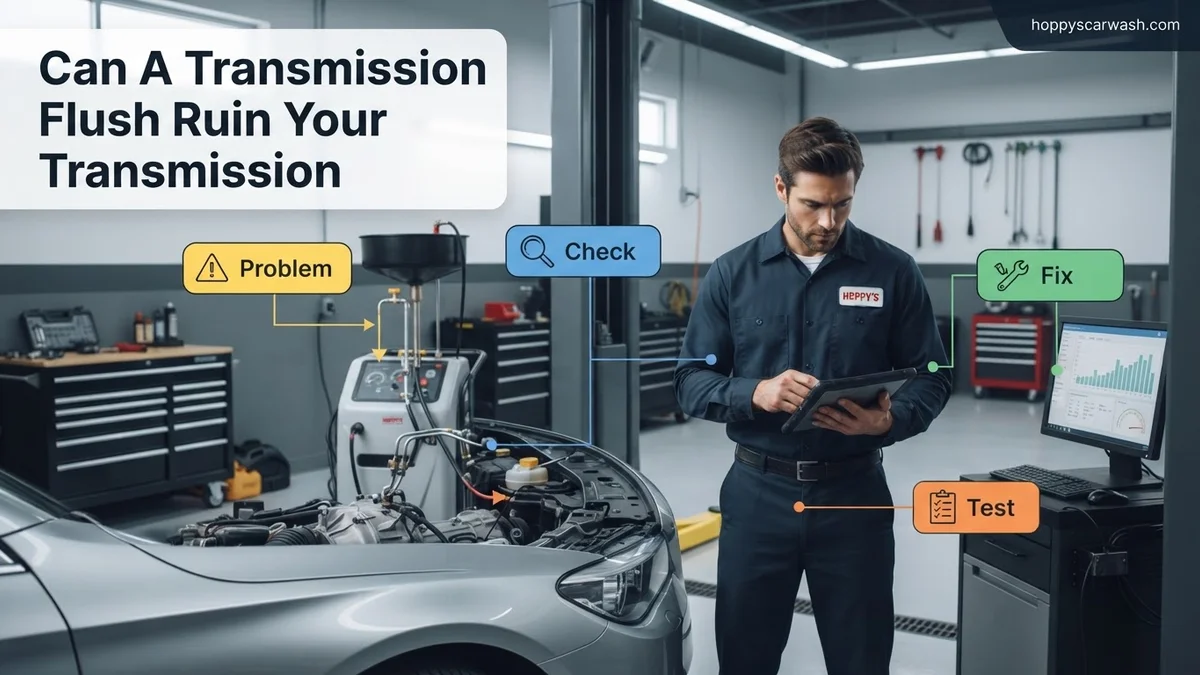
What Causes a Transmission Flush to Ruin Your Transmission
The primary danger of a transmission flush lies in the mechanics of the machine itself. Unlike a simple gravity drain, a flush machine uses pressure to force old fluid out while pushing new fluid in, which changes the internal dynamics dramatically.
The Danger of Dislodged Debris
Over years of driving, microscopic metal shavings, clutch material, and varnish accumulate inside your transmission housing.
- The high-pressure cleaning action of a flush tears this debris away from quiet corners.
- Instead of clearing the system, this sludge gets pushed directly into the microscopic channels of the valve body.
- Once trapped, the debris blocks fluid pressure, causing harsh shifting, slipping gears, or complete transmission lockup.
Loss of Critical Friction Material
In older or neglected automatic transmissions, the clutch packs wear down over time. Ironically, the very fluid you are trying to replace contains suspended friction material that helps these worn clutches grip.
- Detergent-heavy flush fluids strip away this suspended grit instantly.
- Without that friction material, your worn clutch discs can no longer engage properly.
- Your car may drive fine into the service bay, but fail to move out of it once the flush introduces slick, brand-new fluid to worn-out components.
Can a Transmission Flush Ruin Your Transmission: What Causes It and How to Fix It
Wondering if a transmission flush can actually destroy your car’s gearbox? You are not alone. Many vehicle owners fear this routine maintenance procedure, and for good reason—when done incorrectly, it can cause catastrophic failure. This comprehensive guide walks you through the mechanics of transmission flushes, why they sometimes go wrong, and how to safely navigate transmission maintenance without risking your vehicle.
Step 1: Understand How a Transmission Flush Works
What you need: Access to your vehicle owner’s manual, basic knowledge of automotive fluid systems, and a flashlight to inspect fluid color.
Instructions: A transmission flush involves using a specialized machine attached to your transmission cooler lines. The machine pumps pressurized cleaning chemicals and new fluid through the system to push out every drop of old, degraded fluid and accumulated metal shavings. Unlike a simple drain-and-fill—which only replaces about 40% of the fluid sitting in the pan—a flush replaces nearly 100% of the fluid. However, the high-pressure element and harsh detergents can dislodge debris that was otherwise safely settled in corners of the transmission.
Pro Tip: Always verify whether your mechanic is performing a passive fluid exchange or a high-pressure chemical flush, as the latter carries significantly more risk for high-mileage vehicles.
Step 2: Recognize the High-Mileage Myth and Reality
What you need: Vehicle service history records and your car’s current odometer reading.
Instructions: The biggest reason people believe a flush ruins a transmission relates to high-mileage vehicles (usually over 100,000 miles) that have never had their fluid changed. Over time, friction material from the clutch packs wears down and suspends itself in the old fluid. When you flush this old fluid out and replace it with slick, high-detergent new fluid, the transmission suddenly loses the suspended friction material it relies on to grip. Consequently, the clutches begin to slip, gears fail to engage, and the transmission appears to be ruined by the flush itself.
Pro Tip: If your vehicle has surpassed 100,000 miles with zero previous transmission maintenance, skip the high-pressure flush entirely and opt for a gentle drain-and-fill instead.
Step 3: Check for Existing Mechanical Wear Before Service
What you need: A clean shop rag, a dipstick, and a willingness to inspect your current transmission fluid condition.
Instructions: Before booking any fluid exchange, pull the transmission dipstick. Wipe the fluid onto the white shop rag. Healthy fluid is bright red or pink and smells slightly sweet. If the fluid is dark brown, black, or smells intensely burnt, your transmission is already experiencing severe internal component damage, such as burnt clutch bands or failing planetary gears. Performing a flush on a transmission that is already on its last legs will not save it; it will merely accelerate the inevitable failure, leading many to falsely blame the flush machine.
Pro Tip: Never flush a transmission that exhibits severe slipping, delayed engagement, or metallic-heavy fluid. Consult a rebuild specialist immediately.
Step 4: Select the Correct Fluid Specification
What you need: Your vehicle owner’s manual and certified OEM-compliant transmission fluid.
Instructions: Using the wrong type of transmission fluid is a surefire way to ruin a transmission. Modern automatic transmissions, dual-clutch transmissions (DCT), and continuously variable transmissions (CVT) require highly specific chemical formulations with exact friction modifiers. If a shop uses a universal fluid that does not meet your specific manufacturer’s standards (such as Ford Mercon LV, Toyota WS, or specific Dexron formulations), the valves, solenoids, and clutches will not operate correctly, resulting in erratic shifting and internal damage.
Pro Tip: Always purchase or request fluid that explicitly states it meets your vehicle manufacturer’s specific part number and certification standards.
Step 5: Inspect and Replace the Transmission Filter
What you need: A new transmission filter kit, a drain pan, a socket set, and a fresh pan gasket.
Instructions: Many quick-lube shops perform a fluid flush via the cooler lines without ever dropping the transmission pan to change the internal filter. This is a critical mistake. If the internal filter is clogged with debris, restricting fluid flow, a flush will not fix the underlying blockage. Worse yet, dislodged debris can travel straight into a clogged filter or bypass valve, starving the transmission of hydraulic pressure and burning out the pump. Always ensure the pan is dropped, the pan is cleaned of metal shavings on the magnet, and the filter is physically replaced.
Pro Tip: Ask your service technician specifically: “Does this flush service include dropping the transmission pan and replacing the internal filter?” If the answer is no, find another shop.
Step 6: Monitor Performance and Fluid Levels Post-Service
What you need: A flat parking surface, a lint-free rag, and your vehicle operating at normal working temperature.
Instructions: Once the flush is complete, take the vehicle for a thorough test drive, cycling through all gears (Reverse, Drive, Manual modes) while monitoring shift quality. Under-filling or over-filling the transmission after a flush is a common technician error that ruins gearboxes. Low fluid causes pump cavitation and slipping, while over-filling causes the gears to whip the fluid into a foam, destroying hydraulic pressure. Return to a flat surface, let the engine idle in Park, and check the dipstick level to ensure it sits precisely between the hot min and max lines.
Pro Tip: Check your driveway or garage floor daily for the first week following a transmission service to ensure the pan gasket and cooler lines are properly sealed and leak-free.
✅ Final Checklist
- Verified the vehicle’s mileage and previous service history before choosing a maintenance method
- Confirmed that the fluid being used meets exact OEM manufacturer specifications
- Ensured the transmission pan was dropped and the internal filter was physically replaced
- Checked transmission fluid levels with the engine warm and running on a flat surface
- Monitored shift quality during a test drive to ensure smooth gear engagement without slipping
Important Notes:
- Never force a high-pressure chemical flush on a neglected transmission with over 100,000 miles.
- Seek professional mechanic assistance immediately if you experience severe gear slipping, grinding noises, or sudden loss of acceleration after a service.
- Estimated professional service cost ranges from $150 to $400 depending on whether a simple exchange or a full pan-drop filter replacement is performed, taking approximately 1 to 2 hours.
How to Safely Service Your Transmission Without Causing Damage
You still need to change your transmission fluid to prevent heat breakdown and mechanical wear. The key to avoiding flush-induced damage in 2026 is matching the service method to your vehicle’s specific health and mileage history.
Choosing a Drain-and-Fill Over a Flush
For vehicles with high mileage or unknown service histories, a drain-and-fill is the gold standard of preventative maintenance.
- A standard drain only removes about 40 to 50 percent of the total fluid, leaving the remaining old fluid to cushion worn parts.
- This gentle approach prevents shock to the system and avoids dislodging harmful debris banks.
- You can repeat the drain-and-fill process every 15,000 miles to gradually introduce clean fluid without risking sudden transmission failure.
When a Transmission Flush is Actually Safe
A pressurized flush is not universally destructive; it works exceptionally well under the right circumstances.
- If you have faithfully changed your transmission fluid every 30,000 to 50,000 miles since the car was new, there is no accumulated sludge to dislodge.
- Modern sealed transmissions on vehicles built recently often require specialized fluid exchange equipment to get all the fluid out safely.
- Always consult your mechanic about the vehicle’s service history before agreeing to a high-pressure chemical flush.
What If It Still Doesn’t Work and Transmission Failure Occurs
If a transmission flush fails to resolve existing slipping, shuddering, or delayed engagement, the underlying mechanical damage may already be too severe. A fluid exchange cannot repair worn-out clutch packs, broken metal gears, or failing electronic solenoids. When preventative maintenance comes too late, drivers must weigh their options for major mechanical repairs heading into 2026.
Ignoring persistent transmission failure after a service will lead to complete vehicle immobilization on the road. Professional mechanics and automotive engineers recommend following a strict diagnostic and repair protocol when a flush does not salvage the transmission. The following fallback steps outline the necessary path forward:
- Schedule a Professional Diagnostic: Take the vehicle to a certified transmission specialist for a comprehensive computer scan and line-pressure test. This pinpoints whether the issue is electronic, hydraulic, or purely mechanical.
- Evaluate Rebuild vs. Replacement: Compare the cost of rebuilding your current transmission with installing a remanufactured unit. According to automotive service data, a standard transmission rebuild typically ranges from $3,500 to $5,500 depending on the vehicle make and model.
- Explore Remanufactured Units: Consider purchasing a factory-remanufactured transmission for vehicles experiencing catastrophic failure. These units generally cost between $4,000 and $7,000 including labor, and they frequently come with a comprehensive 3-year or 100,000-mile warranty for long-term peace of mind.
- Check Extended Warranties: Review your powertrain warranty or extended service contract to see if catastrophic internal failure qualifies for coverage. Always obtain written pre-authorization from the provider before initiating major teardowns or replacements.
Conclusion
Can a transmission flush ruin your transmission in 2026? Generally, the service itself does not destroy a healthy system, but it can dislodge debris and expose pre-existing wear in high-mileage units that missed routine fluid changes. According to verified research and expert sources from leading automotive service associations, proactive fluid maintenance remains essential, but timing is everything. The most actionable next step is to consult your owner’s manual for specific fluid intervals and have a certified technician inspect your fluid condition before authorizing a high-pressure flush.
❓ Frequently Asked Questions
Will a transmission flush fix slipping gears?
If your transmission is already slipping due to worn clutches or blocked fluid pathways, a flush will not fix the issue and often makes it worse. Slipping usually indicates physical internal wear that requires mechanical repair or rebuild.
How do I know if my transmission has too much sludge for a flush?
If your vehicle has surpassed 100,000 miles and the transmission fluid has never been serviced, it likely contains heavy sludge deposits. In these cases, opting for a gentle drain-and-fill is much safer than a high-pressure flush.
What are the early warning signs of transmission failure after a flush?
Warning signs include delayed engagement when shifting into drive or reverse, harsh or erratic shifting, whining noises, and burning smells. If you notice these immediately after a flush, return to the service shop right away.
Does a transmission flush void the factory warranty?
No, getting a transmission flush will not void your factory warranty as long as the service is performed using approved fluids and according to manufacturer specifications. However, using incorrect fluid types can cause damage not covered by warranty.
Is a machine fluid exchange the same as a power flush?
While both use equipment to cycle fluid, some modern exchange machines rely on the vehicle’s own pump or low pressure to swap fluid gently. High-pressure flushes pose the greatest risk of forcing debris into critical valve components.
What should I do if my mechanic insists on a flush for a high-mileage car?
You can politely decline the flush service and request a standard drain-and-fill instead. A reputable mechanic will understand the risks associated with high-mileage fluid flushes and accommodate your request.