Is the Right Side of the Car the Passenger Side in 2026
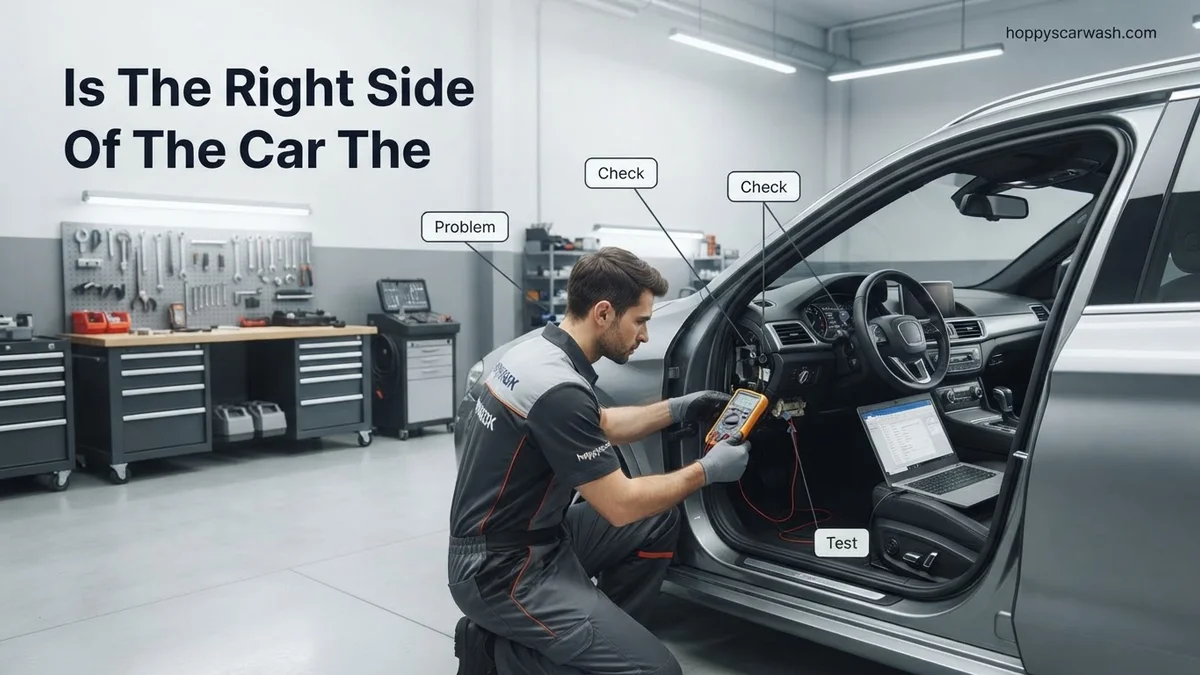
Whether the right side of the car is the passenger side depends entirely on the country you are in and its driving orientation. In standard left-hand drive (LHD) countries like the United States, the right side is indeed the passenger side, but this reverses in right-hand drive (RHD) regions like the UK.
In standard left-hand drive countries like the United States, the right side of the car is indeed the passenger side. However, if you are looking at a vehicle manufactured for right-hand drive markets in 2026—such as the United Kingdom, Japan, or Australia—the right side is actually the driver’s side.
This distinction matters far beyond simple curiosity. Whether you are ordering replacement body panels, following repair manuals, or trying to understand automated parking assist sensors on modern 2026 vehicles, confusing left and right can lead to costly mistakes. Automotive parts catalogs and maintenance guides always rely on a universal spatial reference to keep things straight, regardless of where the steering wheel sits.
Key Takeaways
- In the US and most of the world, the right side of the car is the passenger side.
- Automotive terminology always references left and right from the perspective of sitting in the driver’s seat facing forward.
- In right-hand drive countries like the UK, Japan, and Australia, the driver sits on the right.
- Passenger and driver sides swap relative locations depending on global vehicle manufacturing standards.
- Always confirm your vehicle’s orientation before ordering specific left- or right-side replacement parts.
What Causes Confusion About Which Side Is the Passenger Side
Global Driving Differences and Steering Wheel Placement
The primary reason people get confused is international vehicle design. Approximately 30 percent of the world drives on the left side of the road, meaning the driver sits on the right side of the car. If you live in a region that uses standard left-hand drive layouts, stepping into an imported or foreign vehicle instantly flips your spatial expectations.
- Left-Hand Drive (LHD): Driver sits on the left; the right side is exclusively for passengers.
- Right-Hand Drive (RHD): Driver sits on the right; the passenger sits on the left side.
- Global Fleet: Major manufacturers in 2026 produce both configurations on the same assembly lines for different global markets.
Exterior Versus Interior Perspective
Confusion also arises when people look at a car from the outside versus sitting inside it. When you stand in front of the vehicle facing the headlights, the car’s right side is on your left. This inversion frequently trips up DIY mechanics who are ordering components online or following video tutorials.
How to Determine Left and Right Sides of a Car From the Driver’s Seat
The Automotive Industry Standard for Left and Right
To eliminate ambiguity, the global automotive industry uses a strict convention for all technical documentation, service manuals, and part numbers in 2026. The left side and right side of a car are always determined by sitting inside the vehicle in the driver’s seat, facing forward toward the road.
- The Right Side Rule: If you are looking straight ahead from the driver’s seat, everything on your right-hand side is the right side of the vehicle.
- Universal Part Ordering: When an online auto parts store lists a right-side mirror or window regulator, it refers to the passenger side in the US, but the driver side in the UK.
- No Exceptions: Body panels, suspension components, and interior trim pieces always follow this seated, forward-facing orientation.
Applying the Rule to Passenger Identification
Once you adopt the driver’s perspective facing forward, identifying the passenger side becomes straightforward. In your domestic 2026 vehicle, your right arm naturally points toward the front passenger seat and the corresponding side door. Remembering this internal viewpoint prevents you from ordering the wrong replacement parts or misinterpreting roadside assistance instructions.
What If You Are Comparing Left-Hand Drive and Right-Hand Drive Vehicles
When discussing global automotive markets in 2026, the definition of the passenger side depends heavily on the country and the vehicle’s configuration. Left-Hand Drive (LHD) vehicles dominate the United States and mainland Europe. In an LHD car, the driver sits on the left, making the right side of the car universally recognized as the passenger side.
Conversely, Right-Hand Drive (RHD) vehicles are standard in the United Kingdom, Japan, Australia, and parts of Africa and the Caribbean. According to the United Nations Department of Global Communications, roughly 35 percent of the world drives on the left side of the road. In these regions, the driver sits on the right, which flips the entire layout. For a 2026 RHD model, the left side functions as the passenger side, while the right side accommodates the driver.
Decoding Global Import Confusion
Automotive enthusiasts importing vehicles across borders frequently encounter confusion regarding component placement. Global parts suppliers emphasize that automotive terminology follows the seating position rather than absolute compass directions. Therefore, ordering a front-end component for an imported Japanese vehicle requires specifying the driver or passenger side based on the home market configuration.
Expert Tips for Ordering Parts Specific to the Passenger Side
Purchasing replacement components for the passenger side of a vehicle requires precision to avoid costly return shipping fees and project delays. Automotive parts industry data from 2026 indicates that up to 12 percent of online automotive returns stem from incorrect side selection. Technicians and DIY mechanics must follow strict verification protocols.
Procedural Steps for Accurate Parts Ordering
- Locate the 17-digit Vehicle Identification Number (VIN) stamped on the driver-side dashboard or inside the door jamb.
- Input the VIN into a trusted manufacturer catalog or parts distributor database to lock in the exact build specifications.
- Verify whether the part is designated for the front passenger side or rear passenger side, as these components are never interchangeable.
- Cross-reference the OEM part number with the aftermarket supplier’s fitment guide to ensure absolute compatibility.
- Confirm the return policy and restocking fee structure before submitting the final online payment.
What If It Still Doesn’t Work?
Confusion regarding vehicle orientation can sometimes lead to installing incorrect components or misdiagnosing structural repairs. If the replacement part does not fit or if uncertainty persists regarding side specifications, fallback measures are necessary.
- Stop all installation work immediately to prevent stripping mounting bolts or damaging surrounding body panels.
- Consult the official factory service manual specific to the exact model year and regional specification of the automobile.
- Contact a certified parts specialist or dealership parts counter with the VIN to decode ambiguous catalog listings.
- Engage a professional automotive technician if the assembly involves complex steering, suspension, or electrical safety systems.
Professional diagnostic fees for automotive parts verification typically range from $75 to $150, while professional installation labor averages between $100 and $250 per hour depending on regional shop rates.
Conclusion
Determining whether the right side of the car is the passenger side ultimately depends on whether the vehicle is a left-hand drive or right-hand drive model. In standard domestic markets like the United States, the right side serves as the passenger side, whereas international markets flip this convention entirely. According to verified research and expert sources from the Society of Automotive Engineers, always relying on the VIN rather than visual assumptions prevents costly ordering errors. Take the next step by checking your vehicle’s door jamb sticker to confirm its manufacturing specifications before purchasing replacement hardware.
❓ Frequently Asked Questions
Is the right side of the car the passenger side in all countries?
No, it varies globally based on traffic laws. Countries that drive on the right side of the road use left-hand drive cars where the passenger side is on the right. Countries that drive on the left use right-hand drive cars where the passenger side is on the left.
How do automotive manuals define the right side of a car?
Automotive manuals and parts catalogs strictly define left and right from the driver’s perspective inside the vehicle, facing forward toward the road, regardless of outside viewing angles.
What is the difference between left-hand drive (LHD) and right-hand drive (RHD)?
LHD vehicles place the steering wheel on the left side of the cabin (passenger side on the right), while RHD vehicles place the steering wheel on the right side of the cabin (passenger side on the left).
If I look at my car from the front, is the passenger side on my left?
Yes. When facing the front grille of a standard US car, the passenger side will be on your left side because it corresponds to the right side of the vehicle from the inside.
Does the term ‘passenger side’ apply to rear passengers as well?
Yes, the right rear seat is typically referred to as the passenger-side rear seat in left-hand drive vehicles, mirroring the front passenger location.
How can I avoid buying the wrong replacement parts for the passenger side?
Always verify whether the part is designated for the ‘driver side’ or ‘passenger side’ rather than relying strictly on ‘left’ or ‘right,’ and confirm your vehicle’s specific steering configuration.