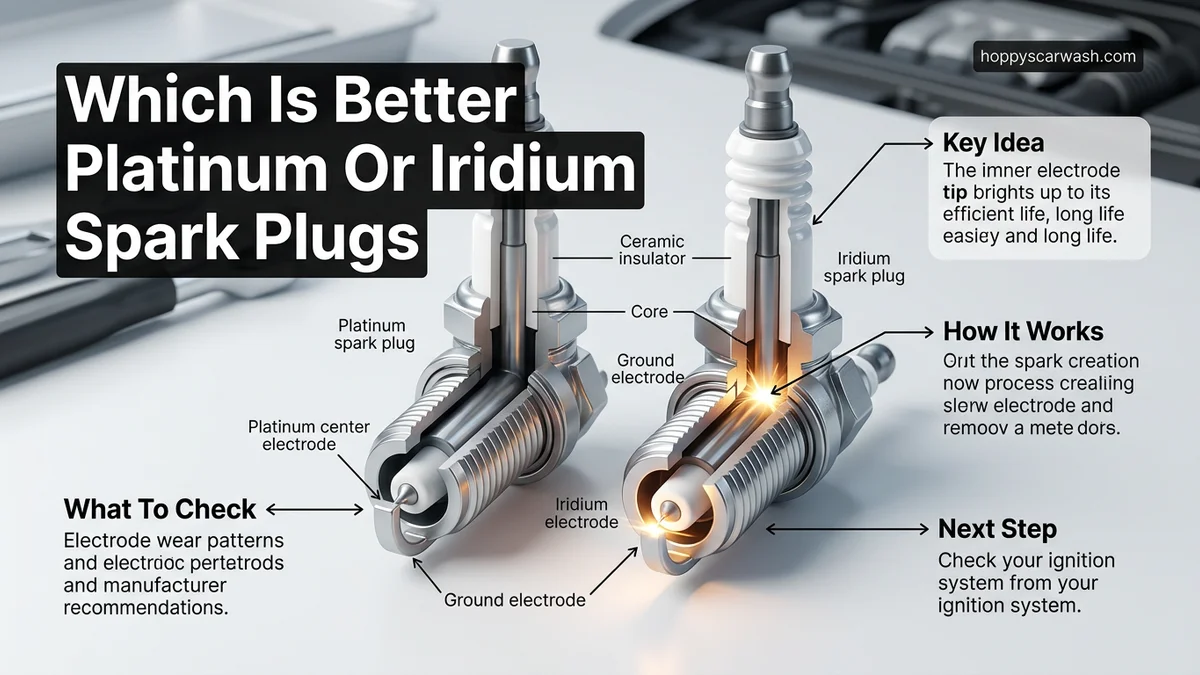
Which Is Better Platinum Or Iridium Spark Plugs 2026
When comparing spark plugs, iridium is objectively superior in performance and longevity, lasting up to 100,000 to 120,000 miles. However, platinum offers a more budget-friendly alternative that still vastly outperforms traditional copper plugs. The right choice depends on your vehicle’s engine design and how long you plan to keep the car.
If you are choosing between platinum and iridium spark plugs for your vehicle in 2026, iridium is technically the superior metal for lifespan, conductivity, and overall performance. However, platinum remains a great value option depending on your driving habits and budget.
When you are upgrading your ignition system, the core decision comes down to a trade-off between upfront cost and long-term durability. While iridium plugs command a higher price tag, their microscopic center electrode design allows for a more focused electrical spark and a lifespan that can easily exceed 100,000 miles without degradation.
Key Takeaways
- Iridium spark plugs last up to 120,000 miles, outlasting standard platinum options.
- Platinum plugs provide reliable performance at a significantly lower upfront cost.
- Modern high-compression and turbocharged engines perform best with iridium technology.
- Iridium features a finer wire center electrode, requiring less voltage to fire.
- Always check manufacturer specifications before upgrading your vehicle’s spark plugs.
What Causes Performance Loss in Worn Spark Plugs
Thermal and Electrical Erosion
Every time your engine fires, your spark plugs endure extreme heat and high-voltage electrical jolts. Over tens of thousands of miles, this constant arcing wears away the precious metal on the center and ground electrodes. As the gap between the electrodes widens, your ignition coil has to work harder to bridge the space, leading to a weaker, less efficient spark that robs your car of horsepower and fuel economy.
Deposit Buildup and Fouling
Combustion byproducts, oil, and unburnt fuel gradually accumulate on the firing tip of your spark plugs. When you drive frequently in stop-and-go city traffic, the plugs may not reach their self-cleaning temperature of around 932 degrees Fahrenheit. This results in carbon fouling, which misdirects the electrical current away from the gap and causes engine misfires, rough idling, and sluggish acceleration during your daily commute.
- Gap widening: High voltage erodes the electrode tip over time.
- Carbon accumulation: Short trips prevent self-cleaning and cause fouling.
- Voltage resistance: Worn gaps force ignition coils to generate higher firing voltages.
How to Test and Diagnose Faulty Spark Plugs
Visual Inspection and Gap Measurement
Pulling your spark plugs is the most reliable way to diagnose their condition. A healthy plug light gray or tan deposits and sharp electrode edges. If you notice a rounded center electrode, heavy white ash buildup, or oil-wet threads, your plugs are failing. Always use a wire-type gap gauge to measure the distance between the electrodes against your vehicle manufacturer specifications.
Diagnostic Scanners and Physical Symptoms
Modern engine management computers make identifying bad spark plugs easier than ever. If a plug fails to fire consistently, your dashboard will likely trigger a check engine light with diagnostic trouble codes ranging from P0300 to P0308. Pay attention to physical warning signs in your cabin:
- Engine misfires: A sudden stutter or hesitation when you press the gas pedal.
- Rough idle: The engine shakes or vibrates excessively while stopped at a red light.
- Drop in fuel economy: You notice noticeably fewer miles per gallon on your regular routes.
- Hard starting: Your engine cranks longer than normal before finally catching.
Step-by-Step Guide to Replacing Platinum and Iridium Plugs
Replacing spark plugs requires precision and the right tools. Whether you chose platinum or iridium for your 2026 vehicle maintenance, following a strict procedure prevents stripped threads and misfires.
Preparation and Removal
- Allow the engine to cool completely to avoid damaging the aluminum cylinder head threads.
- Disconnect the negative battery cable to prevent electrical shorts.
- Remove the engine cover, ignition coils, or spark plug wires, keeping them organized by cylinder.
- Blow away any dirt or debris around the spark plug wells using compressed air to prevent particles from falling into the combustion chamber.
- Use a 5/8-inch or 13/16-inch spark plug socket with a ratchet and extension to loosen and remove the old plugs.
Installation
- Compare the old plugs with your new platinum or iridium plugs to ensure correct sizing and thread reach.
- Check the gap with a feeler gauge, though modern iridium and platinum plugs often come pre-gapped. Never pry on the fragile center electrode of an iridium plug.
- Apply a tiny dab of anti-seize lubricant to the threads only if recommended by the manufacturer. Many modern plugs feature a proprietary coating that makes anti-seize unnecessary.
- Thread the new plug in by hand to prevent cross-threading, then tighten it to the manufacturer-specified torque using a calibrated torque wrench (typically between 11 to 20 foot-pounds).
- Reinstall the ignition components and engine cover, then reconnect the battery.
What If It Still Doesn’t Work?
If your engine continues to misfire or run rough after installing new platinum or iridium spark plugs, the issue stems from a secondary component in the ignition or fuel system. Try these troubleshooting steps in order:
- Inspect the ignition coils or spark plug wires for microscopic cracks, carbon tracking, or internal resistance failure.
- Check the fuel injectors for proper flow and atomization, as a clogged injector mimics a spark plug misfire.
- Perform a compression test to rule out mechanical engine issues like worn piston rings or burnt valves.
- Scan the vehicle computer for pending diagnostic trouble codes using an OBD-II scanner to isolate the exact cylinder and fault.
- Seek professional help from a certified technician if the issue persists. Diagnostic labor typically ranges from $100 to $200, while coil pack replacements cost between $150 and $400 including labor.
Conclusion
Choosing between platinum and iridium spark plugs ultimately depends on your vehicle design and driving habits. Platinum offers reliable performance and solid longevity for standard ignition systems, while iridium delivers maximum durability, optimal spark efficiency, and extended service intervals up to 100,000 miles or more. According to verified research and automotive engineering data, upgrading to the correct high-tier plug restores lost fuel economy and ensures smooth engine operation. Take the next step by checking your owner manual specifications and ordering the ideal set of plugs for your engine today.
❓ Frequently Asked Questions
What is the primary difference between platinum and iridium spark plugs?
The main difference lies in the material of the center electrode and its melting point. Iridium has a much higher melting point and extreme hardness, allowing for a finer wire design that produces a more focused and efficient spark.
Is it worth paying extra for double platinum over single platinum?
Yes, double platinum plugs feature platinum discs on both the center and ground electrodes, preventing premature wear in modern waste-spark ignition systems. Single platinum plugs are generally only suited for older distributor-based systems.
Will switching to iridium spark plugs improve fuel economy?
Switching to iridium plugs can restore optimal fuel efficiency if your current plugs are old, fouled, or worn down. However, they will not exceed the vehicle’s original factory fuel economy ratings.
Do iridium spark plugs require gapping out of the box?
Many premium iridium plugs come pre-gapped from the manufacturer and feature fragile fine-wire electrodes. You should always verify the gap with a feeler gauge, but exercise extreme caution to avoid damaging the center tip.
Can platinum spark plugs cause engine misfires?
Yes, as platinum plugs wear down over tens of thousands of miles, the gap widens, requiring more voltage from the ignition coil. This can eventually lead to weak sparks and engine misfires under load.
How do I know which plug type my vehicle requires?
Your vehicle’s owner manual and the emissions label under the hood will specify the exact OEM heat range and material type. Following these guidelines ensures optimal engine performance and longevity.