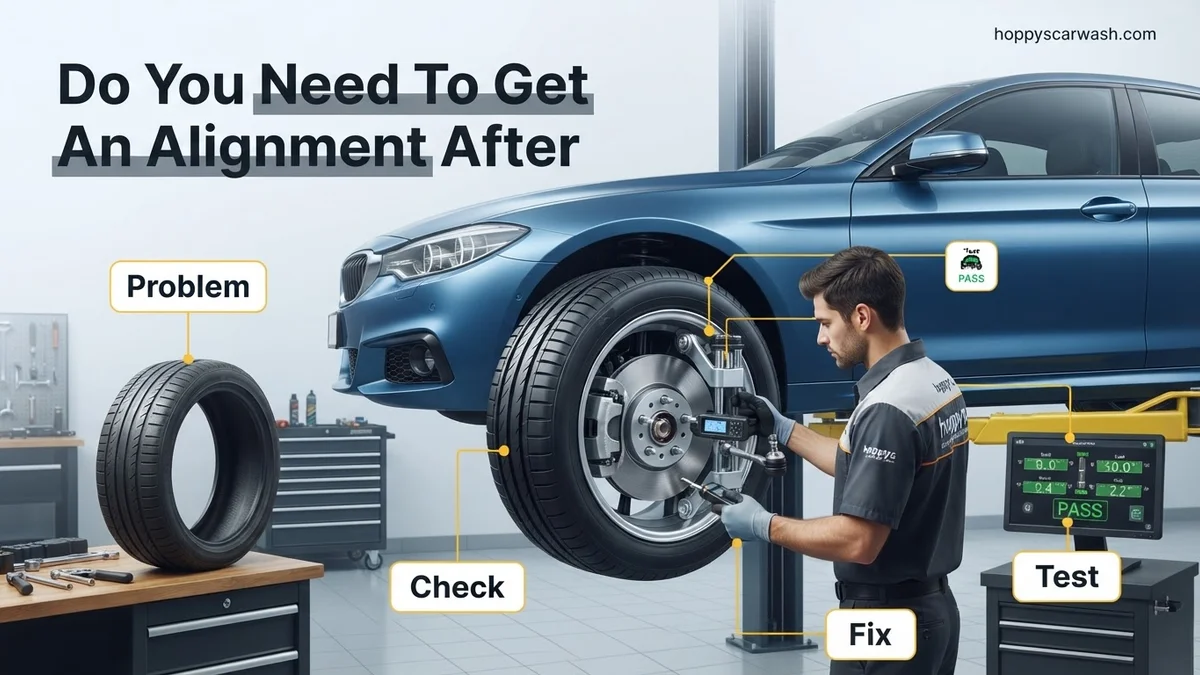
Do You Need to Get an Alignment After New Tires in 2026
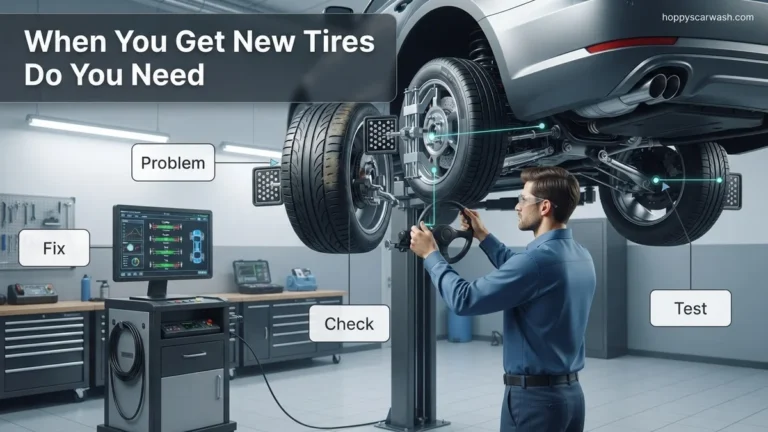
No, you do not technically need a wheel alignment simply because you bought new tires, as replacing tires does not alter your vehicle’s suspension geometry. However, getting an alignment check is strongly recommended to protect your expensive investment from premature, uneven wear caused by pre-existing alignment issues.
No, buying a brand-new set of tires does not automatically mean your car needs a wheel alignment. Putting fresh rubber on your rims does nothing to change your suspension geometry or steering angles, so a simple tire swap will not instantly throw your car out of alignment.
However, skipping an alignment check entirely after investing hundreds—or thousands—of dollars in new tires is a costly gamble. In 2026, premium tires represent a major financial commitment, and protecting that investment requires ensuring they wear evenly from day one.
Key Takeaways
- New tires alone do not automatically cause misalignment or fix existing steering geometry problems.
- Check your old tires for uneven tread wear patterns to determine if your car needs an alignment.
- Many tire manufacturer warranties require proof of regular alignments to remain fully valid.
- An off-center steering wheel or vehicle pulling to one side indicates an urgent need for service.
- Investing in a post-installation alignment check extends the lifespan of your brand new tires.
Why Your Car Needs an Alignment Check After New Tires
Even though mounting new tires does not alter your alignment, the condition of your old tires often tells a story about hidden suspension wear. A professional alignment check acts as an insurance policy for your new rubber.
Protecting Your Financial Investment
A full set of quality passenger tires easily runs well over six hundred dollars today. If your suspension components have subtle wear that causes your wheels to point slightly inward or outward, those expensive new tread blocks will scrub against the pavement.
Consider these practical reasons to check your alignment:
- Uneven wear transfer: If your old tires wore out on the inside edge, your new tires will follow the exact same path within a few thousand miles.
- Premature replacement: Misalignment can destroy a brand-new tire in less than 10,000 miles, completely wasting your upfront purchase.
- Fuel economy: Misaligned wheels create rolling resistance, which forces your engine to work harder and burns more fuel at 2026 gas prices.
The Suspension Connection
Think about how your vehicle got to this point. If your previous tires lasted for 50,000 miles, your suspension has endured years of potholes, rough construction zones, and speed bumps. Springs sag, control arm bushings soften, and tie rods experience minor wear. Checking your alignment when installing new tires catches these hidden suspension shifts before they ruin your fresh tread.
How to Spot Warning Signs of Bad Alignment on Your Vehicle
You do not always need to pay for a professional alignment rack right away if your car is tracking straight and your old tires wore down evenly. Learning to read the warning signs helps you decide if you can skip the alignment service or if you need it immediately.
Classic Symptoms on the Road
Your vehicle will usually tell you if the alignment is off while you are driving down a straight stretch of highway. Pay attention to how the chassis behaves during your daily commute.
- The highway pull: If you briefly let go of the steering wheel on a flat road and the car immediately drifts left or right, your alignment needs attention.
- Off-center steering: Your steering wheel should sit completely straight when you are driving straight ahead. If it tilts to one side, your thrust angle is off.
- Vibration or looseness: A steering wheel that vibrates or feels loose can indicate both balance issues and alignment geometry problems.
Inspecting Your Old Tire Tread Patterns
Before you toss your old tires into the recycling bin, look closely at the tread wear patterns. They serve as a permanent report card for your vehicle alignment over the past few years.
If you see the inner or outer shoulder completely bald while the rest of the tread has life left, your camber or toe settings were wrong. If the tread blocks feel sharp and feathered like saw teeth when you run your hand across them, your toe alignment dragged the tires sideways across the asphalt. Spotting these patterns means you definitely need a professional alignment to protect your new tires.
Step-by-Step Guide to Evaluating Your Tire Wear and Suspension
Determining whether your vehicle requires an alignment after a tire installation in 2026 demands a methodical inspection. You can assess your vehicle health at home before visiting a service center.
Step 1: Check Tread Wear Patterns
Examine the contact patch across all four tires using a digital tread depth gauge. Uneven wear on the inner or outer shoulders immediately indicates a misaligned suspension geometry. According to data from the Tire Industry Association, neglected alignment can reduce tire lifespan by up to 12,000 miles.
Step 2: Perform a Controlled Steering Test
Find a flat, empty stretch of straight asphalt in safe driving conditions. Briefly release your grip on the steering wheel while traveling at 45 mph. If the vehicle veers decisively to the left or right within three seconds, your thrust angle is compromised.
Step 3: Inspect Suspension Components
Safely elevate the vehicle using a hydraulic jack and jack stands. Grab each front tire at the 12-o’clock and 6-o’clock positions and rock it firmly. Play or movement points directly to worn wheel bearings, ball joints, or tie rods that prevent a proper alignment.
What to Do If Your Car Still Pulls After Getting New Tires
Sometimes a vehicle continues to pull even after a brand-new set of tires and a fresh alignment. Environmental factors and internal tire construction often cause this residual pulling behavior.
- Check for Radial Tire Pull: Switch the front left and front right tires. If the pull reverses direction, the issue lies in internal tire construction, known as conicity, rather than the alignment.
- Verify Tire Pressures: Even a 3 psi discrepancy across an axle creates rolling resistance differences that mimic an alignment pull. Set pressures precisely to the manufacturer placard inside the driver door jamb.
- Inspect Brake Drag: A seized brake caliper or a stuck slide pin creates constant friction on one side of the vehicle. Lift the car and spin each wheel by hand to check for resistance.
- Consult a Master Technician: If mechanical fixes fail, visit a specialized alignment shop equipped with high-definition optical sensors. Professional diagnostic services typically range from $150 to $250 depending on whether camber and caster adjustments require specialty kit installations.
Conclusion
Protecting your tire investment in 2026 requires understanding that new rubber alone cannot correct underlying suspension geometry issues. While not every tire swap mandates an immediate alignment, verifying your steering angles prevents premature tread degradation and unsafe handling characteristics. According to verified research and expert sources from the Automotive Service Association, pairing new tires with a precision four-wheel alignment maximizes fuel efficiency and tire longevity. Schedule a professional alignment check today if your vehicle exhibits uneven wear or steering drift.
❓ Frequently Asked Questions
Do I need to get an alignment immediately after installing new tires?
You do not strictly need an alignment the exact moment new tires are put on, because swapping tires does not change suspension settings. However, if your old tires wore out unevenly, the underlying misalignment will quickly destroy your new tires unless corrected.
Will a tire manufacturer void my warranty if I skip the alignment?
Some manufacturers require proof of proper vehicle alignment and regular rotation to honor tread life warranties. Review the specific fine print of your tire warranty documentation to ensure compliance.
How can I tell if my vehicle is currently out of alignment?
Common symptoms include your vehicle pulling persistently to the left or right while driving on a straight road. You might also notice your steering wheel sits crooked or vibrates while you accelerate.
Is it better to get an alignment before or after buying new tires?
It is generally recommended to get the alignment done at the same time you install new tires. This ensures the fresh tread immediately adjusts to proper alignment specifications without unnecessary friction.
How often should I check my wheel alignment under normal driving conditions?
Experts recommend getting your wheel alignment checked at least once a year or every 10,000 to 12,000 miles. Hitting deep potholes or curbs can also knock your suspension out of alignment instantly.
What is the difference between wheel balancing and wheel alignment?
Balancing ensures the weight of the tire and wheel assembly is distributed evenly to prevent vibrations at high speeds. Alignment adjusts the angles of the wheels so they make proper contact with the road and point straight.