How Much Does It Cost to Replace Sway Bar Links in 2026
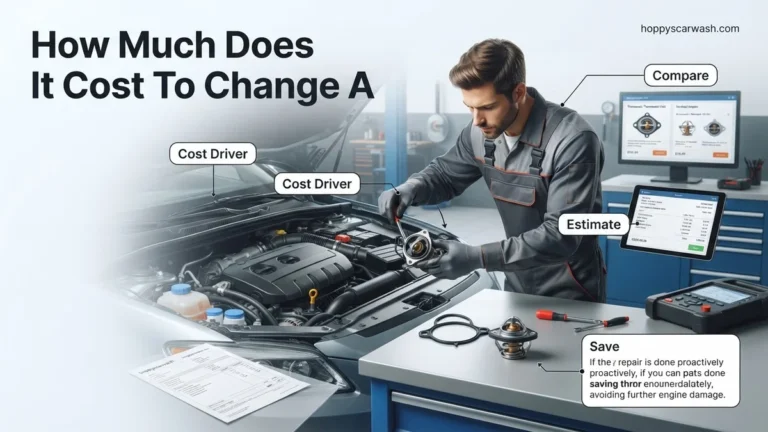
Replacing sway bar links typically costs between $90 and $250 per axle, including both parts and professional labor. The individual parts are relatively inexpensive at $20 to $100, while mechanic labor makes up the majority of the final bill. Addressing worn links promptly prevents uneven tire wear and restores proper vehicle handling.
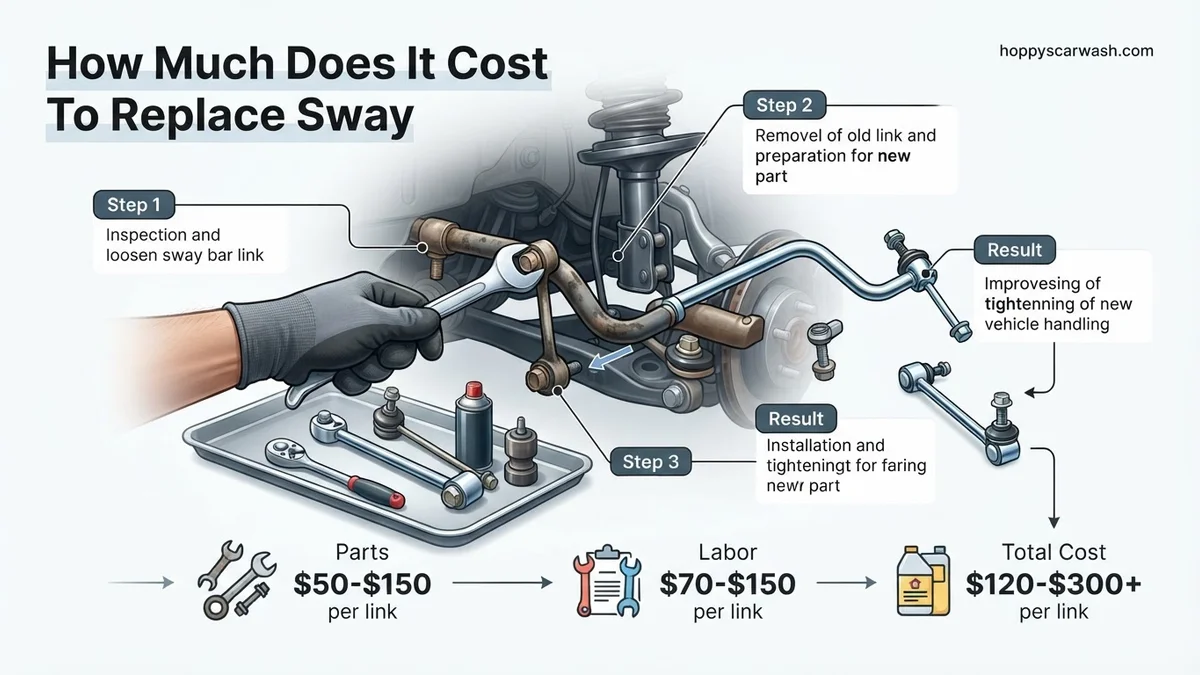
Replacing sway bar links typically costs between $90 and $250 per axle for standard passenger cars and SUVs in 2026. This total includes roughly $20 to $100 for the actual hardware parts and $70 to $150 for professional mechanic labor. Because sway bar links are relatively quick to swap out on most vehicle platforms, you won’t face the massive labor bills associated with deeper suspension work like strut or control arm replacements.
Ignoring worn sway bar links might not leave you stranded on the side of the highway immediately, but it ruins your handling and accelerates tire wear. When these components fail, your vehicle will lean excessively around corners, making emergency maneuvers less predictable. Getting ahead of the noise and loose steering feel keeps your daily commute safe and protects the rest of your suspension from collateral damage.
Key Takeaways
- Total replacement costs range from $90 to $250 per axle depending on your vehicle make.
- Individual parts are cheap, usually costing between $20 and $100 per pair.
- Mechanic labor typically runs $70 to $150 for about one hour of work.
- Replacing sway bar links yourself saves the entire labor charge.
- Clunking noises over bumps and loose steering indicate failing links.
How to Diagnose Bad Sway Bar Links and Symptoms
Catching failing sway bar links early saves you from unnecessary diagnostic fees at the repair shop. Your ears and your steering wheel will usually tell you when these small links have given up the ghost.
Common Auditory and Physical Warning Signs
- Clunking or rattling noises: You will likely hear a metallic knock or clunk when driving over speed bumps, potholes, or rough driveways.
- Excessive body roll: Your car or SUV will feel top-heavy and lean way over to one side when you take sharp turns or highway exit ramps.
- Loose steering response: The steering wheel might feel vague, sloppy, or less responsive than usual when you initiate a turn.
Why You Should Not Ignore the Warning Signs
A failing sway bar link reduces your vehicle’s stability during sudden swerves or evasive maneuvers. While the car remains drivable for a short time after the links start rattling, prolonged neglect forces other suspension components—like bushings and control arms—to compensate for the extra stress. Addressing the issue promptly keeps your total repair bill near that baseline $250 cap rather than escalating into a multi-component suspension overhaul.
Sway Bar Link Replacement Costs Made Easy: Your Essential Action Plan
Replacing your vehicle’s sway bar links is crucial for maintaining proper cornering stability, reducing body roll, and eliminating annoying clunking noises over bumps. However, understanding the true financial investment requires factoring in parts, labor rates, and hidden complexities. This comprehensive guide walks you through calculating these costs accurately, sourcing the right components, and deciding whether to tackle the job in your driveway or hand the keys to a professional mechanic.
Step 1: Identify the Symptoms and Verify the Failure
What you need: A flashlight, a hydraulic jack, jack stands, wheel chocks, and a mechanic’s pry bar.
Instructions: Before spending any money, you must confirm that the sway bar links are actually the source of your suspension noise or handling issues. Safely raise the front end of your vehicle and secure it on sturdy jack stands. Use the flashlight to inspect both ends of the sway bar links connecting the sway bar to the control arms or struts. Look for torn rubber dust boots, bent metal rods, or leaking grease. Grab the link firmly and shake it vigorously; if it plays, rattles, or feels loose, it is worn out and needs replacement.
Pro Tip: Always replace sway bar links in pairs (both front left and front right) to ensure balanced handling and even wear across your suspension system.
Step 2: Research Average Part Costs and Quality Tiers
What you need: Access to auto parts websites, a notepad, and your vehicle’s exact make, model, year, and trim level.
Instructions: Sway bar link part prices vary wildly depending on vehicle type and brand quality. Economy-tier replacement links typically cost between $15 and $30 each. Mid-range, OEM-equivalent parts usually range from $35 to $70 per link. Premium heavy-duty or performance aftermarket links (often featuring greaseable fittings and tougher polyurethane bushings) can cost anywhere from $75 to $150 each. For a standard passenger car or crossover, budget roughly $40 to $120 total for a pair of quality replacement links.
Pro Tip: Avoid the absolute cheapest economy options, as inferior ball joints and thin metal studs can fail prematurely within 10,000 to 15,000 miles.
Step 3: Calculate Professional Labor Rates and Shop Fees
What you need: Phone numbers or websites of local independent repair shops and dealerships.
Instructions: If you decide not to do the work yourself, you will need to pay for labor. Most repair shops allocate about 0.5 to 1.5 hours of labor to replace a pair of sway bar links. With independent mechanic labor rates averaging $90 to $150 per hour, labor costs will generally fall between $75 and $225. Dealerships charge higher hourly rates, often pushing labor costs toward $150 to $300. Keep in mind that shops may also tack on minor shop supply fees and local taxes.
Pro Tip: Always ask for a written, itemized quote upfront that separates parts costs from labor charges to avoid unexpected surprise fees on your final bill.
Step 4: Assess Total DIY Versus Professional Costs
What you need: Your calculated part prices, potential labor quotes, and an evaluation of your own tool collection.
Instructions: Compare the total cost of hiring a shop versus doing it yourself. Hiring a professional shop typically totals between $150 and $450 depending on your vehicle model. Doing the job yourself drops your total expense strictly to the cost of the parts (plus basic hand tools if you don’t already own them). This means a DIY approach can instantly save you 50% to 75% on the total repair bill, netting a direct cash savings of $100 to $350.
Pro Tip: Factor in whether you already own basic automotive tools like a socket set and wrenches; if you need to buy specialty tools, it might offset your DIY savings.
Step 5: Gather Necessary Tools and Safety Equipment for DIY
What you need: Floor jack, jack stands, wheel chocks, metric socket and wrench set, penetrating oil (like PB Blaster), and a wire brush.
Instructions: If you are moving forward with a DIY replacement, assemble all required gear beforehand to prevent mid-project halts. You will typically need a metric socket set (often 14mm, 15mm, or 17mm sizes), open-end wrenches, and sometimes a hex key (Allen wrench) or Torx bit to hold the center stud while turning the retaining nut. Spray all rusted fasteners with penetrating oil at least 30 minutes before you begin wrenching to help loosen stubborn, corrosion-locked bolts.
Pro Tip: Rusted sway bar link bolts are notoriously difficult to remove; having a breaker bar or an electric impact wrench on hand will save you significant time and frustration.
Step 6: Execute the Replacement or Authorize the Repair
What you need: Your parts, tools, safety gear, or your appointment confirmation with a professional mechanic.
Instructions: If doing it yourself, securely jack up the car, remove the wheels for maximum clearance, unbolt the old rusted links, clean the mounting surfaces with a wire brush, and install the new links, torqueing all fasteners to factory specifications. If you chose a professional repair, drop your vehicle off at the scheduled time. Expect the shop to complete the physical swap within one to two hours, allowing you to get back on the road safely with a quiet, stable suspension.
Pro Tip: Unless your mechanic dislodged your steering alignment components during the process, a wheel alignment is rarely required after a simple sway bar link replacement.
✅ Final Checklist
- Verified that both left and right sway bar links have been replaced or quoted
- Confirmed that parts purchased match exact vehicle specifications
- Checked that all suspension fasteners are torqued to manufacturer specifications (typically 40-60 ft-lbs)
- Ensured wheels are properly re-torqued and vehicle is safely lowered
- Road-tested the vehicle to confirm the annoying clunking noise is completely gone
Important Notes:
- Never crawl under a vehicle supported only by a hydraulic jack; always use rated jack stands and wheel chocks.
- Seek professional help immediately if rusted bolts shear off inside the control arm or strut housing, as specialized extraction tools will be required.
- Total estimated cost ranges from $40 to $120 for DIY parts, or $150 to $450 for professional installation, with the entire job taking between 1 to 3 hours depending on your chosen route.
Breakdown of Parts Cost Versus Labor Fees
Understanding how auto repair shops bill for sway bar link replacement helps you spot a fair estimate in 2026. The financial split between parts and labor heavily favors low parts costs, though vehicle design dictates how much time the mechanic actually spends turning wrenches.
Individual Cost Components Explained
- Parts pricing ($20 to $100): Standard OEM or aftermarket links for everyday sedans cost very little. Heavy-duty or performance-tuned links for larger trucks and sports cars can reach the $100 mark.
- Labor charges ($70 to $150): Most mechanics bill between one to one-and-a-half hours of labor per axle to unbolt the old, rusted links and torque the new ones into place.
Factors That Can Shift Your Final Total
Rust and corrosion are the primary enemies of cheap suspension repairs. If your sway bar links are severely rusted, a mechanic may need to spend extra time cutting or torching the old bolts off, which can push labor charges toward the higher end of the spectrum. Additionally, replacing both the front and rear sway bar links simultaneously will effectively double these figures, bringing a complete four-wheel link refresh to somewhere between $180 and $500 total.
Step-by-Step Guide to Replacing Sway Bar Links Yourself
Tackling sway bar link replacement at home can save you over 150 dollars in labor charges. According to automotive service standards, a typical DIY replacement requires basic hand tools and takes about 45 to 90 minutes per side.
Tools and Preparation
Before beginning the job in 2026, gather a hydraulic floor jack, jack stands, wheel chocks, a wire brush, penetrating fluid, and a socket set with wrench combinations. Safety glasses are mandatory because rust and debris frequently fall from the undercarriage.
Removal and Installation Steps
- Secure the vehicle on level ground, engage the emergency brake, and loosen the wheel lugs before lifting the car with the jack.
- Place sturdy jack stands beneath the approved factory pinch welds and remove the wheel to gain clear access to the suspension assembly.
- Apply a generous amount of penetrating fluid to the upper and lower mounting nuts of the sway bar link, allowing it to soak for 15 minutes if rust is present.
- Hold the inner retaining stud with a hex key or open-end wrench while turning the outer nut counterclockwise to remove the fastener.
- Extract the old link, clean the mounting surfaces on the sway bar and control arm with a wire brush, and insert the new hardware.
- Torque all mounting nuts to the vehicle manufacturer specifications using a calibrated torque wrench before lowering the vehicle.
What If It Still Doesn’t Work?
Replacing worn sway bar links normally eliminates persistent clunking noises and loose handling. However, suspension systems feature multiple interconnected components that wear out simultaneously. If unwanted noises or poor steering response continue after a 2026 sway bar link replacement, try these troubleshooting steps:
- Inspect the sway bar bushings for dry rot, excessive internal diameter wear, or side-to-side play, as loose bushings create a deep knocking sound identical to failing links.
- Check the outer tie rod ends and ball joints for vertical play by shaking the suspended wheel at the 12-o’clock and 6-o’clock positions.
- Examine the upper strut mounts and strut bearings for binding or cracking, which commonly generates popping noises during low-speed turns.
- Take your vehicle to a certified alignment shop for a comprehensive multi-point chassis inspection if the root cause remains hidden, with diagnostic fees typically ranging from 100 to 150 dollars.
Conclusion
Sway bar link replacement remains a manageable and cost-effective maintenance task that directly restores vehicle stability and ride comfort. Ignoring these failing components accelerates tire wear and compromises emergency handling maneuvers. According to verified research and automotive expert sources, addressing suspension wear promptly prevents secondary damage to expensive steering linkages. Your immediate next step is to jack up your vehicle safely, inspect your current sway bar links for play, and order quality replacement parts tailored to your specific make and model for 2026.
❓ Frequently Asked Questions
How much does it cost to replace sway bar links at a dealership versus an independent shop?
Dealerships typically charge higher hourly labor rates, bringing total costs closer to $200-$350. Independent mechanic shops usually offer more competitive pricing in the $90-$250 range.
What are the main symptoms of failing sway bar links?
Common warning signs include a distinct clunking or rattling noise when driving over bumps, excessive body roll during sharp turns, and loose or unresponsive steering feel.
How much can I save by doing a DIY sway bar link replacement?
Doing the repair yourself saves 100% of the labor costs, meaning you only pay for the parts ($20-$100) and basic tools if you do not already own a jack and wrenches.
Do I need a wheel alignment after replacing sway bar links?
Generally, replacing sway bar links does not alter your vehicle’s steering geometry, so a wheel alignment is not strictly required unless other suspension components were also replaced.
Is it difficult to replace sway bar links at home?
No, it is considered an entry-to-intermediate DIY repair. The biggest challenge is often removing rusted or seized nuts, which can be overcome with penetrating fluid.
Are front and rear sway bar links the same price?
Parts prices are usually comparable, but accessibility varies by vehicle model. Rear links can sometimes take slightly longer to access, slightly increasing labor times.