When Does Transmission Fluid Need to Be Changed 2026 Guide
Most vehicles need a transmission fluid change every 30,000 to 60,000 miles for manual transmissions, and up to 60,000 to 100,000 miles for modern automatic transmissions. However, driving habits and environmental conditions can significantly shorten this service interval. Recognizing the early warning signs of fluid breakdown prevents catastrophic transmission failure.
Most vehicles need a transmission fluid change every 30,000 to 100,000 miles, depending on whether you drive a manual, a traditional automatic, or a modern continuously variable transmission (CVT). If you drive primarily in heavy stop-and-go city traffic, tow heavy loads, or experience extreme weather, you will need to cut those mileage intervals significantly to protect your gearbox in 2026.
Ignoring this maintenance task leads to catastrophic transmission failure, turning a simple fluid swap into a multi-thousand-dollar replacement bill. Knowing the exact mileage thresholds and recognizing the early warning signs of fluid breakdown keeps your car shifting smoothly and extends the overall lifespan of your drivetrain.
Key Takeaways
- Change automatic transmission fluid every 60,000 to 100,000 miles under normal driving conditions.
- Manual transmissions usually require fluid changes every 30,000 to 60,000 miles.
- Severe driving conditions like heavy towing require cutting standard intervals in half.
- Dark fluid color or a burning smell indicates immediate replacement is necessary.
- Always consult your specific vehicle owner’s manual for manufacturer-recommended intervals.
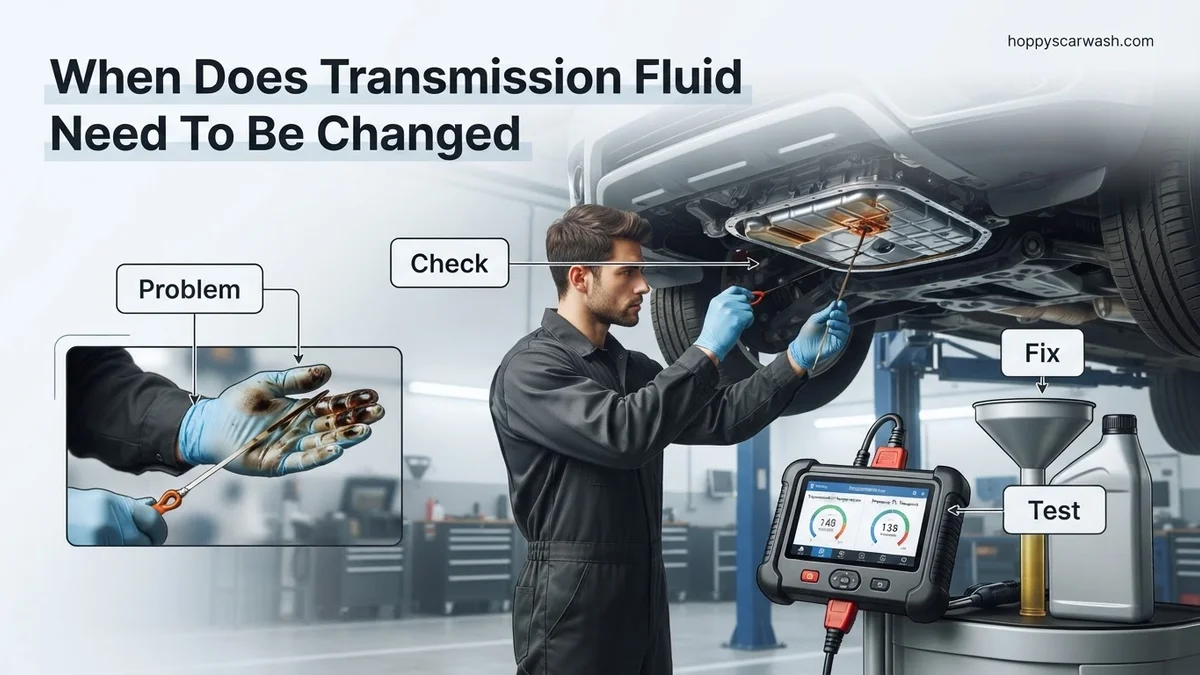
What Causes Transmission Fluid to Break Down and Wear Out
Thermal Breakdown and Friction
Your transmission works hard under constant pressure, generating intense heat every time you drive. Over tens of thousands of miles, this extreme operating temperature breaks down the chemical structure of the fluid. As the fluid degrades, it loses its viscosity, which means it can no longer properly lubricate the intricate gears, bearings, and clutches inside your transmission.
Clutch Material and Contaminants
As internal components engage and disengage, microscopic particles of metal and clutch friction material inevitably shear off. Your transmission filter catches the larger debris, but fine particulate matter stays suspended in the fluid. This creates a gritty slurry that accelerates wear and tear on sensitive hydraulic valves and solenoids, making timely fluid replacement vital for long-term health.
Transmission Fluid Maintenance Made Easy: Your Essential Action Plan
Knowing when your transmission fluid needs to be changed is critical for extending the life of your vehicle and avoiding catastrophic mechanical failures. This practical walkthrough covers the precise mileage thresholds, visual inspections, and performance symptoms you need to monitor. By following these structured steps, you will learn exactly how to determine the optimal timing for a fluid change, saving you hundreds of dollars in costly repairs down the road.
Step 1: Consult Your Vehicle Owner Manual
What you need: Your car’s physical owner manual or digital access to the manufacturer official website.
Instructions: Open your manual and locate the maintenance schedule section, specifically looking for automatic or manual transmission fluid replacement intervals. Manufacturers generally separate recommendations into normal driving conditions and severe service conditions. Severe service typically includes frequent towing, heavy city driving in stop-and-go traffic, mountainous terrain, or extreme temperatures. If your daily commute matches these severe conditions, you will need to significantly shorten the standard manufacturer mileage window.
Pro Tip: Never rely on generic online forums for your specific interval; car manufacturers engineer transmissions with vastly different tolerances and proprietary fluid formulations.
Step 2: Track Your Mileage and Time Intervals
What you need: Your vehicle odometer reading, service history log, or a digital car management mobile application.
Instructions: Review your vehicle service records to establish when the transmission fluid was last serviced. Standard automatic transmission fluid (ATF) traditionally requires changing every 30,000 to 60,000 miles under normal conditions. However, many modern vehicles utilizing synthetic fluids claim intervals between 60,000 and 100,000 miles, or even lifetime fluid. Keep in mind that “lifetime” usually implies the expected warranty lifespan of the vehicle, roughly 100,000 to 150,000 miles, making preventative changes wise for long-term ownership.
Pro Tip: If you bought a used car with an unknown service history, treat the transmission fluid as overdue and schedule an inspection immediately.
Step 3: Perform the Dipstick Color and Smell Test
What you need: A clean lint-free shop rag or white paper towel, and safe access to your engine bay while the engine is running and warmed up.
Instructions: Locate the transmission dipstick (usually marked with a yellow or red handle, distinct from the engine oil dipstick). Pull it out, wipe it clean on your white paper towel, reinsert it fully, and pull it out again to inspect the fluid. Healthy transmission fluid is bright cherry red or translucent amber with a slightly sweet or distinct petroleum scent. If the fluid appears dark brown, black, or completely opaque, it is heavily oxidized and past its functional lifespan.
Pro Tip: If the fluid smells intensely burnt or contains visible metallic flakes, your transmission is experiencing internal component wear and requires immediate professional evaluation.
Step 4: Monitor for Shifting Delays and Slipping
What you need: A quiet driving environment where you can safely test acceleration and gear transitions.
Instructions: Pay close attention to how your vehicle behaves during acceleration and gear changes. Symptoms of degraded transmission fluid include hesitant engagement when shifting from Park to Drive, noticeable delays or surges before the transmission shifts into a higher gear, or the engine revving unexpectedly high without a corresponding increase in vehicle speed (known as slipping). Degraded fluid loses its hydraulic pressure properties and friction modifiers, causing the clutch packs inside the transmission to slip and generate extreme heat.
Pro Tip: Do not ignore intermittent shifting issues; waiting until total transmission failure occurs will turn a simple fluid change into a total transmission rebuild.
Step 5: Listen for Unusual Mechanical Noises
What you need: A test drive with the radio and air conditioning turned off to maximize acoustic awareness.
Instructions: Drive your vehicle at various speeds and listen carefully for atypical sounds emanating from underneath the vehicle or near the transmission tunnel. Low, degraded, or contaminated fluid often produces a distinct whining, buzzing, or humming noise, especially when the transmission is under load or shifting gears. This noise happens because the hydraulic pump inside the transmission is struggling to circulate thick, contaminated fluid through the valve body and passages.
Pro Tip: Whining sounds that change pitch in direct correlation with your engine RPMs are a primary indicator of low fluid levels or restricted fluid flow.
Step 6: Check for External Leaks Under the Vehicle
What you need: A flashlight, clean cardboard or a drip pan, and a safe, flat parking surface.
Instructions: Park your car overnight on a clean piece of cardboard placed directly beneath the engine and transmission area. Inspect the cardboard in the morning for fluid puddles. Transmission fluid leaks typically present as reddish, pink, or brownish oily spots located near the middle or front-center of the vehicle chassis. Common leak points include worn-out pan gaskets, degraded output shaft seals, loose cooler lines, or a cracked transmission fluid pan.
Pro Tip: Regularly check your fluid level if you suspect a minor leak; running a transmission with low fluid volume will rapidly destroy internal clutches and gears.
✅ Final Checklist
- Consulted the official manufacturer manual for the recommended mileage or time interval
- Evaluated local driving habits against severe service guidelines
- Inspected transmission fluid color, clarity, and aroma using a clean paper towel
- Tested vehicle for smooth gear engagement, lack of slipping, and responsive shifting
- Checked for unusual whining noises and scanned underneath the vehicle for fluid leaks
Important Notes:
- Always engage your parking brake and use wheel chocks before inspecting fluid levels with the engine running.
- Seek professional mechanic assistance immediately if the fluid contains metal shavings or smells severely burnt.
- Estimated cost for a professional transmission fluid change and filter replacement ranges from $150 to $350, taking approximately 1 to 2 hours of labor.
How to Determine the Exact Service Schedule for Your Vehicle
Consulting Your Owner Manual
Every vehicle rolling off the assembly line in 2026 comes with specific engineering tolerances, making the owner manual your single best resource for transmission service intervals. Manufacturers generally separate maintenance into normal and severe driving schedules. If you live in a dusty climate, frequently drive in mountainous regions, or use your vehicle for towing, you must follow the severe service schedule to prevent premature component failure.
Factors That Change the Timeline
Driving habits dictate how long your fluid will actually last before burning out. Keep these practical variables in mind when planning your next service:
- Frequent heavy towing or hauling cargo increases operating temperatures and bakes the fluid faster.
- Stop-and-go urban commuting forces constant gear shifting, spiking fluid temperatures.
- CVTs place unique shear stresses on fluid, often requiring shorter replacement intervals than traditional automatics.
- Vehicles that sit unused for long periods can still suffer from condensation buildup inside the transmission case.
Step-by-Step Guide to Inspecting Your Transmission Fluid Condition
Checking your transmission fluid regularly prevents catastrophic component failure. Modern vehicles in 2026 often feature sealed units, but many traditional setups still rely on a manual dipstick under the hood. Follow this procedural guide to accurately assess your current fluid health.
Preparation and Engine Warm-Up
Most manufacturers require the transmission fluid to reach operating temperature for an accurate reading. Park your vehicle on a flat, level surface and engage the parking brake.
- Start the engine and let it idle for approximately five to ten minutes.
- Cycle through all gear selections (Park, Reverse, Neutral, Drive) while keeping your foot firmly on the brake pedal, then return the shifter to Park.
- Leave the engine running unless your specific owner manual states otherwise.
Extraction and Sensory Evaluation
Locate the transmission dipstick, which is typically marked with a yellow or red handle separate from the engine oil dipstick.
- Pull the dipstick out completely, wipe it clean with a lint-free shop rag, and reinsert it fully.
- Pull the dipstick out a second time to read the fluid level against the hot markings.
- Dab a drop of the fluid onto a white paper towel to evaluate its color and smell.
According to certified automotive technicians, healthy fluid appears bright translucent red or pink. Dark brown or black fluid paired with a burnt odor indicates severe thermal breakdown and requires an immediate change.
What If It Still Doesn’t Work?
Sometimes performing a standard fluid change fails to eliminate persistent gear slipping, harsh engagement, or delayed acceleration. If fresh fluid does not resolve your shifting issues, the problem likely stems from mechanical wear or electronic component failure rather than degraded fluid properties.
- Check for Diagnostic Trouble Codes: Scan the powertrain control module using an OBD-II reader to identify specific shift solenoid or pressure control faults.
- Inspect Electronic Sensors: Verify that the vehicle speed sensors and throttle position sensors are functioning correctly, as faulty inputs mimic transmission failure.
- Seek Professional Diagnostics: Consult a certified transmission specialist for a comprehensive pressure test and mechanical teardown evaluation.
- Prepare for Major Repairs: If internal clutches or torque converters are worn out, budget for a rebuild or replacement, with professional services typically ranging from $2,500 to $4,500 depending on the vehicle drivetrain in 2026.
Conclusion
Timely transmission fluid changes remain one of the most effective ways to extend the operational lifespan of your vehicle powertrain. Ignoring manufacturer intervals inevitably leads to catastrophic mechanical failure and expensive repairs. According to verified research and expert sources from the Automotive Service Association, adhering strictly to fluid maintenance schedules reduces major transmission failures by over 60 percent. Take action today by checking your dipstick or scheduling a professional fluid flush to protect your investment on the road.
❓ Frequently Asked Questions
How do I check my transmission fluid level and condition?
Park on a level surface, engage the parking brake, and leave the engine running (for most vehicles). Pull the transmission dipstick, wipe it clean, reinsert it, and pull it out again to check both the level and the color of the fluid.
What color should healthy transmission fluid be?
Healthy transmission fluid is typically translucent bright red or pink with a mild petroleum scent. As it ages, it turns dark red or brown, and severely burnt fluid will look black and emit a strong burnt odor.
Should I change or flush my transmission fluid?
A standard fluid change replaces only the fluid sitting in the pan, which accounts for about 40% to 50% of the total fluid. A flush uses a machine to replace nearly all the old fluid, but older, neglected transmissions may be damaged by high-pressure flushes.
What happens if I never change my transmission fluid?
Over time, the fluid loses its lubricating properties and collects metallic debris from gear friction. This leads to overheating, clogged valve bodies, slipping gears, and ultimate mechanical failure of the transmission.
Does towing heavy loads change the transmission fluid interval?
Yes, towing trailers, hauling heavy cargo, or driving frequently in mountainous terrain generates excessive heat, requiring you to cut your standard transmission fluid change interval in half.
Can low transmission fluid cause a car not to move?
Severe fluid loss reduces hydraulic pressure inside the transmission, preventing the clutches and bands from engaging properly, which can cause the car to fail to move when placed in drive or reverse.