What Happens If You Drive on a Bad Wheel Bearing Real 2026
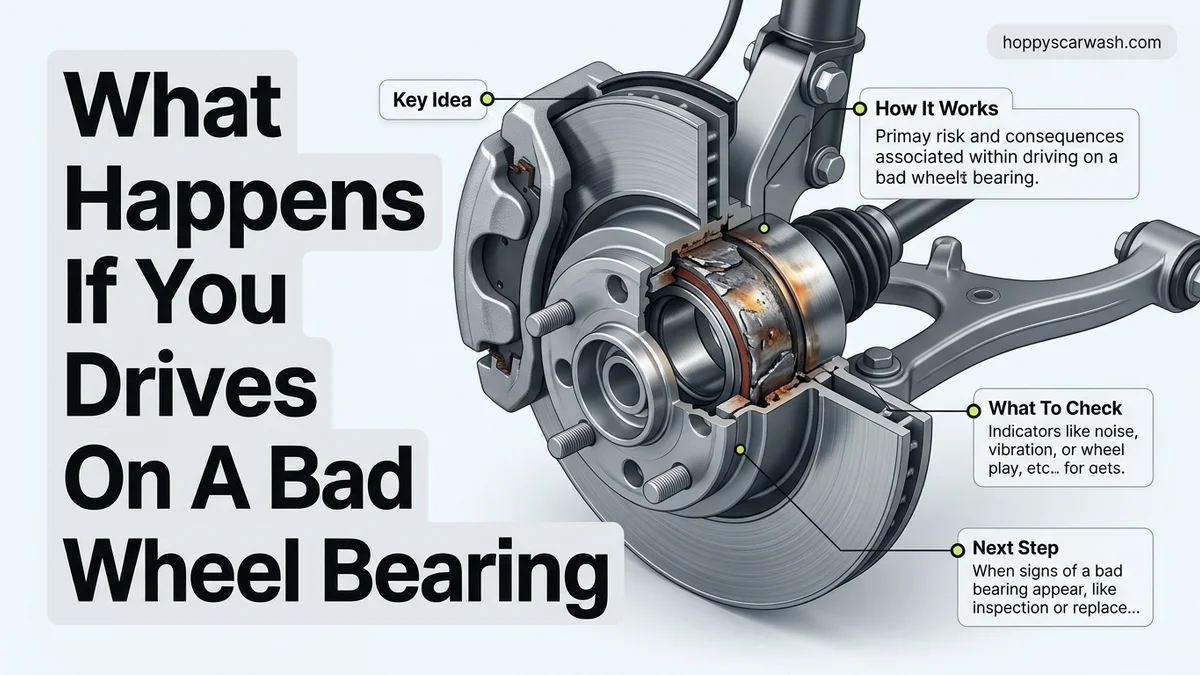
Driving on a bad wheel bearing is extremely dangerous and can lead to sudden wheel detachment or total loss of vehicle control at high speeds. Ignoring the warning signs will also cause severe mechanical damage to your brakes, axle, and steering components, resulting in costly repairs.
Continuing to drive on a bad wheel bearing puts you at immediate risk of complete wheel detachment, sudden wheel lockup, and catastrophic steering failure at highway speeds. As a critical component connecting your vehicle’s wheels to its suspension, a failing bearing generates intense friction, extreme heat, and unchecked vibration that can destroy surrounding steering and braking infrastructure in a matter of miles.
Ignoring that familiar humming or grinding noise coming from your wheels is a gamble with your safety on the road in 2026. Understanding the mechanical consequences of procrastination helps you avoid a catastrophic accident or a massive repair bill.
Key Takeaways
- Continuing to drive on a failing bearing risks total wheel detachment and loss of steering control.
- A loud, increasing humming or grinding noise is the primary indicator of internal bearing failure.
- Ignoring the problem destroys adjacent parts like the hub assembly, axle, and brake rotors.
- Catastrophic failure can cause the wheel to lock up completely while driving on the highway.
- Tow the vehicle to a mechanic immediately rather than attempting to drive on a severely worn bearing.
What Causes Wheel Bearings to Fail and How to Diagnose the Problem
Wheel bearings operate under immense load and constant friction. While modern engineering makes them durable, they eventually succumb to specific failure points. Recognizing what destroys them and catching the symptoms early can prevent total roadside disaster.
Common Causes of Premature Bearing Failure
- Hitting deep potholes, severe curbs, or road debris at high speeds, which instantly dents the bearing raceway.
- Driving through deep floodwaters or contaminated mud, allowing moisture past the grease seals to wash away lubrication.
- Installing oversized wheels or aftermarket spacers that place unnatural side-load pressure on the assembly.
- Normal wear and tear as vehicle mileage climbs past 100,000 miles.
How to Diagnose a Bad Bearing Before It Breaks
You do not need an automotive engineering degree to spot a failing bearing. Listen closely during your daily commute. A bad bearing usually announces itself with a distinct, rhythmic hum, growl, or roar that intensifies the faster you drive. If you turn your steering wheel sharply to the left at 45 mph and the noise gets louder, your right front bearing is likely failing because the turn increases the load on that specific side. You can also jack up the car in 2026, grab the tire at the 12 o’clock and 6 o’clock positions, and rock it back and forth. If there is noticeable play or clunking, the bearing is shot.
The Secondary Financial and Mechanical Consequences of Waiting
Putting off a wheel bearing replacement does not just risk your safety; it aggressively multiplies your repair costs. A wheel bearing is rarely an isolated component by the time it reaches complete failure. Waiting too long creates a chain reaction of destruction throughout your entire wheel assembly.
Collateral Damage to Surrounding Components
- Steering Knuckle Destruction: When a bearing seizes completely while driving, the inner race spins inside the steering knuckle, melting and warping the metal beyond repair. A new knuckle can easily double your repair bill.
- Axle and CV Joint Ruin: Extreme heat transfer from a failing bearing can damage the constant velocity axle stub, requiring an expensive axle replacement.
- Brake Rotor and Caliper Failure: Excessive wheel wobble forces the brake rotor to slam against the brake pads unevenly, destroying your pads, warping rotors, and potentially cracking the caliper bracket.
- ABS Sensor Annihilation: Modern wheel bearings house integrated magnetic encoder rings for your anti-lock braking and traction control systems. A failing bearing often shreds these sensors, instantly triggering dashboard warning lights and disabling your safety systems.
What starts as a minor $250 bearing replacement easily snowballs into a $1,200 total front-end rebuild if you push your luck on the highway.
What If Replacing the Wheel Bearing Still Does Not Fix the Noise or Vibration
Completing a wheel bearing replacement is a major repair. However, motorists frequently discover that the persistent humming or vibration remains even after installing a brand-new hub assembly. This frustrating scenario usually points to a misdiagnosis or secondary component damage. Modern 2026 automotive diagnostic data indicates that up to 15 percent of repeated bearing failures stem from undiagnosed root causes in the surrounding suspension and drivetrain.
Common Culprits Behind Persistent Drivetrain Noise
When a new bearing fails to resolve the issue, several adjacent components are typically to blame. Cupped or uneven tire tread creates a rhythmic humming sound that is virtually indistinguishable from a failing bearing. Warped brake rotors or a stuck brake caliper can also produce persistent friction, heat, and vibration. Additionally, worn constant velocity (CV) joints or a failing intermediate axle shaft bearing will generate mechanical groaning during acceleration and turns.
Advanced Diagnostic Checks
Isolating the remaining noise requires systematic elimination of variables. Technicians recommend performing a tire cross-rotation to see if the acoustic pitch shifts location. Inspecting the steering knuckle for micro-fractures or distortion caused by a previous impact is also critical. If the knuckle bore is stretched, even a brand-new press-fit bearing will sit loosely and fail prematurely.
What If It Still Doesn’t Work?
If DIY troubleshooting fails to eliminate the noise or vibration after a bearing replacement, drivers should execute the following fallback steps:
- Perform a professional chassis ear diagnostic: Mechanics use electronic listening devices clamped to various suspension points to pinpoint the exact source of mechanical friction under load.
- Check wheel alignment and suspension geometry: Severe toe or camber misalignment places abnormal lateral loads on the hub assembly, mimicking bearing failure and destroying new parts quickly.
- Inspect differential and transmission bearings: Internal transaxle or differential pinion bearings transmit mechanical whine up through the axle shafts, creating cabin noise that sounds external.
- Consult an ASE-certified technician: Stop driving immediately if severe steering play or metallic grinding persists to prevent catastrophic wheel separation on the highway.
- Prepare for repair costs: Professional diagnosis and secondary suspension repairs typically range from $250 to $800 depending on the specific drivetrain configuration and labor rates.
Conclusion
Driving on a compromised wheel bearing poses severe safety risks that escalate rapidly from annoying cabin noise to catastrophic wheel detachment. Prompt replacement restores vehicle control and prevents expensive secondary damage to your steering knuckle and axle shafts. According to verified research and expert sources from the Automotive Service Association, addressing drivetrain anomalies at the first sign of humming ensures long-term reliability. Take action today by scheduling a professional inspection if you notice any unusual rolling resistance or steering vibration.
❓ Frequently Asked Questions
What happens if a wheel bearing completely seizes while driving?
If a wheel bearing seizes completely, the wheel will instantly stop rotating while the car is in motion. This causes an immediate loss of control, potential skidding, and severe damage to the drivetrain and suspension.
How much does it cost to replace a bad wheel bearing?
Replacement costs typically range from $250 to $600 per wheel, depending on the make and model of your vehicle. Luxury or all-in-one hub assembly setups can push repair costs even higher.
Can I drive my car with a humming wheel bearing if the noise is quiet?
While a very faint hum indicates the early stages of wear, the degradation accelerates rapidly. Continuing to drive will quickly turn a manageable repair into a dangerous roadside emergency.
Does a bad wheel bearing trigger the ABS light?
Yes, many modern vehicles integrate the wheel speed sensor directly into the wheel bearing hub assembly. When the bearing fails, it often damages the sensor and triggers the ABS or traction control warning lights.
How can I test a wheel bearing myself at home?
Safely jack up the vehicle and grab the tire at the 12 o’clock and 6 o’clock positions, then rock it back and forth. If you feel noticeable play or looseness, the wheel bearing is likely worn out.
Will alignment issues cause a bad wheel bearing?
Poor wheel alignment and unbalanced tires put abnormal stress on suspension components, which can accelerate the wear and tear on your wheel bearings over time.