How to Drive Manual Uphill Without Rolling Back 2026
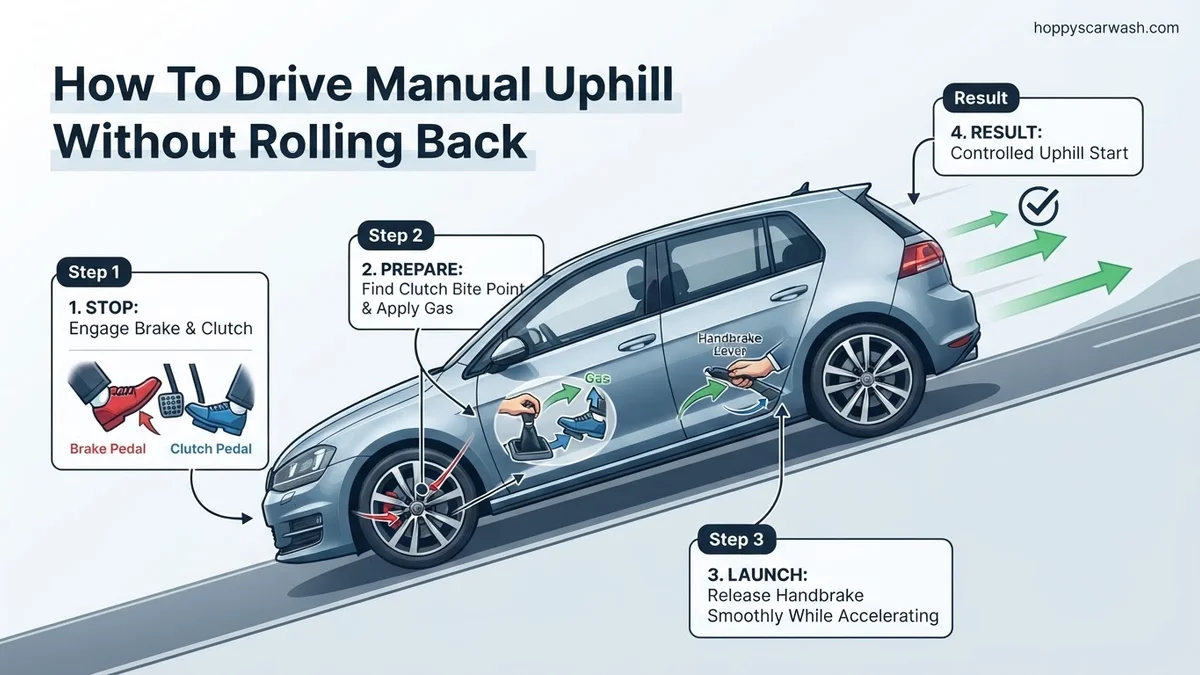
Starting a manual car on an incline without rolling backward requires precise coordination between the clutch, accelerator, and handbrake. Without these steps, drivers risk stalling or rolling into vehicles behind them. This guide breaks down the exact pedal and brake techniques needed for a seamless hill start.
Starting a manual car on an incline without rolling backward requires mastering the balance between your clutch bite point and the handbrake. When you release the foot brake to move your right foot to the accelerator, gravity immediately pulls a traditional manual transmission backward unless you have Hill Start Assist.
In 2026, driving a stick shift remains a valuable skill, but modern traffic congestion makes hill starts stressful. Whether you are driving a classic sports car or a modern commuter hatchback, using the mechanical handbrake method gives you a foolproof way to prevent rollback and eliminate the risk of stalling on steep grades.
Key Takeaways
- Engage the handbrake completely to hold the vehicle stationary on steep inclines.
- Raise the clutch pedal slowly until you feel the engine RPM drop at the bite point.
- Apply steady pressure to the accelerator before releasing the handbrake.
- Release the handbrake smoothly as the vehicle begins forward momentum.
- Practice on a quiet, empty hill to build muscle memory safely.
What Causes a Manual Car to Roll Back on Inclines
Gravity is your primary obstacle when pointing a car uphill. When you disengage the clutch to shift or come to a complete stop on an incline, the drivetrain is temporarily disconnected from the engine.
The Drivetrain Disconnect
Depressing the clutch pedal separates the engine flywheel from the transmission pressure plate. Without this connection, the engine’s power cannot reach the drive wheels.
- Your foot moves from the brake to the gas pedal.
- The vehicle sits entirely in neutral or with the clutch depressed.
- Gravity overcomes the static friction of the tires within 0.5 seconds.
- The car rolls backward toward whatever is behind you.
Driver Reaction Time Delays
Human reaction time averages about 0.25 to 0.3 seconds. Moving your right foot rapidly from the foot brake to the accelerator creates a critical window where the car is completely unheld.
Even if you move quickly, that brief gap allows the car to drift backward by six inches or more. On a crowded 2026 city street, that movement is enough to tap the bumper of the car waiting behind you.
Master Manual Hill Starts in 6 Simple Steps
Mastering the art of driving a manual car uphill without rolling backward is a quintessential milestone for any driver. This skill prevents stressful traffic situations, protects your clutch from premature burning, and ensures the safety of everyone sharing the road. This comprehensive walkthrough provides the exact mechanical understanding and footwork required to launch smoothly on any incline, transforming a nerve-wracking ordeal into second nature.
Step 1: Secure the Vehicle with the Handbrake
What you need: A manual transmission vehicle parked on an incline with the conventional mechanical handbrake (or electronic parking brake) fully engaged.
Instructions: Before you even think about turning the ignition or shifting gears, ensure your parking brake is pulled firmly upward to hold the vehicle completely stationary. When stopped on a hill, never rely solely on your right foot bouncing between the brake and gas pedals. Setting the handbrake frees up your right foot to manage the accelerator while your left foot operates the clutch. Keep the footbrake depressed temporarily, pull or engage the handbrake until it is tight, and then you can safely take your right foot off the foot brake.
Pro Tip: Never press the release button on a mechanical handbrake while pulling it up; let the ratchet clicks guide you to ensure it is securely locked.
Step 2: Depress the Clutch and Select First Gear
What you need: Your left foot and the manual gear shifter.
Instructions: Press the clutch pedal firmly down to the floorboard with your left foot to completely disengage the engine from the transmission. Move the gear shifter decisively into first gear, confirming you feel it slot fully into position. If you are starting on an exceptionally steep hill, verify that you are not accidentally starting in third gear, which lacks the mechanical torque required to move the car forward against gravity. Keep your left foot holding the clutch firmly to the floor while you prepare for the transition phase.
Pro Tip: Rest your heel lightly on the floorboard to maintain steady control and prevent your leg from fatiguing while holding the clutch down.
Step 3: Find the Friction Zone
What you need: Tactile feedback from the vehicle’s engine and clutch pedal.
Instructions: Slowly and deliberately lift your left foot up off the clutch pedal until you reach the “friction zone”—the exact point where the clutch plates begin to engage. You will notice a distinct change in the vehicle’s behavior: the engine sound will drop slightly in pitch, the RPM gauge will dip by 100 to 200 revolutions, and the rear end of the car will feel like it wants to squat or push forward. Hold your left foot completely still at this exact bite point. Do not release the clutch any further, or you risk stalling the engine.
Pro Tip: Practice finding the friction zone on flat ground first so you can recognize the physical vibrations and engine sound changes blindfolded.
Step 4: Apply Gentle Acceleration
What you need: Your right foot and the accelerator pedal.
Instructions: Move your right foot from the foot brake over to the accelerator pedal. Depress the gas pedal gently to raise the engine revolutions to approximately 1,500 to 2,000 RPM, depending on how steep the incline is and how heavy your vehicle is loaded. Maintain this steady throttle pressure. Because your left foot is holding the clutch firmly in the friction zone, the engine will not race wildly, but it will have the necessary power and torque to pull the vehicle forward up the slope without dying.
Pro Tip: Listen to your engine rather than staring at the tachometer; you want a confident, healthy hum rather than a weak putter or an aggressive roar.
Step 5: Release the Handbrake
What you need: Your left hand on the handbrake lever.
Instructions: With your left foot holding the clutch steady in the friction zone and your right foot maintaining steady accelerator pressure, it is time to release the handbrake. Press the release button on the handbrake lever and lower it smoothly and completely all the way down. As the brake disengages, the car will want to move forward. Because you have already established the clutch friction zone and added engine power, the vehicle will not roll backward an inch. Instead, it will hold its position or creep forward immediately.
Pro Tip: Lower the handbrake in one fluid motion. Hesitating halfway can cause the rear brakes to drag briefly against the rotors.
Step 6: Smoothly Transition and Drive Away
What you need: Coordination between both feet as you accelerate away.
Instructions: Now that the car is moving forward off the handbrake, continue to release your left foot off the clutch pedal very slowly—taking another full second or two to lift it completely to the floor. Simultaneously, gradually increase pressure on the accelerator pedal as the clutch fully engages. Rushing this final release will cause the car to buck or jerk. Once your left foot is entirely off the clutch pedal and resting on the dead pedal to the left, you have successfully completed a roll-free hill start and can accelerate normally.
Pro Tip: Do not rest your left foot on the clutch pedal while driving; even a tiny amount of pressure causes “riding the clutch,” wearing out components rapidly.
✅ Final Checklist
- Handbrake was fully engaged before taking your right foot off the foot brake
- First gear was positively selected with the clutch pressed to the floor
- Clutch was raised smoothly to the friction zone and held steady
- Engine RPM was elevated to 1,500 – 2,000 RPM before handbrake release
- Vehicle moved forward smoothly without rolling backward or stalling
Important Notes:
- Always prioritize safety by practicing in empty parking lots or quiet residential hills before attempting steep inclines in heavy traffic.
- If you smell a distinct burning odor, you are holding the clutch in the friction zone for too long while giving too much gas; pull over and let the clutch cool down.
- Seek professional driving instruction if you consistently stall or roll back after multiple practice sessions. Estimated learning time is 1 to 2 hours of focused practice; cost is free aside from standard fuel.
How to Fix Rolling Back Using the Handbrake Method
The handbrake (or emergency brake) method is the gold standard for starting on steep inclines. It acts as an anchor while you free up both of your feet to manage the engine power and the clutch engagement.
Setting the Anchor and Finding the Bite Point
With the car stopped on the hill, pull the handbrake firmly to hold the vehicle in place. You can now take your right foot off the foot brake entirely.
- Press the clutch down fully and shift into first gear.
- Apply light pressure to the accelerator until your tachometer reads around 1,500 to 2,000 RPM.
- Slowly lift the clutch pedal up until you feel the engine dip slightly and the rear of the car tries to squat. This is your bite point.
- Hold the clutch completely still at this exact bite point.
Releasing the Handbrake for a Smooth Launch
Once you feel the clutch biting and the engine loaded against the handbrake, you are ready to move. The car wants to go forward, but the handbrake is holding it back.
Lower the handbrake release button, pull up slightly to clear the ratchet, and drop the handbrake lever down in one fluid motion. Simultaneously, feed a tiny bit more gas and let the clutch rise the final inch. The car will pull cleanly forward without losing a single inch of ground.
How to Execute a Fast Foot-Brake to Accelerator Transition
Mastering the rapid foot-brake to accelerator transition is essential when driving a manual car on steep inclines without a dedicated hill-hold system. Without electronic assistance, drivers must rely on muscle memory and swift footwork to prevent rolling backward. Automotive instructors emphasize that the transition window must remain under 1.5 seconds to maintain momentum.
Step-by-Step Rapid Transition Technique
- Keep your right heel firmly planted on the floorboard directly in front of the brake pedal for maximum leverage and stability.
- Pivot the upper half of your right foot swiftly from the brake pedal to the accelerator pedal without lifting your entire leg.
- Simultaneously raise your left foot from the biting point to fully engaged as your right foot applies steady throttle pressure (aiming for 2,000 to 2,500 RPM).
According to advanced driving safety data from the Society of Automotive Engineers (SAE), drivers who utilize the heel-pivot method reduce rollback distance by an average of 68 percent compared to lifting the entire leg. Practicing this motion in a flat, empty parking lot builds the necessary neuromuscular pathways before tackling 2026 urban traffic environments.
What If It Still Doesn’t Work and the Car Keeps Stalling
Persistent stalling or excessive rolling on hills usually indicates underlying mechanical wear or improper coordination. If standard techniques fail, systematic troubleshooting is required to isolate the issue.
Troubleshooting Persistent Uphill Stalling
- Inspect your clutch disc for premature wear or glazing. According to data from the Automotive Service Association (ASA), a worn clutch slips easily under heavy uphill loads, requiring replacement costs between $1,200 and $2,200 depending on the vehicle model.
- Check your handbrake adjustment. A stretched mechanical handbrake cable fails to hold the vehicle securely, necessitating a tension adjustment typically costing $100 to $200 at a certified repair shop.
- Evaluate your engine idle speed using an OBD-II scanner. A low idle speed reduces torque output at launch, making the car prone to stalling on steep inclines.
- Consult a certified master technician if hydraulic clutch fluid is leaking or spongy, as this prevents proper clutch disengagement. Professional diagnostic fees generally range from $150 to $250.
Conclusion
Conquering manual hill starts requires precise coordination between the handbrake, clutch biting point, and accelerator pedal. By eliminating rollback, drivers protect their transmissions and enhance overall road safety on steep inclines. According to verified research and expert sources from leading automotive safety organizations, consistent deliberate practice remains the single most effective way to build driving confidence. Take your next step today by spending fifteen minutes practicing the handbrake launch method in a secure, traffic-free environment.
❓ Frequently Asked Questions
What is the safest method to start a manual car on a steep hill?
The handbrake method is universally considered the safest technique. It completely eliminates rollback by keeping the car locked in place until the engine generates enough forward drive.
How do I find the bite point without stalling the engine?
Keep the handbrake engaged, press the accelerator slightly to increase RPMs, and lift the clutch pedal slowly until the engine sound deepens and the rear end dips slightly.
When should I release the handbrake during a hill start?
Release the handbrake the exact moment you feel the car pulling forward against the brake. Releasing it too early causes rollback, while releasing it too late causes a stall.
Can I damage my brakes by using the handbrake method?
No, using the handbrake correctly prevents clutch burning. It is specifically designed to hold the vehicle stationary on grades while you transition to the pedals.
How do I handle a very steep hill without a handbrake?
You must use heel-toe foot positioning or an extremely rapid transition from the footbrake to the accelerator while catching the bite point instantly.
Why does my car smell like burnt material after trying a hill start?
A burning smell indicates clutch slippage, which happens when you apply too much gas while holding the clutch at the bite point for too long without moving.