What Does It Mean to Cut Someone Off in Traffic 2026 Guide
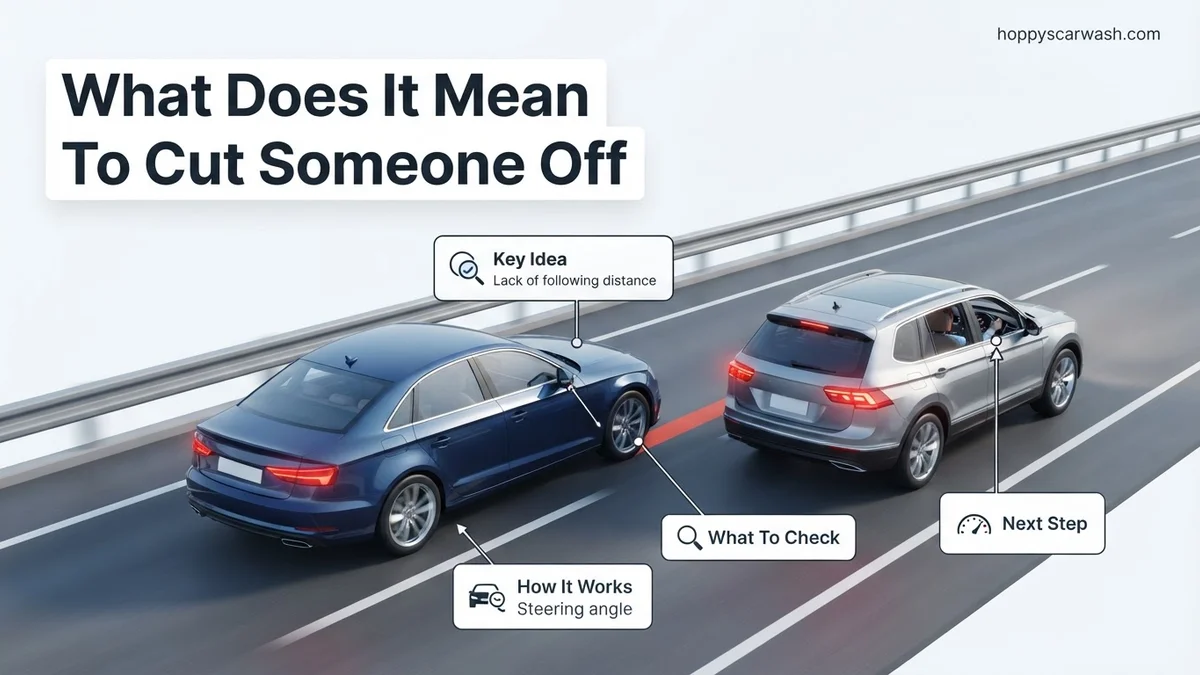
Cutting someone off in traffic means entering another driver’s lane too closely, forcing them to brake harshly or swerve to avoid a collision. This dangerous driving behavior often triggers severe road rage and leads to preventable rear-end accidents.
Cutting someone off in traffic means merging, turning, or changing lanes directly into another driver’s immediate path, forcing them to brake hard or swerve to avoid a collision. It happens when you misjudge speed or distance, leaving the trailing vehicle with inadequate stopping space.
As traffic congestion peaks in 2026, understanding this maneuver matters practically because it is a primary catalyst for rear-end collisions and road rage incidents. Recognizing the exact mechanics of cutting someone off helps you avoid aggressive driving habits and keeps daily commutes predictable and safe.
Key Takeaways
- Cutting someone off forces other drivers to brake harshly, creating immediate rear-end collision risks.
- Always check blind spots and use turn signals before changing lanes.
- Maintain a safe following distance of at least three to four seconds.
- Avoid aggressive merging when traffic is moving at high speeds.
- Recognize that abrupt lane changes are a primary trigger for road rage incidents.
What Causes Drivers to Cut Someone Off in Traffic
Most dangerous cut-offs are not malicious; they stem from poor spatial awareness, distraction, or last-second panic. When you understand these root causes, you can actively prevent them on the road.
Distracted Driving and Navigation Panic
- Waiting until the final hundred feet to realize your GPS requires an immediate lane change.
- Glancing down at a mobile device and failing to gauge the closing speed of adjacent traffic.
- Tunnel vision focused solely on your destination rather than the flow of vehicles around you.
Misjudging Speed and Gap Size
- Assuming a car traveling at 65 mph can slow down instantly to accommodate your slower entry.
- Failing to utilize convex mirrors and blind spot monitors effectively before shifting weight into a new lane.
- Rushing a left or right turn onto a busy roadway because you misestimated the gap between oncoming vehicles.
Step-by-Step Guide to Safe Merging and Lane Changes
Executing a lane change without cutting anyone off requires a methodical approach. By following a strict sequence of checks, you ensure that surrounding drivers never have to slam on their brakes.
Preparation and Signaling
- Turn on your indicator at least five seconds before moving, giving nearby drivers ample warning of your intentions.
- Scan your rearview and side mirrors continuously to monitor the vehicle occupying your target space.
- Check your physical blind spot with a quick over-the-shoulder glance to catch any cars hidden from mirror view.
Execution and Space Management
- Accelerate smoothly to match the speed of the traffic in the destination lane rather than slowing down.
- Ensure you can see the entire front end of the trailing car in your rearview mirror before pulling in.
- Move over gradually, maintaining a steady wheel adjustment instead of a sharp, jerky swerve.
How to Fix Blind Spot Habits and Avoid Close Calls
Eliminating blind spot errors requires a systematic approach to mirror adjustment and physical head checks. According to the Society of Automotive Engineers (SAE), traditional mirror settings leave dangerous gaps in a driver’s field of view. Modern defensive driving strategies demand a complete physical overhaul of your daily mirror habits.
Optimizing Your Mirror Configuration
Proper mirror placement drastically reduces the likelihood of accidentally cutting off a fellow motorist by shrinking unseen zones. Drivers must adjust their side mirrors outward until they just barely capture the side of their own vehicle.
-
Adjust the rear-view mirror to center the entire rear window from your normal driving posture.
Lean your head almost against the driver-side window to set the left side mirror outward.
Lean toward the center console to set the right side mirror outward by the same margin.
Verify the setup by watching a passing car transition seamlessly from the rear-view mirror to the side mirror, and finally into your peripheral vision.
Executing Reliable Shoulder Checks
Mirrors alone cannot eliminate every hazard on high-speed 2026 roadways. A physical glance over your shoulder remains mandatory before every lateral movement. Quick, deliberate checks ensure that modern vehicle design pillars do not obscure a merging motorist.
-
Signal your intent at least five seconds prior to executing any lane change.
Glance rapidly over your shoulder toward the intended direction of travel.
Complete the maneuver smoothly without reducing your speed below the flow of surrounding traffic.
What If Another Driver Cuts You Off on the Road
Encountering an aggressive or distracted driver who cuts you off unexpectedly requires immediate emotional and physical control. The AAA Foundation for Traffic Safety reports that reacting with retaliation escalates minor friction into severe road rage incidents.
Immediate Defensive Maneuvers
When someone forces their way into your lane without adequate spacing, your primary objective is collision avoidance. Protecting your vehicle and passengers always supersedes teaching the other driver a lesson.
-
Ease off the accelerator immediately to create a safe braking buffer between vehicles.
Firmly apply the brakes if the distance closes too rapidly, avoiding sudden slams that could cause a rear-end collision behind you.
Hold your steering wheel steady and resist the urge to swerve into adjacent lanes or onto the shoulder.
Allow the erratic driver to pass completely out of your immediate vicinity before resuming your normal pace.
What If It Still Doesn’t Work?
If recurring close calls or persistent mirror adjustments fail to eliminate driving anxiety or near-misses, deeper intervention is required. Environmental factors or vehicle equipment failures often demand specialized solutions in 2026.
-
Install aftermarket blind spot monitoring systems equipped with radar sensors if your vehicle lacks factory assistance. Estimated cost ranges from $300 to $800 including professional installation.
Upgrade convex blind spot stick-on mirrors to expand your direct field of view instantly for less than $15.
Enroll in an advanced defensive driving course certified by the National Safety Council. Professional instruction typically costs between $50 and $150.
Consult a vision specialist or optometrist if peripheral vision degradation contributes to frequent driving miscalculations. Comprehensive eye exams generally range from $150 to $250 without insurance coverage.
Conclusion
Cutting someone off in traffic means failing to yield adequate right-of-way, creating an unsafe braking situation for surrounding motorists. Mitigating this risk requires disciplined mirror adjustments, consistent shoulder checks, and strict adherence to space management principles. According to verified research and expert sources from the National Highway Traffic Safety Administration, maintaining proper following distances and signaling early are the most effective ways to prevent road conflicts. Take action today by properly aligning your side mirrors before your next commute.
❓ Frequently Asked Questions
What specific driving maneuvers count as cutting someone off?
Common scenarios include darting into a small gap on the highway, making a left turn immediately in front of oncoming traffic, or squeezing past a semi-truck without adequate clearance.
How does cutting someone off contribute to road rage?
When a driver is forced to slam on their brakes unexpectedly, it causes sudden fear and anger, often leading to retaliatory driving behavior like tailgating or shouting.
What is the proper way to merge onto a busy highway?
Match the speed of highway traffic, signal your intent well in advance, find an open gap, and smoothly merge without forcing anyone to slow down.
Can you get pulled over for cutting someone off?
Traffic police routinely issue tickets for erratic lane changes, unsafe passing, and failure to yield when drivers cut others off.
How can I check my blind spots more effectively?
Adjust your side mirrors to reduce blind spots, always perform a quick physical head check over your shoulder, and never rely solely on digital sensors.
What should you do if you accidentally cut someone off?
Raise your hand in a gesture of apology, avoid engaging if they react angrily, and maintain a calm, steady speed to de-escalate the situation.