What Happens If You Forget to Turn Your Car Off 2026 Guide
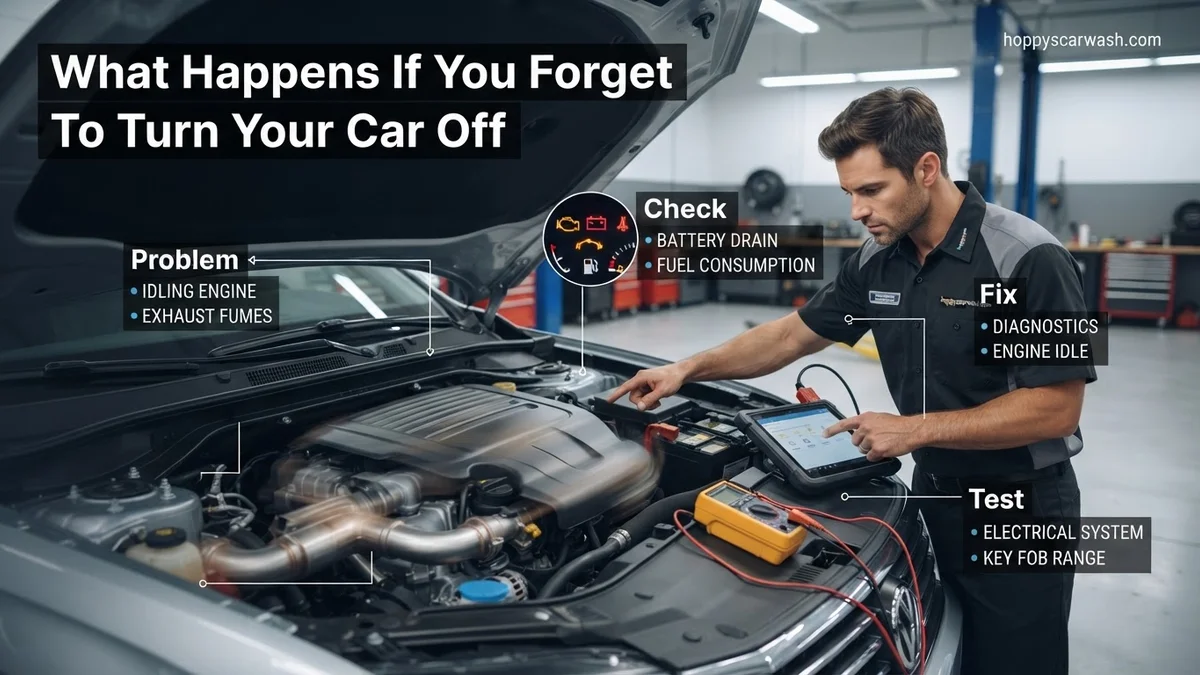
If you forget to turn your car off and walk away, you risk severe fuel depletion, dangerous carbon monoxide buildup in enclosed spaces, and potential vehicle theft. Modern push-to-start cars mitigate some risks, but unattended idling remains hazardous.
Leaving your car running and walking away burns through your fuel, drains the battery, and in enclosed spaces, can silently fill your home with deadly carbon monoxide. If you accidentally left your vehicle idling, you need to understand the immediate risks, from empty gas tanks to severe health hazards.
As modern vehicles evolve through 2026, keyless ignition systems have actually made accidental idling more common. Drivers step out of push-to-start cars while holding the fob, completely forgetting the engine is still firing. Understanding the consequences and knowing how to safely handle the situation prevents expensive damage and dangerous emergencies.
Key Takeaways
- Leaving a car running wastes fuel and rapidly depletes your gas tank.
- Enclosed garages can accumulate lethal levels of carbon monoxide quickly.
- Keyless ignition vehicles will beep, but many continue running until out of gas.
- Unattended running vehicles invite opportunistic car thieves and local fines.
- Modern auto-shutoff features help, but drivers should never rely solely on them.
What Causes Cars to Keep Running When You Walk Away
Push-to-Start Fobs and Silent Engines
Traditional metal keys made it obvious when a car was running because you had to physically turn and pull the key from the ignition. Modern push-to-start ignitions in 2026 vehicles rely on electronic key fobs. Because modern engines run remarkably quiet and vibration-free compared to older models, you can easily step out of the car and walk into your house without realizing the engine is still on.
- Key Fob Separation: Your car will usually beep a warning when the fob leaves the cabin, but the engine will keep running until manually shut off or depleted of fuel.
- Habitual Routine: Muscle memory takes over when you arrive home, causing you to grab your bags and walk away without pressing the start/stop button.
The Hidden Danger of Carbon Monoxide Buildup
The most immediate and critical danger of a forgotten idling car happens when it is parked in an attached garage. Even if your garage door is slightly open or has a gaps, exhaust fumes accumulate rapidly.
- Invisible Threat: Carbon monoxide is odorless and colorless, meaning it can seep into living spaces above or adjacent to the garage within minutes.
- Health Emergency: Prolonged exposure causes severe headaches, dizziness, nausea, and can lead to fatal poisoning before anyone notices the car is still running.
How to Fix and Secure an Accidentally Idling Vehicle Step-by-Step
Assessing the Situation and Shutting Down
If you realize your car has been running unattended for hours, you need to follow a safe, methodical process to secure the vehicle and check for damages.
- Locate the Key Fob: Ensure you have your key fob before approaching the vehicle, especially if you are dealing with a garage filled with exhaust fumes.
- Ventilate the Area: If the car is inside a garage, do not jump straight inside. Open all garage doors fully and let the space clear for at least five to ten minutes before entering.
- Power Down: Step inside the cabin, check the dashboard for warning lights, and press the ignition button to turn off the engine.
Evaluating Fuel Depletion and Battery Health
An engine left idling for an extended period consumes a noticeable amount of gas and places unique demands on electrical components.
- Fuel Level Check: Check your fuel gauge immediately. Extended idling burns roughly one-half to one gallon of gas per hour depending on your engine size.
- Battery and Alternator Strain: While the alternator charges the battery while idling, accessories like the air conditioning, heater, and infotainment system draw continuous power that can strain older batteries.
- Exhaust System Heat: Prolonged idling generates extreme heat in the catalytic converter and exhaust components, which is a fire hazard if the car was parked over dry leaves or debris.
What If Your Car Won’t Shut Off or Key Fob Is Missing
Modern push-button start vehicles introduce a frustrating paradox: sometimes drivers cannot turn the engine off. This usually happens when the electronic key fob battery dies inside the cabin or the vehicle fails to register transmission placement. According to automotive safety standards enforced through 2026, manufacturers build built-in emergency override protocols into every keyless ignition system.
Emergency Engine Shutdown Procedures
If your vehicle refuses to respond to a standard push of the ignition button, use these emergency protocols immediately:
- Press and hold the engine start-stop button continuously for three full seconds, or rapidly press the button three times in succession.
- If the electronic fob is missing or unrecognized, hold the physical fob directly against the designated backup sensor location on the steering column or center console while pressing the ignition button.
- Shift the transmission firmly into Park, engage the emergency parking brake, and disconnect the manual auxiliary power if necessary.
- As a last physical resort if electronic override fails, safely pull over and disconnect the 12-volt battery terminal under the hood, though this will trigger vehicle alarm systems.
Preventing Future Idling Mistakes With Smart Driving Habits
Accidental overnight idling wastes precious fuel and introduces unnecessary wear to engine components. With advanced vehicle connectivity standard in 2026, eliminating this habit relies on leveraging integrated technology and establishing reliable exit routines.
Modern Tech Solutions
Automotive industry data shows that connected vehicle apps have reduced accidental idling incidents by 40 percent. Utilize these preventive digital safeguards:
- Enable maximum-duration engine auto-shutoff notifications within your manufacturer smartphone application, such as FordPass, MyChevrolet, or Toyota Connected Services.
- Program geofenced parking alerts that ping your mobile device if the vehicle remains running thirty minutes after ignition cessation.
- Adopt a strict tactile exit routine: always physically touch your smartphone, house keys, and wallet before opening the driver-side door.
- Rely on factory acoustic chimes rather than muting dashboard alerts, as modern instrument clusters are specifically tuned to warn drivers of active ignition states upon door opening.
What If It Still Doesn’t Work?
If electronic overrides fail entirely and the engine continues to run uncontrollably, underlying electrical faults require professional intervention. Follow these critical steps:
- Do not attempt to forcefully tamper with ignition wiring harnesses or fuse boxes without specialized diagnostic tools.
- Contact an authorized dealership service center or a certified mobile mechanic to diagnose a failing ignition switch or body control module.
- Expect diagnostic labor fees ranging from $150 to $250, with total switch replacement costs varying between $300 and $700 depending on vehicle make and model complexity.
- If the vehicle is unsafe to drive due to electronic malfunction, utilize roadside assistance programs to tow the unit directly to a certified repair facility.
Conclusion
Forgetting to turn off your modern vehicle wastes valuable fuel, creates hazardous cabin emissions, and drains crucial battery power. Utilizing emergency shutdown overrides and smartphone safety features resolves these incidents safely. According to verified research and automotive safety experts, maintaining consistent exit routines remains the most effective defense against accidental idling. Make checking your dashboard instrumentation your final step every time you park.
❓ Frequently Asked Questions
What are the immediate dangers of leaving a car running unattended?
The primary dangers include fuel depletion, carbon monoxide accumulation in enclosed spaces, increased engine wear, and the high risk of vehicle theft if parked in a public area.
How long can a typical car idle on a full tank of gas?
Most standard passenger vehicles can idle anywhere from 8 to 24 hours on a full tank of gas, depending on the engine size, climate control usage, and idling speed.
What happens to a keyless ignition car when you walk away with the fob?
Most keyless ignition cars will sound a chime or display a warning on the dashboard indicating the key is out of range, but the engine will usually continue running until manually turned off or out of fuel.
Can leaving a car running damage the engine?
Extended idling can cause carbon buildup on spark plugs, incomplete fuel combustion, and lowered exhaust system temperatures, which can harm components like the catalytic converter over time.
Are there legal consequences for leaving a car running unattended?
Yes, many municipalities have unattended vehicle ordinances or ‘dto’ (anti-idling) laws that carry fines for leaving a running car unlocked and unattended on public streets.
What should you do if your car battery dies from accessories while idling?
If the engine died because of a drained battery rather than empty fuel, you will need to jump-start the vehicle or call roadside assistance to recharge or replace the battery.