How to Remove Hard Water Spots from Car Windows 2026 Guide
Hard water spots consist of mineral deposits left behind when water evaporates on your vehicle’s glass. You can safely remove these stains using targeted step-by-step methods ranging from mild vinegar solutions to professional chemical removers and mechanical polishing.
The most effective and safe way to remove stubborn hard water spots from car windows without scratching the glass is by dissolving the mineral deposits with a targeted acidic solution like a 50/50 mix of distilled white vinegar and water, followed by a dedicated automotive glass polish for severe etching. Leaving baked-on calcium and magnesium deposits on your vehicle glass ruins your outward visibility and can permanently etch the surface if ignored.
As you look to clear up your windshield and side windows in 2026, modern detailing techniques focus heavily on chemical neutralization rather than aggressive scrubbing. This guide breaks down the exact step-by-step methods you need, ranked by severity, ensuring your glass stays crystal clear and completely scratch-free.
Key Takeaways
- Wash and dry your car windows thoroughly before applying any spot removal treatments.
- Start with mild DIY methods like white vinegar before using harsh chemicals.
- Never use standard abrasive pads that can permanently scratch automobile glass.
- Work in the shade to prevent cleaning solutions from drying too quickly.
- Apply a glass sealant afterward to prevent future mineral buildup.
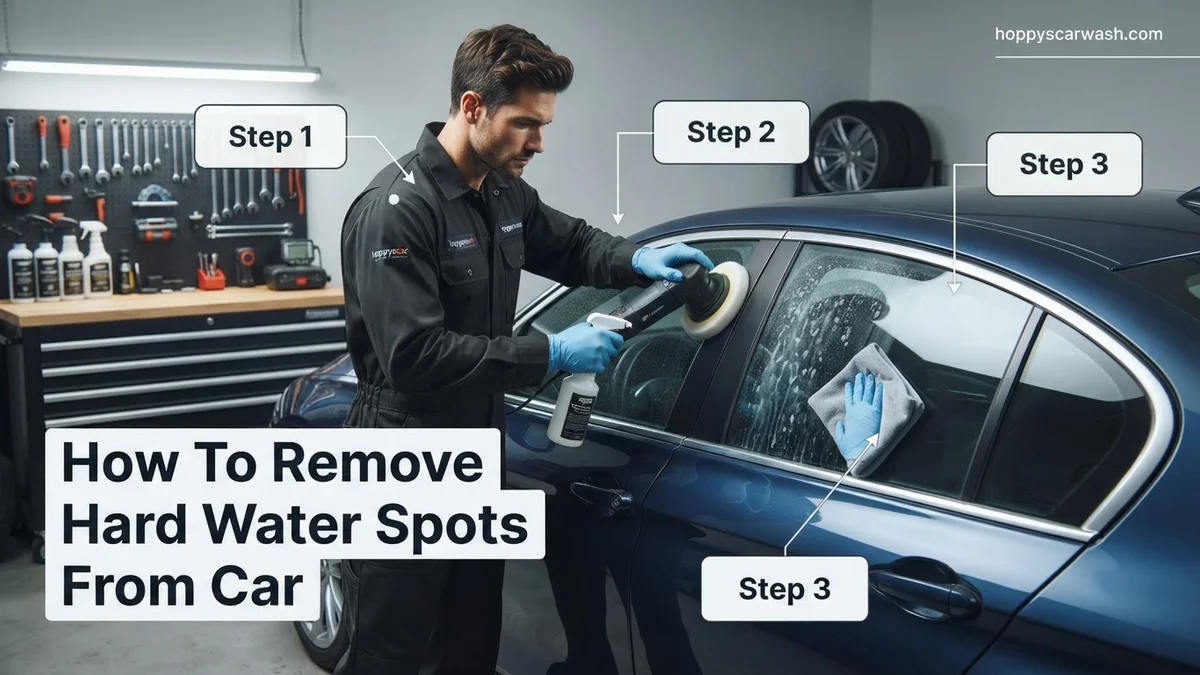
What Causes Hard Water Spots on Car Windows
Hard water spots appear when mineral-rich water, such as lawn sprinkler spray, hard tap water, or untreated rain, evaporates rapidly on your car glass. The water disappears, but the heavy minerals stay behind and bake into the pores of the glass.
Mineral Composition and Glass Porosity
- Calcium and Magnesium: These primary minerals form a hard, alkaline crust that regular car soap cannot break down.
- Silica and Iron: Often found in well water, these elements can chemically bond with automotive glass within days under direct sunlight.
- Micro-Pores: Automotive glass looks smooth, but it actually contains microscopic pits where minerals anchor themselves securely.
Environmental Triggers
- Sprinkler Systems: Automated sprinklers often contain high concentrations of well water lime and calcium.
- Solar Baking: Parking your car in direct 2026 summer sunlight accelerates the evaporation process, baking mineral rings into the glass.
- Acid Rain: Industrial fallout mixes with precipitation, creating acidic deposits that etch glass surfaces upon drying.
Master Hard Water Spots on Car Windows in 6 Simple Steps
Dealing with stubborn mineral deposits can ruin the appearance of your vehicle and obstruct your vision. This comprehensive walkthrough provides a foolproof method to safely dissolve and remove unsightly hard water spots from your car windows without scratching the glass, ensuring crystal-clear visibility.
Step 1: Wash and Dry the Car Thoroughly
What you need: Car wash soap, two microfiber wash mitts, two buckets with grit guards, a dedicated drying towel, and a garden hose with a spray nozzle.
Instructions: Begin by performing a standard two-bucket hand wash on your vehicle. It is crucial to remove all loose dirt, dust, and abrasive debris from the glass and surrounding paintwork. If you skip this, wiping down the windows later could drag grit across the surface and cause deep scratches. Rinse the car thoroughly with clean water, and then dry the windows completely using a clean, plush microfiber drying towel to properly assess the severity of the hard water spots.
Pro Tip: Never work on hot glass under direct sunlight. Heat causes soap and water to dry too quickly, leaving fresh mineral deposits and streaks that complicate the removal process.
Step 2: Prepare a DIY Neutralizing Solution
What you need: Distilled white vinegar, pure distilled water, a clean spray bottle, and measuring cups.
Instructions: Hard water spots consist of alkaline minerals like calcium and magnesium. To break them down naturally, create a neutralizing solution inside your spray bottle by mixing equal parts distilled white vinegar and distilled water (a 1:1 ratio). The mild acetic acid in the vinegar will safely dissolve the mineral bonds without harming your automotive glass. Spray a generous amount of this solution directly onto the affected window, ensuring the entire spotted surface is thoroughly wet.
Pro Tip: Always use distilled water instead of tap water for your mixture. Tap water contains minerals that can add new spots while you are trying to clean the old ones.
Step 3: Let the Solution Dwell
What you need: Your vinegar-filled spray bottle and a timer or smartphone.
Instructions: Once the windows are saturated with the vinegar solution, allow it to sit undisturbed for 3 to 5 minutes. This dwelling time is critical because it gives the mild acid enough time to chemically penetrate and loosen the hardened mineral crust. Do not let the solution dry completely on the glass; if you notice it evaporating quickly in warmer ambient temperatures, lightly mist additional solution onto the window to keep the surface wet during the entire waiting period.
Pro Tip: Place an old towel at the base of the window on your car door to catch any vinegar runoff and protect your vehicle’s paint and rubber window seals.
Step 4: Gently Scrub with a Non-Abrasive Pad
What you need: A microfiber applicator pad or fine-grade #0000 steel wool (optional for severe spots).
Instructions: After the dwelling time, take your microfiber applicator pad and gently scrub the glass in overlapping circular motions. For exceptionally stubborn or etched mineral spots, you can substitute the pad with ultra-fine #0000 steel wool, keeping the glass heavily lubricated with the vinegar solution at all times. Apply light, even pressure, letting the acid and the texture of the pad do the heavy lifting. You should begin to feel the surface of the glass transitioning from rough to completely smooth.
Pro Tip: Never use standard household scouring pads or coarse steel wool, as these will permanently scratch and ruin automotive glass beyond simple repair.
Step 5: Apply a Specialized Glass Polish (If Needed)
What you need: Commercial hard water spot remover or automotive glass polish, a dual-action polisher or microfiber polishing pad.
Instructions: If vinegar fails to remove deeply etched mineral deposits, upgrade to a professional commercial glass polish containing cerium oxide. Apply a coin-sized amount of the polish to a foam or microfiber polishing pad. Work the product into a small 2×2 foot section of the glass using moderate pressure and circular motions. The micro-abrasives in the polish will safely level the microscopic peaks and valleys of the glass, completely erasing stubborn water rings and restoring optical clarity.
Pro Tip: Work in small sections rather than trying to polish the entire windshield at once to ensure even coverage and prevent the product from drying out.
Step 6: Rinse, Clean, and Protect
What you need: Glass cleaner, clean microfiber glass towels, and a hydrophobic glass sealant or ceramic coating.
Instructions: Rinse the windows thoroughly with clean water to wash away all traces of vinegar or polishing residue. Dry the glass completely. Next, spray a dedicated automotive glass cleaner onto a fresh microfiber towel and wipe the windows down to achieve a streak-free shine. Finally, apply a quality glass sealant or spray ceramic coating. Buff the sealant off according to the manufacturer’s instructions. This creates an invisible, water-repellent barrier that causes future water to bead up and roll off, preventing new spots from forming.
Pro Tip: Apply your glass sealant every 2 to 3 months to maintain optimal water-repellent properties and drastically reduce future maintenance efforts.
✅ Final Checklist
- Are the windows completely smooth to the touch across the entire surface?
- Is there a total absence of white rings, mineral crust, or hazing under direct sunlight?
- Did you thoroughly rinse away all traces of vinegar and polishing residue from surrounding paint and trim?
- Are the windows streak-free and offering unobstructed visibility from inside the cabin?
- Has a protective glass sealant been applied to prevent future mineral bonding?
Important Notes:
- Always wear nitrile gloves when working with vinegar or chemical polishes to protect your skin from irritation.
- If mineral deposits have severely etched into the windshield glass and cannot be removed via polishing, seek professional glass restoration or replacement services.
- Estimated time to complete this project is 1 to 2 hours, with an estimated cost range of $15 to $40 depending on whether you already own the cleaning supplies.
How to Wash and Prepare Your Car Glass for Treatment
Never apply vinegar, specialized chemicals, or glass polish to a dirty windshield. Trapped dirt particles act like sandpaper under your microfiber towel or polishing pad, instantly creating permanent scratches on your glass.
Step-by-Step Debris Removal
- Cool the Glass: Move your vehicle into total shade. Hot glass causes chemical treatments to flash-dry and streak instantly.
- Standard Two-Bucket Wash: Wash the entire vehicle using a pH-neutral automotive shampoo to eliminate loose dirt, road grime, and surface dust.
- Thorough Rinse: Flush the windows completely with clean water to remove any residual soap film.
- Dry Completely: Pat the glass dry using a clean waffle-weave microfiber drying towel.
Clay Bar Decontamination
- Surface Check: Run your clean fingertips lightly across the cool glass. If it feels like fine sandpaper, bonded contaminants remain.
- Lubrication is Key: Spray a dedicated synthetic clay lubricant generously over a small two-foot section of the glass.
- Gentle Gliding: Glide a fine-grade automotive clay bar back and forth across the lubricated glass with zero downward pressure to shear off surface-level mineral crust.
Step-by-Step Guide to Removing Hard Water Spots from Car Windows
Successfully eliminating mineral deposits requires a methodical approach that protects your automotive glass from scratching. Follow this proven protocol to restore optical clarity safely.
Preparation and Initial Wash
- Park your vehicle in a shaded area and ensure the glass is cool to the touch to prevent chemical flash-drying.
- Perform a thorough traditional wash using a pH-balanced automotive shampoo to remove loose dirt and grit.
- Dry the windows completely with a clean, plush microfiber towel to evaluate the exact extent of the water spot damage.
Chemical Treatment and Agitation
- Put on nitrile gloves and apply a dedicated commercial water spot remover or a 50/50 mix of distilled white vinegar and water to a specialized foam applicator pad.
- Work in a controlled two-by-two-foot section, pressing the applicator firmly against the glass using overlapping linear motions.
- Allow the acidic solution to dwell for 60 to 120 seconds, ensuring it never dries completely on the surface.
- Buff the area vigorously with the applicator pad to break down the softened calcium and magnesium bonds.
- Rinse the glass thoroughly with clean water to neutralize the acid and wash away dissolved mineral residue.
- Dry the window completely and inspect under direct light to determine if further mechanical polishing is necessary.
What If It Still Doesn’t Work?
Stubborn mineral rings that survive chemical treatments indicate severe etching into the glass surface. Implement these advanced fallback steps to resolve deep-seated damage.
- Upgrade to a Glass Polish: Switch from chemical spot removers to a dedicated cerium oxide glass polish applied with a dual-action orbital machine.
- Utilize Fine Grade Glass Scrub: Use a specialized heavy-duty mineral scrubbing pad paired with a professional glass compound to mechanically lift bonded deposits.
- Consult a Professional Detailer: Take your vehicle to an accredited restoration shop if manual machine polishing fails to eliminate the etching. Professional glass correction services typically cost between $150 and $300 depending on vehicle size and damage severity.
- Evaluate Windshield Replacement: Consider full glass replacement if the mineral etching has compromised structural integrity or severely distorts night visibility, noting that insurance deductibles may apply.
Conclusion
Hard water spots on car windows disrupt driving visibility and degrade exterior aesthetics when mineral deposits bond permanently to automotive glass. Utilizing an acidic neutralizer combined with safe mechanical polishing restores pristine clarity and prevents long-term surface etching. According to verified research and expert sources in the automotive care industry, applying a hydrophobic ceramic coating immediately after spot removal reduces future mineral adhesion by up to 80 percent. Take action today by inspecting your vehicle glass and applying a protective sealant to maintain a spot-free finish through 2026.
❓ Frequently Asked Questions
What are hard water spots and why do they stick to car windows?
Hard water contains high levels of dissolved minerals like calcium and magnesium. When water droplets evaporate under the sun, these minerals bond tightly to the microscopic pores of the glass surface.
How do I safely use a vinegar solution on my car windows?
Mix equal parts distilled white vinegar and water in a spray bottle. Spray the solution generously onto the glass, let it dwell for two to three minutes without drying, and scrub gently with a microfiber towel before rinsing.
When should I switch from DIY remedies to commercial water spot removers?
If vinegar and water fail to dissolve the mineral crust after two or three attempts, the deposits are likely etched or heavily layered, requiring an acid-based or specialized gel window cleaner.
Is it safe to use a dual-action polisher on car windows?
Yes, using a DA polisher paired with a glass polishing compound and a rayon glass pad is one of the most effective ways to mechanically level out stubborn mineral etching.
Can hard water spots ruin car window tint?
The spots themselves sit on the exterior side of the window, so interior tint film is generally safe. However, aggressive scraping with razor blades or harsh chemicals on the outside can damage nearby trim and seals.
How can I prevent hard water spots from forming again?
Always dry your car completely after washing it, park away from sprinklers, and apply a protective hydrophobic glass coating or sealant every few months to repel mineral-heavy water.