How Much Does a Martin Brothers Custom Car Cost in 2026
Commissioning a high-end custom vehicle from the famous Martin Brothers Customs shop typically requires a substantial investment, often ranging from $100,000 to well over $250,000 depending on the scope of the project. The final price tag is heavily influenced by the cost of the donor vehicle, extensive metal fabrication, specialized custom paint, and high-performance mechanical upgrades. Understanding these pricing tiers helps buyers prepare realistic budgets for owning a piece of automotive art seen on Iron Resurrection.
If you want to commission a fully custom vehicle from the famous Texas shop featured on Iron Resurrection, you are looking at a starting price between $150,000 and $300,000 for standard restomods, while elite, ground-up builds easily push past $500,000 in 2026. Joe Martin and his crew do not just restore classic cars; they reimagine them entirely, meaning you are paying for thousands of hours of high-end fabrication, bespoke interior design, and championship-level paint.
Understanding these costs helps you determine if a Martin Brothers build aligns with your budget before you ever pick up the phone to request a shop consultation. Because every project is tailored to the owner’s exact specifications, pricing varies wildly based on the rarity of the donor car and the complexity of the engineering required to bring it into the modern era.
Key Takeaways
- Custom builds from Martin Brothers generally start around $100,000 for extensive projects.
- The price of the donor car directly adds to the total base investment.
- Hand-fabricated metalwork and custom body modifications significantly increase labor costs.
- High-performance engine swaps and modern chassis upgrades drive up hardware expenses.
- Commissioning a build requires contacting the shop directly through their official website.
What Causes High Price Tags on Martin Brothers Custom Cars
Bespoke Metal Fabrication and Body Modification
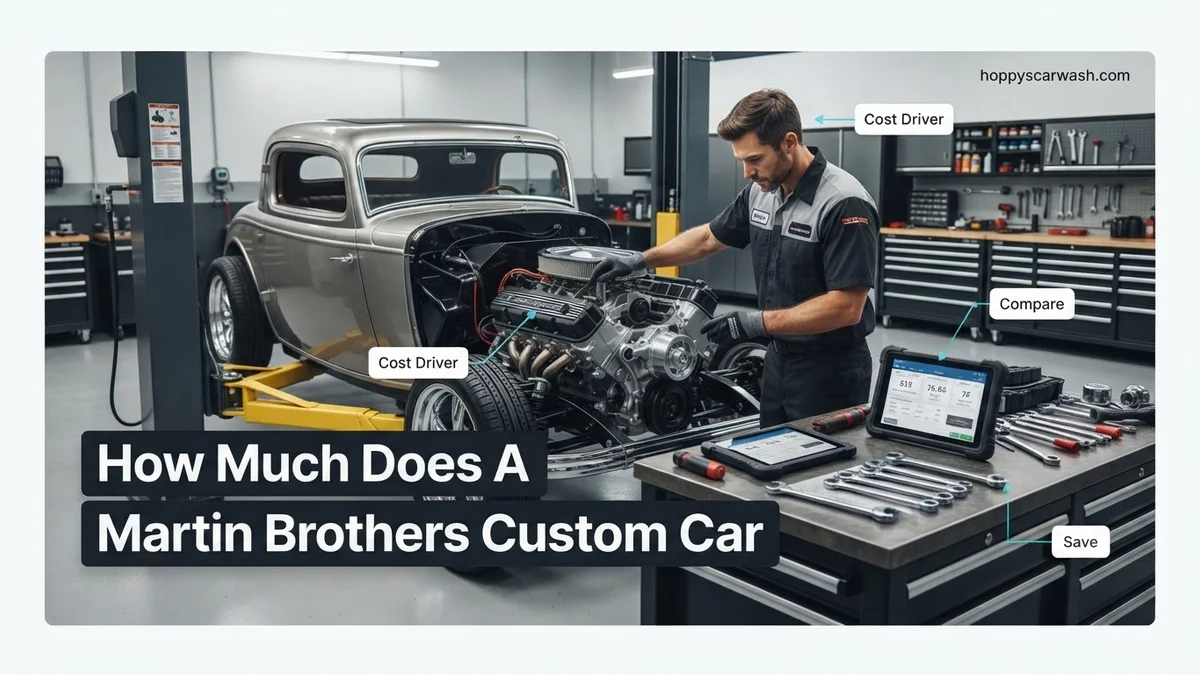
Mass-produced restoration parts rarely fit a true custom build properly. The team at Martin Brothers spends weeks chopping tops, widening fenders, smoothing firewall seams, and fabricating one-off bumpers.
- Hand-formed steel body panels take dozens of skilled labor hours to shape.
- Custom chassis integration requires precision engineering to handle modern high-horsepower engines.
- Every customized gap, tuck, and shave adds substantial cost to your bottom line.
Show-Quality Paint and Custom Finishes
Amanda Martin and the paint crew are renowned for eye-popping, multi-stage finishes that take weeks of block-sanding, spraying, and polishing to achieve a flawless glass-like reflection.
- Specialty metallic flakes, candy paints, and custom-mixed hues carry high material costs.
- Intricate ghost flames, pinstriping, and multi-tone clear coats demand master-level artistry.
- Underbody detailing and engine bay smoothing require the same high-end paint process as the exterior.
Martin Brothers Custom Car Cost: What Causes It and How to Fix It
Understanding the true cost of a custom build from Martin Brothers Customs requires peeling back the layers of high-end automotive craftsmanship, rare donor vehicles, and bespoke fabrication. This practical guide walks you through the financial realities of commissioning a vehicle from the famous Texas shop, helping you diagnose your budget gaps and fix your financial planning before you ever sign a contract.
Step 1: Define Your Vision and Vehicle Platform
What you need: A clear idea of the make and model you want, reference photos, and a preliminary budget baseline of at least $100,000.
Instructions: Start by identifying the exact vehicle platform you want the Martin Brothers to transform. Whether it is a vintage 1950s Chevy truck, a classic muscle car, or a rare post-war cruiser, your choice dictates the baseline scarcity and structural needs. Visit the Martin Brothers Customs portfolio online and compile 3 to 5 reference images that capture the stance, paint style, and interior vibe you desire. Presenting a focused, cohesive vision prevents scope creep later and gives the build team an accurate target for their initial feasibility assessment.
Pro Tip: Do not fall in love with a rare, highly rotted donor car unless your budget can absorb an extra $30,000 in purely structural sheet metal replacement before the actual custom work even begins.
Step 2: Account for the Donor Vehicle Acquisition Cost
What you need: Online auction sites, classic car broker contacts, and a separate line item for vehicle transport.
Instructions: Joe Martin and his team rarely start with a blank slate; they usually build upon classic American iron. You must either source and purchase your own donor vehicle and ship it to their facility in the Dallas-Fort Worth area, or commission them to find one for you. Expect to pay anywhere from $10,000 for a decent project car to $50,000+ for a straight, rust-free Texas or California survivor. Remember to factor in enclosed trailer transport fees, which typically cost between $1.50 and $3.00 per mile depending on fuel prices and distance.
Pro Tip: Let the Martin Brothers inspect potential donor cars before you buy them online; their trained eyes can spot hidden frame rot and botched past restorations that photos conveniently hide.
Step 3: Estimate the Fabrication and Body Modification Hours
What you need: An understanding of shop labor rates, custom metalworking techniques, and a timeline ranging from 12 to 36 months.
Instructions: High-end custom builds are measured in thousands of labor hours. Chop tops, suicide doors, custom tubbed rear wheel wells, and hand-formed body lines require master metal fabricators working painstakingly over months. Shop labor rates at premier custom houses typically range from $100 to $175 per hour. For a complete ground-up build involving heavy metal modification, expect labor alone to consume $150,000 to $300,000 of your total budget. Keep track of milestone updates from the shop to ensure the fabrication pace aligns with your projected financial flow.
Pro Tip: Ask the shop for a dedicated phase-by-phase billing schedule so you can pay for labor progressively as milestones like “chassis rolling” or “body smoothing” are officially completed.
Step 4: Budget for High-Performance Drivetrains and Chassis
What you need: Specifications for modern crate engines (like a supercharged LT4 or Gen III Hemi), aftermarket tubular chassis, and upgraded braking systems.
Instructions: A stunning Martin Brothers build drives as aggressively as it looks. You need to allocate funds for a modern foundation, which usually means ordering an aftermarket full frame from companies like Art Morrison or Roadster Shop ($15,000 to $25,000). Next, select your powerplant: a brand-new high-horsepower crate engine mated to a modern automatic or manual transmission will easily run you $25,000 to $50,000 including accessories, cooling systems, and custom exhaust fabrication. Add high-performance independent front suspension, adjustable coilovers, and massive Wilwood or Baer disc brakes to bring the whole mechanical package together safely.
Pro Tip: Opt for a fuel-injected modern crate engine over a carbureted vintage block if you plan to drive the car regularly; it ensures reliable turn-key startups and better fuel economy on long road trips.
Step 5: Factor in Custom Paint and Body Finishing
What you need: Premium automotive paint lines, high-build primers, color chips, and specialized booth time.
Instructions: Joe Martin is an award-winning painter known for flawless mirror finishes, subtle ghost flames, and eye-popping custom metallic hues. The paint and body stage is one of the most labor-intensive parts of the entire process, often taking hundreds of hours of block sanding, priming, and wet-sanding to achieve that trademark liquid-glass look. A world-class paint job of this caliber easily commands $20,000 to $50,000 depending on the complexity of the graphics, multi-stage pearls, and clear coat depth required to make the metalwork truly sing under showroom lights.
Pro Tip: Stick to classic, timeless color palettes if you ever plan to resell the vehicle; overly trendy matte neon shades can severely limit your buyer pool down the road.
Step 6: Price Out Bespoke Interior and Electronics Integration
What you need: Leather swatches, custom gauge cluster designs, vintage-look modern air conditioning units, and high-end audio specifications.
Instructions: Once the exterior dazzles, the interior must match the luxury and craftsmanship. Martin Brothers builds feature completely custom leather-wrapped dash panels, hand-stitched bucket seats, custom center consoles, and integrated hidden sound systems. Budget $15,000 to $35,000 for top-tier interior upholstery and modern amenities like Vintage Air climate control, power windows, and custom digital or analog gauges. Every wire must be neatly tucked away and professionally loomed to ensure complete electrical reliability and a clean engine bay aesthetic.
Pro Tip: Prioritize ergonomic comfort during the interior design phase; custom seat foam thickness and steering column placement must be custom-tailored to your specific height and driving posture.
Step 7: Finalize the Financial Cushion and Contingency Fund
What you need: A dedicated emergency reserve account containing 15% to 20% of your total estimated project cost.
Instructions: Custom car building almost always encounters unforeseen hurdles—hidden structural damage uncovered during media blasting, supply chain delays for specialty parts, or last-minute custom requests. Before you wire your first deposit, establish a mandatory contingency fund on top of your quoted build price. If your dream build is estimated at $250,000, keep an extra $37,500 to $50,000 liquid. This buffer prevents project stalls, eliminates financial panic, and ensures that compromises never have to be made on the final quality of your custom ride.
Pro Tip: Never finance 100% of a custom car build through high-interest personal loans; always use liquid capital or specialized classic car construction financing to avoid getting upside-down financially.
✅ Final Checklist
- Confirmed donor vehicle is structurally sound and safely transported to the shop.
- Established a realistic total budget range between $150,000 and $400,000+.
- Secured a 15% to 20% cash contingency fund for unexpected fabrication challenges.
- Agreed upon milestone payment schedules directly with the Martin Brothers shop management.
- Defined clear expectations for engine performance, interior luxury, and exterior paint style.
Important Notes:
- Custom builds of this magnitude carry zero guarantees on completion dates; expect waiting lists that can stretch out for several years.
- Seek professional legal and financial advice before liquidating assets or signing high-value custom fabrication agreements.
- Total estimated cost: $150,000 to $500,000+; Total estimated timeline: 12 to 36 months from initial deposit to final delivery.
How to Calculate Your Custom Car Build and Commission Costs
Donor Car Acquisition versus Total Reconstruction
Your total bill depends heavily on whether you supply a solid rust-free cruiser or ask the shop to hunt down a rare, highly sought-after vintage shell from the 1950s or 1960s.
- Supplying your own donor vehicle can save you upfront sourcing fees, but hidden rust can escalate initial repair estimates.
- Sourcing a rare Texas barn find through the shop adds finder’s fees and initial structural restoration costs.
- Complete basket cases require total metal replacement, driving up billable shop hours significantly.
Modern Performance and Interior Integration
Upgrading a classic to modern supercar performance standards requires high-end mechanical components that command premium retail pricing.
- Supercharged crate engines and custom-tuned transmissions regularly cost between $25,000 and $50,000 alone.
- Upgraded independent front and rear suspensions, plus big-brake kits, add another $15,000 to $30,000 in parts.
- Custom leather interiors, bespoke dash fabrication, and modern climate control systems easily run $20,000 to $40,000.
Step-by-Step Guide to Contacting and Commissioning Joe Martin
Securing a custom build from Martin Brothers Customs requires a structured approach. Because demand from television exposure and national prestige remains exceptionally high in 2026, the intake process is formal and selective.
1. Initial Inquiry and Vision Submission
Prospective clients must initiate contact through the official Martin Brothers Customs website or professional consultation channels. The initial submission requires a clear overview of the target vehicle, preferred styling direction, and an honest target budget reflecting 2026 market rates.
2. Design Consultation and Feasibility Review
If the shop accepts the initial proposal, the team schedules an in-depth consultation. Joe Martin and his lead fabricators review mechanical feasibility, sourcing requirements for rare donor parts, and custom fabrication hours. This phase establishes the baseline project scope before any metal is cut.
3. Contract Execution and Phased Financing
Once the design rendering and master parts list receive approval, the shop issues a formal contract. Commissioning a bespoke vehicle requires a substantial upfront deposit to secure shop capacity and raw materials, followed by milestone-based progress payments as the build moves through fabrication, paint, and final assembly.
What If the Shop Is Booked or Your Budget Falls Short
The reality of commissioning a top-tier television shop means multi-year waiting lists and six-figure price tags that may exceed some enthusiast budgets. If direct commissioning with Martin Brothers is temporarily out of reach, several viable alternatives exist for custom car builders in 2026.
- Target Regional Custom Builders: Many elite fabricators without television shows offer comparable craftsmanship at lower overhead costs. Local custom hot rod shops typically charge between $85 and $150 per labor hour.
- Purchase a Completed Inventory Vehicle: Buying a previously finished custom build from an auction house or private collector often costs significantly less than a ground-up commissioned build. Completed custom restomods frequently trade at a 20% to 30% discount compared to total build invoices.
- Pursue Modular Upgrades: Instead of a total frame-off restoration, upgrade a vehicle in stages. Tackle suspension, powertrain, and interior over separate fiscal quarters to manage cash flow effectively.
- Consult a Professional Restorer: If you own a partially completed project that stalled, hire a professional fabrication shop for project rescue. Professional shop completion rates vary widely depending on required metalwork, with average project rescue budgets starting around $25,000.
Conclusion
Investing in a Martin Brothers custom car involves balancing elite automotive artistry against steep six-figure pricing and extended 2026 fabrication timelines. Understanding the financial commitment helps enthusiasts align their expectations before entering the builder intake queue. According to verified research and industry cost indices, securing a bespoke build requires thorough financial preparation and clear communication with the shop from day one. Take the next step today by assembling your vehicle vision board and submitting an official project inquiry through the Martin Brothers Customs portal.
❓ Frequently Asked Questions
What is the starting price for a Martin Brothers custom car build?
While exact pricing is rarely publicized due to the bespoke nature of each project, comprehensive custom builds rarely fall below the six-figure mark, usually starting around $100,000.
Are Martin Brothers cars more expensive because of the TV show?
The popularity of Iron Resurrection certainly highlights their craftsmanship, but the high cost is primarily driven by elite-tier metal shaping, bespoke interiors, and high-end mechanical components.
How long does a custom build take from start to finish?
A complete frame-off custom build by Joe Martin and his team can take anywhere from 6 months to over a year, depending on the complexity of the fabrication work.
Can I supply my own car for them to rebuild?
Yes, many clients bring their own sentimental or classic donor vehicles to the Johnson City, Texas shop to be completely transformed.
What factors have the biggest impact on the final quote?
Hand-formed body panels, custom chassis fabrication, specialized paint jobs, and high-end modern engine packages are the primary drivers of total cost.
Do they work on modern muscle cars or only vintage classics?
While they specialize in vintage classics, hot rods, and custom trucks, the team evaluates various projects based on their unique creative vision and shop capacity.