What Happens If You Drive With the Handbrake On 2026 Guide
Driving with the handbrake engaged creates immediate friction that leads to overheating brake pads, glazed rotors, and a strong burning smell. The severity of the damage depends on how fast and how far you drove with the parking brake partially or fully applied. Fortunately, short distances usually result in minimal long-term harm once the brakes cool down.
Driving with your handbrake—also known as the parking brake or emergency brake—engaged creates immediate friction, severe heat buildup, and rapid mechanical wear. Whether you are distracted or your electronic parking brake failed to disengage automatically, moving your vehicle against a locked braking system puts immense stress on vital components.
As car technology shifts into 2026, modern electronic parking brakes (EPBs) feature automatic release mechanisms and dashboard sensor warnings. However, human error and mechanical cable jams still lead drivers to accidentally drag their brakes down the road. Understanding the immediate physical consequences and potential repair bills helps you handle this stressful mistake safely and effectively.
Key Takeaways
- Pull over safely immediately if you notice a burning smell or dashboard warning light.
- Short distances at low speeds typically cause only minor, temporary brake pad wear.
- Extended driving can warp brake rotors, boil brake fluid, and glaze brake pads.
- Electronic parking brakes often disengage automatically or alert you much faster.
- Always let your brakes cool down before resuming driving after an incident.
What Happens When You Drive With the Handbrake On
Immediate Mechanical Friction and Heat Generation
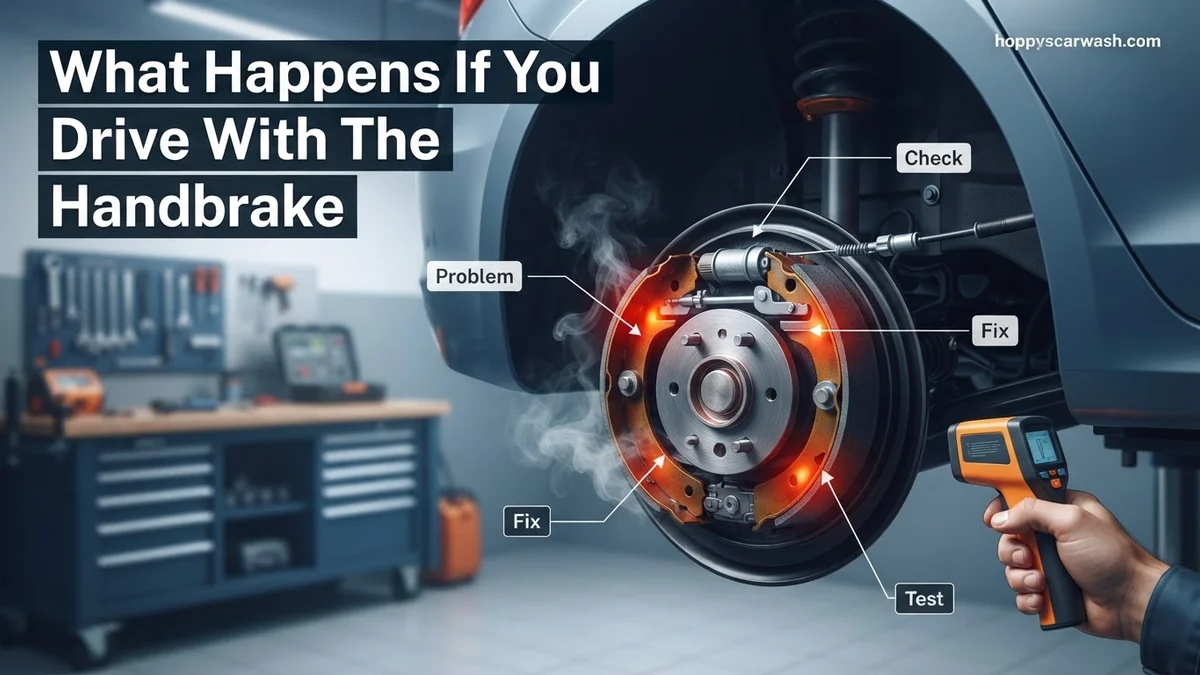
When you press the gas pedal with the handbrake pulled, your car’s engine has to work significantly harder to overcome the clamped brake pads or shoes. This creates intense friction against the brake rotors or drums. Within just a few hundred yards at moderate speeds, temperatures can skyrocket past 500 degrees Fahrenheit. This extreme heat rapidly degrades the friction material on your brake pads, causing them to harden, crack, or completely lose their stopping efficiency.
Wear on Related Drivetrain and Braking Components
The damage extends far beyond the rear brakes if you drive for an extended distance. You risk facing several major mechanical issues:
- Brake Pad Glazing: Excessive heat melts and crystallizes the pad surface, rendering them slick and ineffective.
- Rotor Warping: High thermal stress causes metal brake rotors to warp, resulting in severe steering wheel vibrations when braking.
- Fluid Boiling: Extreme heat can boil your brake fluid, introducing air bubbles and leading to a spongy or completely failed brake pedal.
- Cable and Caliper Strain: Mechanical cables stretch and snap, while electronic brake calipers can burn out their internal electric motors trying to release under pressure.
How to Fix and Diagnose Brake Damage From Driving With the Handbrake On
Recognizing Warning Signs and Immediate Severity Checks
If you catch the mistake within a few seconds—perhaps moving just down your driveway—the damage is likely minimal. You might only notice a slight burning smell or a sluggish acceleration. However, driving for several miles at highway speeds changes the equation entirely. You must evaluate the severity immediately by looking for specific post-incident symptoms:
- A persistent burning smell: Indicates severely overheated brake pads or burning friction linings.
- A spongy brake pedal: Suggests that the brake fluid has boiled due to conducted heat.
- Vibrations or pulling: Warped rotors will cause the car to pull to one side or vibrate heavily when you press the pedal.
- The red brake warning light: Stays illuminated even after you physically push the handbrake down.
Inspection and Repair Steps for 2026 Vehicles
Once you safely park and let the braking system cool down for at least 30 to 45 minutes, perform a quick visual and functional inspection. Never touch hot brake components. Check your rear wheels for heavy dark brake dust or discolored, blued metal rotors. If your dashboard warning light remains on, or if you notice any unusual noises like scraping or grinding when you move again, you need to visit a professional mechanic. They will measure your brake pad thickness, check for fluid leaks around the wheel cylinders, and test the tension on your parking brake cables or EPB actuators to ensure your vehicle remains safe to drive.
Step-by-Step Guide on What to Do Right Now if Your Handbrake Was Engaged
Discovering you have driven with the handbrake engaged requires immediate, methodical action to prevent permanent damage to your vehicle’s braking assembly. According to automotive safety guidelines from the Car Care Council, drivers must safely manage the cool-down process to preserve component integrity.
1. Safely Pull Over and Disengage
Signal and pull off the roadway into a safe, well-lit location immediately. Fully release the handbrake lever or electronic switch, and turn off the engine to let the friction components cool.
2. Perform a Visual Inspection
Wait at least 15 to 20 minutes before inspecting the rear wheels. Look for visible smoke, glowing brake rotors, or unusual melting around the wheel hubs.
3. Test the Brake Pedal Feel
With the engine running while parked, press the brake pedal firmly several times. The pedal should feel firm and hold steady under foot pressure.
What If Your Brakes Still Feel Spongy or Smell Bad After Cooling Down
If lingering symptoms persist after the system cools down, the thermal stress likely damaged critical hydraulic or mechanical parts. Persistent burning odors indicate burnt friction material, while a spongy pedal points to boiled brake fluid.
1. Check for Fluid Leaks
Inspect the inner wheels and ground for puddles of clear or amber fluid. Boiling brake fluid can compromise lines and master cylinder seals.
2. Assess Rotor Warping
Take a short, low-speed test drive in a safe area to check for steering wheel vibration. Severe heat often warps brake rotors, requiring immediate resurfacing or replacement.
3. Schedule Professional Inspection
Book an appointment with a certified technician if performance does not return to normal. Ignoring glazed pads or damaged cables compromises overall stopping distance.
What If It Still Doesn’t Work?
If basic cool-down steps and fluid checks fail to restore normal braking performance, advanced mechanical intervention is required. Follow these steps if your braking system remains compromised:
- Do not attempt to drive the vehicle at highway speeds, as total stopping failure is a severe safety risk.
- Arrange for a flatbed tow truck to transport the vehicle directly to a certified repair facility or dealership service center.
- Request a comprehensive inspection of the rear brake calipers, brake pads, rotors, and emergency brake cables.
- Prepare for potential repair costs, which typically range from $150 to $600 depending on whether you need simple pad replacements or complete rotor and cable swaps.
Conclusion
Driving with the handbrake engaged causes rapid friction, extreme heat buildup, and premature wear on your rear braking system. Fortunately, pulling over safely and allowing the components to cool can prevent catastrophic failure in many cases. According to verified research and expert sources from major automotive safety councils, addressing lingering symptoms like warped rotors or glazed pads immediately ensures safe vehicle operation. Make it a habit to double-check your dashboard indicators before every departure in 2026.
❓ Frequently Asked Questions
What exact mechanical damage occurs when driving with the handbrake engaged?
Continuous friction rapidly wears down brake pads or shoes, overheats the brake fluid, and can warp metal rotors or drums. Severe overheating may also glaze the brake pads, significantly reducing their stopping power until replaced.
How can I tell if my brake pads are glazed after driving with the handbrake on?
Glazed brake pads look shiny and smooth rather than matte and abrasive. You will likely notice a significant reduction in braking responsiveness and potentially a squealing noise when you press the brake pedal.
Should I drive my car immediately after realizing the handbrake was on?
You should safely pull over, disengage the brake, and let the vehicle sit for 15 to 20 minutes to allow the braking components to cool completely. Driving immediately while they are superheated increases the risk of warping rotors.
Do front-wheel drive and rear-wheel drive cars react differently?
Yes, most traditional handbrakes lock the rear wheels. In a front-wheel drive car, your engine has to drag the locked rear wheels, causing noticeable resistance and distinct rear tire dragging or smoke.
When should I take my car to a mechanic after driving with the handbrake on?
Visit a mechanic if your brake pedal feels spongy, your car pulls to one side when braking, you hear grinding noises, or the burning smell and warning lights do not go away after cooling.
Can driving with the handbrake on cause a fire?
While rare, extreme friction can generate temperatures high enough to ignite brake dust, grease, or nearby components, making an immediate stop necessary if heavy smoke appears.