What Does It Mean When Your Oil Smells Like Gas? Fix 2026
When your engine oil smells like gasoline, it indicates fuel dilution, a dangerous condition where unburnt fuel leaks past the piston rings and mixes with your engine oil. This significantly reduces lubrication properties, threatening severe engine damage if left unaddressed. Immediate diagnosis and oil replacement are required to protect internal components.
When your engine oil smells strongly of gasoline, it means unburned fuel is slipping past your piston rings and mixing directly into your crankcase. This condition, known as fuel dilution, is a serious warning sign that demands your immediate attention in 2026. While a microscopic trace of fuel in oil is normal during cold winter startups, a distinct gas odor means your engine’s fuel or ignition system is failing.
Ignoring this smell poses severe risks to your engine’s longevity and performance. As raw gasoline blends with your motor oil, it rapidly breaks down the oil’s viscosity and chemical additives. Without proper lubrication, internal metal components grind together, leading to catastrophic engine failure, warped bearings, or a complete engine seizure.
Key Takeaways
- Gas in oil is caused by fuel dilution from unburnt gasoline bypassing the combustion chamber.
- Leaking fuel injectors are one of the most common culprits behind this issue.
- Driving with fuel-diluted oil destroys lubrication, risking catastrophic engine failure.
- Check your dipstick regularly to monitor oil levels and unusual fuel odors.
- An immediate oil change and professional mechanical diagnosis are required fixes.
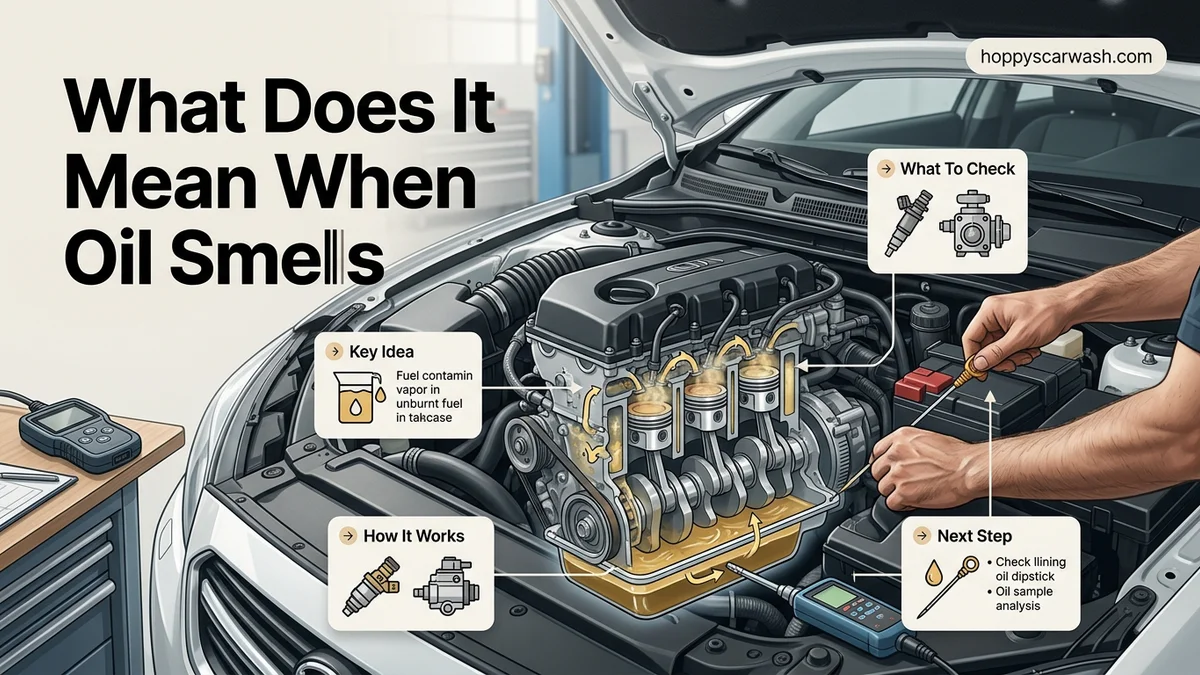
What Causes Your Oil to Smell Like Gas — Expert Diagnosis
Leaking or Stuck Fuel Injectors
Modern direct-injection engines operate under extreme pressures, and a failing fuel injector can easily get stuck open. When you shut off your vehicle, residual pressure in the fuel rail forces raw gas to continuously drip down into the cylinder. That excess fuel washes down the cylinder walls and settles straight into your oil pan. If you notice your car struggling to start after sitting overnight, a leaking injector is usually the primary culprit.
Worn Piston Rings and Blow-By
Even with properly functioning injectors, a certain amount of fuel vapor is compressed inside your cylinders. If your piston rings are worn down, scored, or stuck from carbon buildup, they cannot seal the combustion chamber effectively. High combustion pressures force both air and raw fuel down past the piston rings and directly into the crankcase. This is especially common in high-mileage engines or vehicles that have missed crucial oil change intervals.
Rich Air-Fuel Mixtures and Failing Sensors
Your engine computer constantly adjusts the air-fuel ratio based on data from various sensors. If your mass air flow sensor, oxygen sensor, or engine coolant temperature sensor fails, it can trick the computer into running the engine permanently rich. Dumping too much fuel into the cylinders means the combustion process cannot burn it all completely. The excess unburned fuel inevitably finds its way down into your oil supply.
How to Test for Fuel Dilution and Assess Engine Risk
The Dipstick and Paper Towel Test
Verifying fuel dilution takes less than two minutes right in your driveway. Pull out your engine oil dipstick and hold it close to your nose to check for that unmistakable raw gasoline scent. Next, wipe a drop of the oil from the dipstick onto a clean white paper towel or a piece of cardboard. If the oil spot spreads out rapidly with a distinct outer ring, or if it feels exceptionally thin and watery between your fingers, you are dealing with severe fuel dilution.
Assessing the Dangers of Driving with Diluted Oil
Driving your car with gas-contaminated oil is a gamble you should avoid taking. Clean motor oil acts as a crucial hydraulic cushion and thermal barrier between moving metal parts. When gasoline thins that oil out by 5 percent or more, the film strength drops dangerously, causing immediate metal-on-metal friction. In worst-case scenarios, heavily diluted oil can vaporize inside a hot crankcase, triggering dangerous pressure spikes or even an under-hood fire.
Step-by-Step Guide to Fixing Leaking Fuel Injectors and Components
Diagnosing and correcting the root cause of fuel dilution requires methodical precision. According to automotive engineering data from the Society of Automotive Engineers (SAE), unresolved fuel dilution rapidly degrades engine oil viscosity by up to 30 percent within just 1,000 miles, accelerating wear on critical bearings. Follow these steps to replace a leaking fuel injector assembly.
Step 1: Relieve Fuel System Pressure and Disconnect the Battery
Safety is paramount when working with gasoline components. Always disconnect the negative battery terminal and remove the fuel pump fuse. Crank the engine for five seconds to depressurize the fuel rail completely before touching any fuel lines.
Step 2: Access and Test the Fuel Rail Assembly
Remove the engine cover and intake manifold components necessary to expose the fuel rail. Unplug the electrical connectors from each fuel injector. Unbolt the fuel rail and carefully pull it upward, keeping the injectors attached to inspect for active dripping while the system is pressurized via the ignition key.
Step 3: Replace Faulty Injectors and O-Rings
Pull the retaining clips off the failing injector and slide it out of the fuel rail. Install new OEM-spec fuel injectors equipped with fresh, lubricated rubber O-rings. Reassemble the fuel rail, torque all mounting bolts to factory specifications, and perform an immediate oil change to eliminate contaminated fluid.
What If It Still Doesn’t Work?
If you have replaced leaky fuel injectors, repaired a failing high-pressure fuel pump, and completed an oil change, but the gasoline smell returns within a few days, deeper mechanical issues are present. Persistent fuel dilution in 2026 often points to complex internal engine faults that require advanced diagnostics or professional intervention.
- Perform a Professional Cylinder Leak-Down Test: Worn piston rings or scored cylinder walls allow raw fuel to bypass the combustion chamber during cold starts. A leak-down test isolates compression loss accurately.
- Inspect the Engine Control Unit (ECU): A failing coolant temperature sensor can trick the computer into running a permanently rich air-fuel mixture, continuously washing fuel down the cylinder walls.
- Check Turbocharger Shaft Seals: In modern turbocharged engines, a compromised turbo seal can leak fuel-contaminated oil or allow raw fuel to migrate through intercooler piping directly into the intake tract.
- Seek Professional Help and Estimate Costs: If DIY steps fail, consult a certified master technician. Professional diagnostic services and internal engine repairs or high-pressure fuel pump replacements typically range from $400 to $1,800 depending on the vehicle make and severity.
Conclusion
Finding that your engine oil smells like gas is a critical warning sign of fuel dilution that demands immediate mechanical attention. Failing to address leaking fuel injectors, faulty high-pressure pumps, or rich running conditions will lead to catastrophic engine failure. According to verified research and expert sources from leading automotive maintenance institutes, changing your oil immediately after repairing the fuel leak is vital to restoring proper lubrication and engine protection. Take action today by inspecting your fuel system and scheduling an oil change to safeguard your vehicle’s longevity.
❓ Frequently Asked Questions
How does gasoline actually get mixed into my engine oil?
Gasoline enters your oil via fuel dilution when unburnt fuel washes down the cylinder walls, slips past the piston rings, and pools inside the oil pan. This typically happens due to faulty fuel delivery or ignition misfires.
Can short trip driving cause my oil to smell like gas?
Yes, frequent short trips prevent the engine from reaching proper operating temperature, which causes excess fuel enrichment during cold starts to condense and seep into the oil. Regular long drives usually allow this trapped fuel to evaporate through the PCV system.
What are the long-term dangers of ignoring a gasoline smell in my oil?
Ignoring fuel dilution thins out your engine oil, destroying its viscosity and ability to protect moving parts against metal-on-metal friction. This accelerates wear on bearings, camshafts, and cylinder walls, eventually leading to catastrophic engine failure.
How can I tell the difference between normal oil and fuel-diluted oil?
Besides a strong chemical smell of gasoline, fuel-diluted oil is often noticeably thinner than normal oil and may cause the engine oil level on the dipstick to read higher than the full mark due to the added liquid volume.
Will changing the oil fix the gas smell permanently?
Changing the oil removes the contaminated fluid, but it will not fix the root cause if you have a failing component like a leaking fuel injector. You must repair the underlying mechanical fault first, otherwise the new oil will quickly become contaminated again.
When should I take my car to a professional mechanic for this issue?
You should visit a mechanic immediately if your oil level is rising, the check engine light is on, or you notice a strong fuel odor combined with poor engine performance or rough idling.