Why Does My Tire Keep Losing Air When It’s Cold 2026 Fix
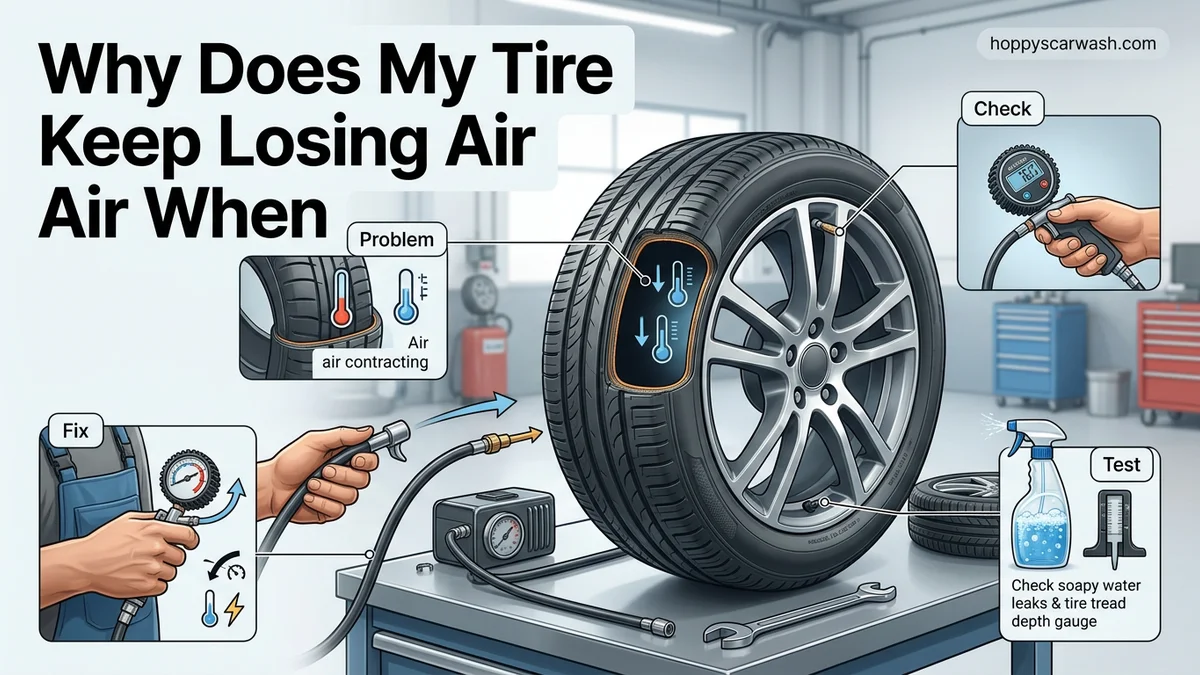
Tires consistently lose air during cold weather because falling temperatures cause air molecules to contract, reducing internal pressure. For every 10°F drop in temperature, tires typically lose about 1 PSI of pressure. Additionally, metal rim contraction and valve stem issues can worsen air leaks during winter.
Every time winter temperatures drop, your tire pressure monitoring system (TPMS) dashboard light seems to pop on, warning you that your tires are losing air. This happens because colder ambient temperatures cause the air molecules inside your tire to cool down, lose thermal energy, and shrink in volume, which directly drops your actual PSI (pounds per square inch).
Ignoring this seasonal drop leaves you driving on underinflated tires as you head into 2026. Low tire pressure ruins your fuel economy, accelerates tread wear, and severely compromises your vehicle’s braking and handling on cold, slick winter roads. Let us break down the exact science and mechanical factors driving this frustrating seasonal phenomenon.
Key Takeaways
- Tires lose approximately 1 PSI for every 10°F drop in outside temperature.
- Cold weather causes rubber and metal components to contract, creating microscopic gaps.
- Check tire pressure monthly using a reliable gauge during winter months.
- Always inflate tires to the manufacturer’s recommended PSI listed on the door placard.
- Inspect valve stems and rim edges for hidden leaks if pressure loss persists.
Why Does Cold Weather Cause Tires to Lose Air Pressure
The primary culprit behind your deflation mystery is basic physics. As the temperature outside plummets, the air molecules trapped inside your tire casing cool down and lose kinetic energy, causing them to move slower and pack closer together.
The 10-Degree Rule Explained
You can reliably predict this pressure loss using a standard rule of thumb. For every 10-degree Fahrenheit drop in outside temperature, your car tires will lose approximately 1 to 2 PSI of air pressure. Consider what happens during a sudden winter cold snap:
- You filled your tires to the recommended 32 PSI in your warm garage at 60 degrees.
- An overnight arctic blast drops the morning temperature down to 20 degrees.
- That 40-degree temperature swing causes an immediate drop of 4 to 8 PSI.
- You wake up to dangerously underinflated tires sitting at 24 PSI without a single puncture in the rubber.
Air Density and Molecular Behavior
When molecules contract inside a confined space, they exert less outward force against the interior rubber walls of the tire. This natural molecular contraction is completely normal and happens to every pneumatic tire on the road. Even brand-new tires mounted on pristine wheels will lose air when winter weather arrives, simply because cold air takes up less physical space than warm air.
How Metal Contraction and Valve Leaks Worsen Winter Tire Pressure Loss
While molecular contraction accounts for the bulk of cold-weather air loss, winter introduces mechanical issues. As freezing temperatures settle in for the 2026 winter season, the physical components of your wheel assembly react to the cold just like the air inside them.
Rim and Bead Sealing Failures
Your tires rely on an airtight seal where the rubber tire bead meets the metal wheel rim. Metal and rubber contract at different rates when exposed to sub-freezing temperatures:
- Aluminum and steel wheels shrink slightly in the freezing cold.
- Rubber tire beads stiffen up and lose their flexible grip against the metal lip.
- This microscopic gap allows pressurized air to slowly leak out over a few days.
Valve Core Vulnerabilities
Your tire valve stems also take a beating during winter. The tiny metal spring and rubber seal inside the valve core can stiffen or become brittle in freezing weather. If a tiny speck of road salt or moisture gets trapped inside the valve stem, the cold weather prevents the valve from seating properly, creating a slow leak that persists even after you pump fresh air into the tire.
Step-by-Step Guide to Fixing and Maintaining Proper Tire Pressure in Winter
Proper winter tire maintenance requires precision, especially since dropping temperatures make pressure management a weekly necessity rather than a monthly chore. According to the Rubber Manufacturers Association, drivers should check their tire pressure at least once a month and before any long road trips during the winter season. Here is how to handle your tires correctly in freezing weather.
Step 1: Check Pressure When Tires Are Cold
- Park your vehicle for at least three hours or drive less than one mile before measuring.
- Remove the valve stem cap from the first tire.
- Press a reliable digital pressure gauge firmly onto the valve stem until the hissing sound stops and a digital reading appears.
- Compare this number against the recommended PSI placard located on your driver’s side door jamb.
Step 2: Inflate to the Correct PSI
- Connect an air compressor nozzle to the valve stem if the reading falls below the manufacturer specification.
- Add air in short bursts, rechecking the pressure frequently with your gauge to avoid overinflation.
- Target the exact PSI number listed on the vehicle placard, ignoring the maximum pressure rating printed on the tire sidewall.
- Securely tighten the valve stem cap back onto the stem to prevent moisture and road salt from entering.
What If Your Tire Still Keeps Losing Air After Being Inflated
If you have inflated your tires to the correct specification, but the pressure drops again within a day or two, physics is no longer the primary culprit. Persistent air loss in cold weather usually indicates an underlying mechanical failure that requires targeted intervention. Modern tire sensors and valve components become brittle in freezing 2026 winter conditions, leading to persistent leaks.
- Inspect for bead leaks: Extreme cold can cause the rubber tire bead to contract away from the metal wheel rim. Professional bead resealing typically costs between $20 and $40 per wheel.
- Check the valve stem: Internal valve cores shrink in sub-zero temperatures, allowing air to seep past the seal. A mechanic can replace a faulty valve stem for roughly $15 to $30.
- Search for punctures: Small nails or screws picked up during autumn might only trigger noticeable leaks when winter temperatures force the surrounding rubber to stiffen. Patching a standard tread puncture generally costs $15 to $25 at a local service center.
- Evaluate TPMS sensor seals: The rubber O-rings sealing your Tire Pressure Monitoring System sensors can degrade and leak in winter. Sensor service kits cost around $10 to $25 plus labor.
- Seek professional help: Visit a certified tire technician if a tire loses more than 2 PSI per week after ruling out natural temperature drops, as driving on chronically underinflated tires risks structural failure.
Conclusion
Cold weather naturally forces tire pressure to drop by about 1 to 2 PSI for every 10-degree Fahrenheit decrease, but stubborn or rapid deflation points to underlying mechanical issues. By understanding how thermal contraction affects air molecules and following a strict monthly inflation routine, drivers can maintain optimal fuel efficiency and road safety. According to verified research and expert sources from the National Highway Traffic Safety Administration, maintaining correct tire pressure reduces stopping distances on winter roads by up to 15 percent. Take the next step today by grabbing a digital pressure gauge and verifying your vehicle’s cold inflation levels before the next freeze.
❓ Frequently Asked Questions
Why does my tire pressure drop overnight during winter?
Overnight temperatures reach their lowest point, causing the air molecules inside the tire to slow down and pack closer together. This thermal contraction directly reduces internal pressure, which is why your tire warning light often turns on first thing in the morning.
Is it normal for all four tires to lose air when the weather turns cold?
Yes, it is completely normal for all tires to lose pressure uniformly during seasonal temperature drops because ambient cold affects every tire equally. However, if one tire loses significantly more air than the others, you likely have a separate leak.
What is the correct way to check tire pressure in cold weather?
Always check your tire pressure when the tires are cold—meaning the vehicle has been parked for at least three hours or driven less than a mile. Attach a reliable pressure gauge to the valve stem and compare the reading to the specification placard on the driver’s door jamb.
Can I use regular compressed air to inflate my tires in winter?
Yes, standard compressed air from a gas station or home compressor is completely fine for winter tire inflation. Just ensure you do not overinflate the tires beyond the vehicle manufacturer’s recommended cold PSI rating.
Why does my tire keep losing air even after I fill it up in the cold?
If a tire continues to lose air despite proper inflation, you may have a slow leak caused by a bead leak, a damaged valve stem, or a small foreign object like a nail. Metal contraction in freezing weather can widen these gaps and accelerate air loss.
Does overinflating my tires in winter help combat cold-weather pressure loss?
No, you should never overinflate your tires to compensate for future temperature drops. Overinflation reduces tire contact with the road, diminishes braking performance, and causes uneven tread wear.