
Can I Spray Air Freshener on My Cabin Air Filter 2026 Guide
Spraying liquid air freshener or essential oils directly onto your car’s cabin air filter is not recommended. Doing so can warp the filter media, clog your HVAC system with chemical residue, and force concentrated VOCs directly into your lungs. Instead, use specialized scented filters or proper vent clips to safely freshen your car’s interior.
No, you should not spray standard liquid air freshener, Febreze, or pure essential oils directly onto your car’s cabin air filter. While the immediate result might be a pleasant burst of fragrance when you turn on your AC, this shortcut creates serious problems for your vehicle’s HVAC system and your health.
As vehicle ventilation systems have grown more complex in 2026, introducing wet chemical agents into dry filtration media has proven counterproductive. It compromises air quality and can permanently damage delicate components.
Key Takeaways
- Spraying liquid air freshener on paper filter media causes it to warp and degrade instantly.
- Chemical residues can build up on your vehicle’s blower motor and evaporator core.
- Closed cabin spaces trap concentrated synthetic fragrances, potentially triggering respiratory irritation.
- Pre-scented cabin air filters offer a safe, manufactured alternative for pleasant AC airflow.
- Always address the root cause of musty AC odors, such as mold on the evaporator, rather than masking them.
What Happens When You Spray Air Freshener on a Cabin Air Filter
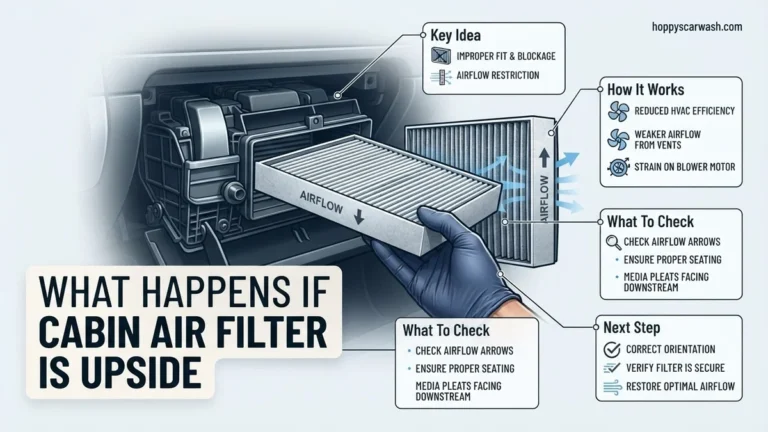
Most modern cabin filters use specialized paper, cotton, or synthetic fiber media designed to capture microscopic particles like pollen, dust, and diesel soot. When you saturate these dry fibers with liquid air freshener, the chemical composition shifts dramatically.
Chemical Breakdown and Mold Risk
Spraying a liquid product onto a dry filter clogs the porous media instantly. This moisture barrier traps ambient humidity, creating a breeding ground for mold and mildew inside your dark dashboard. Instead of fresh air, your AC will soon pump musty, spore-laden air directly into your face.
- Synthetic sprays can chemically degrade paper-based filter pleats
- Trapped moisture invites bacterial growth within 48 to 72 hours
- Airflow restriction forces your blower motor to work harder, risking premature burnout
The Concentrated Chemical Cloud Effect
A car cabin is a sealed, high-pressure environment. When the blower fan pushes air through a freshly sprayed filter, it vaporizes the concentrated chemicals all at once. Inhaling these heavy volatile organic compounds (VOCs) in an enclosed space can trigger headaches, nausea, or respiratory irritation for you and your passengers.
How to Safely Make Your Car AC Smell Good Step-by-Step
If you want a great-smelling cabin without ruining your ventilation system, you need to rely on engineered solutions rather than DIY spraying. The automotive aftermarket in 2026 offers plenty of safe alternatives that deliver long-lasting fragrance.
Upgrade to Pre-Scented or Carbon Cabin Filters
The safest way to get scent through your vents is by purchasing a filter designed for the job. Manufacturers now produce cabin filters infused with activated charcoal or subtle botanical scents.
- Remove your old filter following standard vehicle access steps.
- Install a specialized carbon-embedded filter to neutralize odors naturally.
- Alternatively, use a filter explicitly manufactured with a safe, slow-release scent matrix.
Deodorize the Evaporator Core
Often, bad AC odors stem from mildew on the evaporator core, not the filter itself. Spraying the filter won’t fix this root cause.
- Locate the fresh air intake cowl beneath your windshield wipers outside the car.
- Turn your AC on high with the fan running and windows open.
- Spray an automotive-grade HVAC disinfectant directly into the external intake vent to kill odor-causing bacteria at the source.
How to Deodorize Your Car HVAC System and Evaporator Core
Often, a foul smell originates not from the cabin air filter itself, but from the vehicle’s evaporator core. Dark, damp conditions inside the HVAC housing create an ideal breeding ground for mold and bacteria, releasing musty odors every time you turn on the AC. According to automotive maintenance guidelines for 2026, treating the entire ventilation duct network is the only permanent solution for deep-seated microbial growth.
Step-by-Step Evaporator Cleaning Process
- Locate the fresh air intake vent on the exterior of your car, usually situated directly beneath the windshield wipers at the base of the hood.
- Start the engine, turn the climate control system on high with the air conditioning engaged, and switch off the recirculation mode to draw outside air inward.
- Shake an automotive-grade HVAC disinfectant or enzymatic evaporator cleaner thoroughly before inserting the application tube into the exterior intake vents.
- Spray the entire contents of the can into the intake while the system runs, allowing the antimicrobial mist to travel through the blower motor and coat the evaporator core.
- Turn off the vehicle and let the product sit undisturbed for 15 to 20 minutes to break down mold, mildew, and trapped organic residue.
- Run the heater on its maximum temperature setting for five minutes to completely dry the evaporator housing and expel loosened debris.
What If It Still Doesn’t Work?
If lingering odors persist after replacing your cabin air filter and treating the HVAC evaporator core, the source of the problem requires deeper intervention. Stubborn smells often trace back to hidden organic matter, deeply embedded cabin fabric stains, or neglected mechanical components.
- Inspect the fresh air intake cowl for trapped organic debris, such as wet autumn leaves, dead insects, or rodent nests blocking the drainage ports.
- Check under the floor mats and deep within seat upholstery for hidden moisture damage, pet accidents, or spilled liquids that standard surface cleaning missed.
- Perform an intensive interior ozone treatment using a commercial-grade generator for 30 minutes, ensuring the vehicle cabin remains completely unoccupied and well-ventilated afterward.
- Seek professional automotive detailing or HVAC servicing if the odor smells like sweet coolant, which indicates a failing heater core. Professional heater core replacement and system diagnostics typically cost between $500 and $1,200 depending on your specific vehicle make and model.
Conclusion
Spraying standard air freshener directly onto your cabin air filter provides only a temporary mask while risking clogged media, reduced airflow, and chemical degradation of your blower motor. Maintaining a fresh cabin environment requires swapping out dirty filters annually or every 15,000 miles and properly sanitizing the evaporator core when mold strikes. According to verified research and expert automotive sources, proper mechanical maintenance outperforms chemical masking agents every time. Your next actionable step is to inspect your current cabin air filter today and replace it with a high-efficiency particulate or activated carbon alternative if it shows signs of clogging or age.
❓ Frequently Asked Questions
Can I spray air freshener on my cabin air filter?
No, spraying standard household air fresheners or liquid sprays onto a cabin air filter is risky. It can ruin the filter material, restrict airflow, and blow heavy chemical mists directly into your breathing zone.
Will putting essential oils on my cabin air filter damage my car?
Yes, heavy or concentrated oils can degrade the glue and synthetic fibers holding the filter together. Furthermore, the oil residue can stick to the blower motor and attract dust, potentially causing mechanical failure over time.
What is the safest way to get a good scent from my car vents?
The safest approach is purchasing a cabin air filter specifically infused with baking soda or light botanical scents during manufacturing. These are tested to ensure they do not shed chemicals or restrict proper airflow.
How do I fix a musty smell coming from my car air conditioner?
Musty smells usually stem from mold on the evaporator core rather than a dirty filter. You must spray an HVAC evaporator cleaner through the outside fresh-air intake vents to kill the underlying bacteria.
How often should a cabin air filter be replaced?
You should typically replace your cabin air filter every 12,000 to 15,000 miles or once a year. A clean filter ensures maximum airflow and prevents trapped dust from generating stale odors.
Can baking soda neutralize bad smells in a cabin filter?
Yes, activated carbon or baking soda-infused cabin filters are excellent at absorbing bad odors naturally. They trap foul gases without introducing artificial fragrances or liquid chemicals into your HVAC system.

One Comment