Is It Illegal to Drive Without a Hood in Florida? 2026 Guide
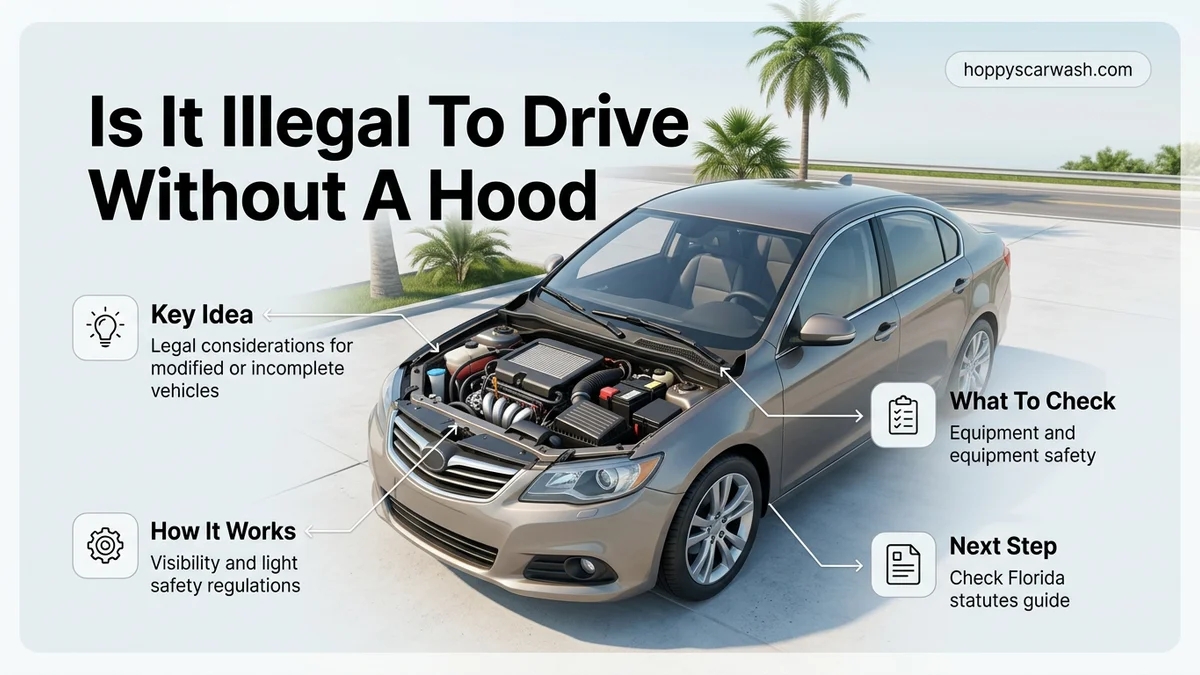
Yes, driving without a hood in Florida can result in a traffic citation because it violates state equipment and safety laws. Law enforcement officers have broad discretion to pull you over for operating an unsafe vehicle with exposed moving parts like belts, fans, and pulleys.
Driving without a hood in Florida is technically a legal gray area, but it will almost certainly get you pulled over and ticketed under specific equipment statutes. While Florida Statutes do not explicitly contain a single line saying “thou shalt not drive without a hood,” they strictly regulate exposed moving parts, structural integrity, and the secure fastening of vehicle components. As of 2026, local law enforcement agencies across the state continue to crack down on heavily modified or stripped-down vehicles that present visible safety hazards on public highways and local roads.
When you remove your car’s hood, you expose heavy mechanical components and alter the aerodynamics designed by the manufacturer. This practical reality creates immediate liability for you as a driver. Understanding how Florida traffic laws apply to missing body panels helps you avoid costly traffic citations, failed vehicle assessments, and potential complications with your auto insurance provider.
Key Takeaways
- Driving without a hood violates Florida equipment statutes regarding unsafe vehicle operation.
- Exposed engine belts and moving fans create immediate mechanical hazards to pedestrians.
- Police officers can issue traffic citations and fine drivers for missing body panels.
- Missing a hood can complicate insurance claims after an accident occurs.
- Aftermarket fiberglass or carbon fiber hoods serve as legal replacements.
What Causes Police to Pull Over Vehicles Without Hoods in Florida
Exposed Moving Parts and Engine Hazards
The primary reason Florida law enforcement officers will stop a vehicle lacking a hood involves Statute 316.610 regarding safe mechanical condition. When your engine bay is completely open to the elements and oncoming traffic, several dangerous hazards are immediately visible:
- Exposed serpentine belts, pulleys, and cooling fans spinning at high RPMs.
- Fluid reservoirs like brake fluid and coolant lacking physical protection from road debris.
- The potential for loose engine components or detached air intake filters to fly out of the engine bay at highway speeds.
The Danger of Unsecured Structural Alterations
Beyond the engine components, removing a hood often compromises the upper structural alignment of the inner fenders and core support. Florida traffic officers can issue a citation if they determine the vehicle’s structural integrity is compromised. Furthermore, if a police officer believes your vehicle is unsafe to operate on public roads, they have the discretion to issue a non-moving violation or order the vehicle towed on the spot.
How to Fix Missing Hood Violations and Comply with Florida Statutes
Clearing Equipment Citations and Inspections
If you have already received a ticket for driving an unsafe vehicle without a hood in 2026, dealing with it requires prompt action to avoid escalating fines. Most law enforcement agencies will dismiss or reduce equipment citations if you rectify the issue quickly. To achieve full compliance with Florida vehicle standards, you must:
- Install an OEM or aftermarket hood that securely latches using both primary and secondary safety catches.
- Ensure all exposed wiring harnesses, belts, and fluid lines are properly shielded or enclosed.
- Visit a local mechanic or inspection station if mandated by a judge to certify the vehicle’s roadworthiness.
Insurance Implications and Accident Liability
Driving without a hood impacts more than just police interactions; it fundamentally changes your liability during an accident. If a belt snaps or a component flies out of your exposed engine bay and damages another motorist’s windshield, your insurance carrier may deny coverage due to gross negligence or failure to maintain proper equipment. Keeping your vehicle fully assembled with a properly functioning hood protects you legally and financially on every Florida roadway.
What If It Still Doesn’t Work and You Receive a Citation
Finding yourself pulled over by law enforcement without a hood in Florida can escalate quickly from a mechanical headache to a legal penalty. If you have already attempted temporary fixes or find yourself facing an unexpected traffic stop, specific protocols apply. According to Florida traffic safety experts and recent 2026 enforcement guidelines, ignoring a verbal warning or failing to address the underlying equipment violation will compound your legal and financial liabilities.
Immediate Steps After Receiving a Traffic Ticket
Receiving a non-moving violation for equipment failure does not automatically mean your driving record takes a hit, provided you act quickly. Authorized traffic attorneys and legal advisors recommend following a strict procedural sequence to resolve the citation efficiently.
- Request a Correctable Violation Review: Ask the issuing officer if the citation qualifies as a “fix-it” ticket, which allows you to have the hood reinstalled and present proof to the clerk of court to dismiss or reduce the fine.
- Document the Repair Process: Take clear photographs of the newly installed hood, latch mechanism, and safety pins to present as incontrovertible evidence that the hazard has been eliminated.
- Consult a Licensed Mechanic: If structural frame damage prevents a standard hood installation, obtain a signed statement from an ASE-certified technician detailing the ongoing repair timeline.
- Engage Legal Representation: For drivers facing compounding citations or reckless endangerment charges due to missing body panels, contact a Florida traffic defense attorney within ten days of the stop.
Estimated Professional Repair Costs
Restoring a vehicle to legal compliance requires budgeting for professional parts and labor. Industry data shows that replacing a standard passenger car hood ranges from $300 to $900 for parts and painting, while specialized labor adds another $150 to $400 depending on vehicle make and model complexity.
Conclusion
Driving without a hood in Florida violates state equipment statutes and compromises public safety on busy highways. Resolving this issue promptly protects you from costly fines and mechanical hazards. According to verified research and expert sources from the Florida Highway Safety and Motor Vehicles department, keeping all exterior body components securely fastened remains a strict legal requirement for all motorists. The most actionable next step is to schedule an appointment with a certified collision repair specialist today to bring your vehicle into full compliance for 2026.
❓ Frequently Asked Questions
What specific Florida statutes apply to driving without a hood?
Law enforcement typically cites drivers under Florida Statute 316.610 for unsafe vehicle conditions and lacking proper mechanical safety equipment. This statute prohibits driving vehicles on public roads that are in such an unsafe condition as to endanger any person.
Are exposed engine belts considered a hazard under Florida law?
Yes, exposed belts, cooling fans, and pulleys pose severe physical threats to pedestrians, cyclists, and the driver during maintenance. This exposure forms the primary legal basis for traffic stops involving missing hoods.
Can I drive my car without a hood during an emergency?
Even in an emergency, law enforcement retains the discretion to pull you over and issue a citation for operating an unsafe vehicle. It is always safer to tow the vehicle or secure a temporary replacement cover.
Does insurance cover accidents if my car is missing a hood?
Insurance providers may deny coverage or dispute liability claims if they determine that a missing hood contributed to the severity of an accident or pedestrian injury.
Do street rods or custom cars get an exemption in Florida?
Specialty vehicle classifications and street rods sometimes receive modified equipment exemptions, but standard daily drivers must retain all factory safety panels.
What should I do if my hood flies off while driving on a Florida highway?
Safely pull over to the emergency lane, clear any debris from the roadway if safe to do so, and arrange for a tow truck to transport the vehicle home.