What Happens If You Put Washer Fluid In Coolant 2026 Guide
Putting windshield washer fluid into your coolant reservoir is a critical mistake that can damage your engine if not addressed immediately. Washer fluid contains methanol, detergents, and water that cause foaming and corrode cooling system components. You must stop driving and flush the system immediately to prevent severe overheating.
Putting windshield washer fluid into your coolant reservoir is a critical mistake that requires immediate action. Washer fluid contains methanol, detergents, and water, which chemically clash with the ethylene glycol or propylene glycol in your engine coolant. Driving your car with this mixture can quickly lead to overheating, corrosion, and catastrophic engine damage.
If you made this mistake recently in 2026, you must not start your engine. Running the vehicle circulates the washer fluid through your sensitive aluminum block, radiator, and heater core, turning a simple fluid swap into a major repair bill. Let us break down exactly what happens to your vehicle and how to handle the situation.
Key Takeaways
- Never start or drive your vehicle if you realize washer fluid is in the coolant system.
- Washer fluid contains methanol and detergents that strip protective coatings and destroy rubber hoses.
- Do not run the engine, as circulating the contaminated fluid causes rapid foaming and overheating.
- Fix the mistake by completely draining the contaminated coolant reservoir and lines.
- Perform a full system flush with distilled water and fresh coolant before driving again.
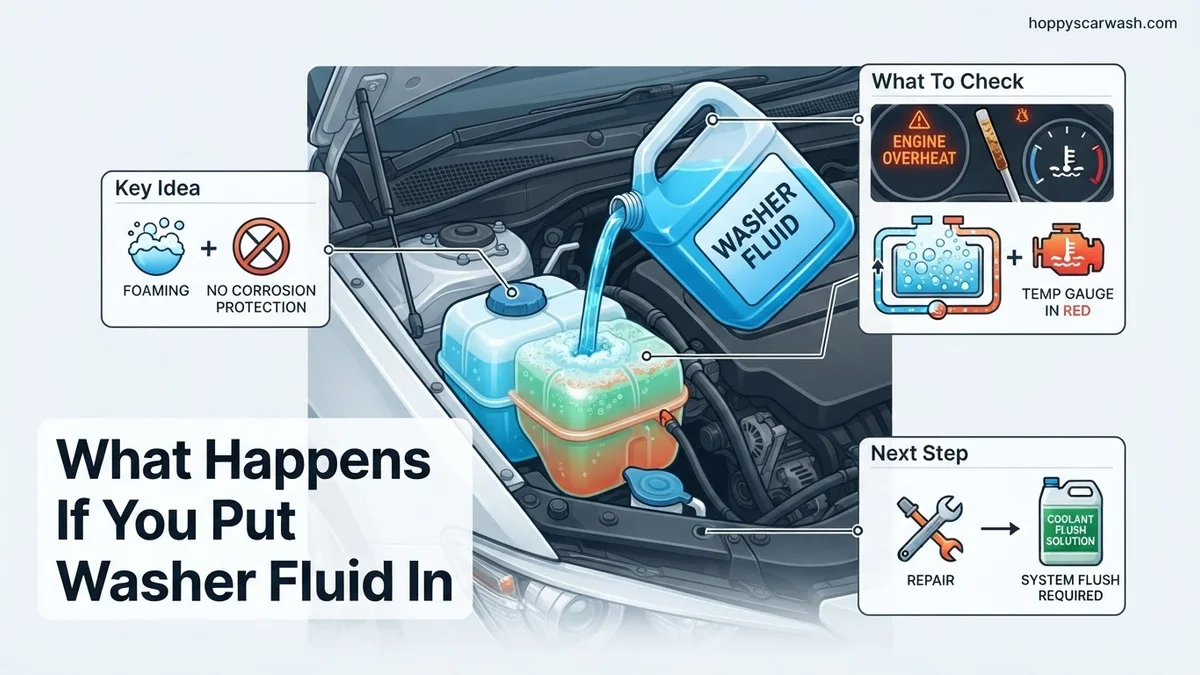
What Happens When Windshield Washer Fluid Mixes With Coolant
The severity of the damage depends entirely on whether you started the engine after the mix-up. Time is your biggest enemy here.
If You Haven’t Started the Engine Yet
You are in luck if you realized your mistake before turning the ignition key. Because the fluids have not circulated:
- The contamination is limited strictly to the overflow reservoir or the top of the radiator neck.
- No fluid has reached the engine block, water pump, or thermostat.
- The fix requires simply draining or extracting the contaminated fluid from the reservoir.
- Your cooling system components remain safe from chemical degradation.
If You Have Driven the Car
Starting the engine and driving forces the washer fluid deep into the entire cooling loop. The consequences escalate rapidly:
- The water pump circulates the detergent-heavy fluid through hot engine channels within seconds.
- Foaming occurs, drastically reducing the cooling system ability to dissipate heat.
- Engine temperatures will likely spike, risking warped cylinder heads or a blown head gasket.
- Rubber seals and gaskets begin to swell and degrade upon contact with harsh cleaning solvents.
Why Washer Fluid Destroys Cooling Systems Chemically
Windshield washer fluid and engine coolant serve completely opposite purposes. Mixing them creates a volatile chemical reaction inside a pressurized, high-heat environment.
The Danger of Methanol and Detergents
Standard washer fluid is formulated to strip bugs and road grime off glass, not to protect iron and aluminum. The chemical composition works against your engine in specific ways:
- Methanol Boiling Point: Methanol boils at a much lower temperature than water or antifreeze, creating vapor pockets that cause immediate overheating.
- Harsh Surfactants: The detergents and soaps in washer fluid cause severe foaming, which traps air pockets and blocks heat transfer.
- Acidic Breakdown: Washer fluid lacks the alkaline rust inhibitors found in proper 2026-grade coolants, leading to rapid internal corrosion.
Sludge Formation and Component Failure
When the alcohol and detergents in washer fluid interact with standard antifreeze additives, they break down the fluid suspension. This chemical clash creates a thick, gel-like sludge.
- The sludge clogs the tiny passages inside your radiator and heater core.
- Thermostats stick open or closed due to chemical scaling and residue buildup.
- Water pump seals dry out, crack, and begin leaking coolant onto your drive belt.
Step-by-Step Guide to Flushing and Fixing Contaminated Coolant
Fixing washer fluid contamination in your vehicle requires a complete system flush to prevent long-term corrosion. According to automotive engineering standards, leaving detergent-based fluids inside an aluminum engine block will rapidly degrade gaskets and seals by 2026 guidelines.
Preparation and Draining
Always work on a completely cold engine to avoid severe thermal shock and pressurized steam burns. Gather a catch pan, distilled water, and a manufacturer-approved coolant formula before beginning.
- Locate the radiator drain plug at the bottom of the radiator or disconnect the lower radiator hose.
- Open the coolant reservoir cap to allow air flow and let the contaminated fluid drain entirely into the catch pan.
- Inspect the drained fluid for heavy foaming, which indicates detergent presence from the washer fluid.
- Secure the drain plug or reconnect the lower hose tightly once draining stops.
Flushing and Refilling
To eliminate all traces of methanol and soapy surfactants, you must flush the cooling system multiple times with clean water.
- Fill the cooling system with a 50/50 mix of distilled water and a specialized cooling system flush detergent.
- Run the engine with the cabin heater turned to maximum until it reaches normal operating temperature and the thermostat opens.
- Turn off the engine, let it cool down safely, and drain the flush mixture completely.
- Repeat the rinsing process with pure distilled water until the draining fluid runs completely clear and foam-free.
- Refill the system with the exact coolant type specified in your 2026 vehicle owner’s manual and bleed any trapped air pockets.
What to Do If Engine Damage Occurs or The Issue Persists
Sometimes a simple flush is not enough if the washer fluid sat in the cooling system for too long. Residual methanol can warp composite intake manifolds and destroy rubber heater core hoses.
Recognizing Persistent Contamination Signs
If you experience ongoing engine overheating, sweet-smelling white exhaust smoke, or continuous coolant loss after a thorough flush, deeper mechanical failure has likely occurred.
- Perform a professional chemical block test to check for exhaust gases leaking into the cooling system.
- Inspect all rubber hoses and radiator seals for softening, swelling, or active weeping.
- Check the engine oil dipstick for a milky, frothy residue that indicates internal fluid mixing.
- Take your vehicle to a certified repair facility if engine temperatures continue to fluctuate wildly.
What If It Still Doesn’t Work?
When a DIY cooling system flush fails to resolve overheating or persistent fluid contamination, professional intervention becomes necessary. Advanced diagnostic equipment can identify hidden component failures before catastrophic engine failure happens.
- Have a certified technician perform a pressure test on the cooling system to locate compromised gaskets or cracked cylinder heads.
- Request a specialized heater core flush if lingering soapy residue continues to restrict cabin heating performance.
- Replace degraded rubber components, including radiator hoses, thermostat housings, and water pump seals, which are vulnerable to methanol degradation.
- Anticipate professional service costs ranging from $250 for thorough chemical flushes up to $1,800 or more if head gaskets or water pumps require replacement.
Conclusion
Accidentally mixing windshield washer fluid into your coolant system creates a dangerous cocktail of methanol and detergents that accelerates engine corrosion and foaming. Immediate action—specifically, a complete system flush using distilled water and proper coolant replenishment—prevents expensive component failure. According to verified research and expert sources from leading automotive maintenance engineers, catching this mistake early preserves your engine’s lifespan and structural integrity. Your next step is to safely drain the contaminated fluid and perform a multi-stage flush following strict manufacturer specifications for 2026 vehicles.
❓ Frequently Asked Questions
How can I tell if I accidentally put washer fluid in the coolant?
You might notice an unusual chemical smell near the engine bay, visible foaming in the coolant overflow tank, or sudden engine temperature spikes while driving. The color of the reservoir fluid may also look abnormally clear, blue, or orange depending on your washer fluid type.
What specific chemicals in washer fluid cause damage to the cooling system?
Windshield washer fluid primarily consists of water, methanol (methyl alcohol), and harsh dishwashing-like detergents. While these chemicals clean glass effectively, methanol boils at a much lower temperature than antifreeze and strips away the anti-corrosive properties of standard coolant.
Will a small splash of washer fluid ruin my entire engine?
If it was just a tiny splash directly into the overflow tank and the engine has not been turned on, you can often turkey-baste or siphon out the reservoir, clean it thoroughly, and refill it with fresh coolant without doing permanent damage.
How long does it take for washer fluid to ruin engine hoses?
The corrosive degradation begins immediately upon contact, but visible swelling and cracking of rubber hoses typically happen within hours to a few days of exposure, especially under normal operating temperatures and pressures.
Can a professional mechanic flush out washer fluid completely?
Yes, professional repair shops use specialized pressure-flushing equipment that circulates cleaning agents through the entire cooling circuit, ensuring every trace of methanol and detergent is completely removed from the engine block and heater core.
What type of coolant should I use after flushing the system?
Always check your vehicle owner’s manual to use the exact manufacturer-specified coolant type, whether it is OAT, HOAT, or traditional IAT, and mix it strictly 50/50 with distilled water unless using pre-diluted coolant.