What to Look For When Buying a Used Ford Raptor A 2026
When buying a used Ford Raptor, inspecting the suspension and frame for signs of hard off-road abuse is critical to avoiding costly repairs. Buyers must carefully evaluate generation-specific issues like Gen 2 cam phaser wear and Gen 1 shock degradation before purchasing.
Buying a used Ford Raptor in 2026 requires looking far beyond standard used car checks. These high-performance trucks are built for severe off-roading, meaning hidden structural stress, blown suspension components, and neglected powertrain maintenance are common pitfalls. You need to inspect the specific failure points that separate a well-maintained desert runner from a financial disaster.
Skipping a targeted Raptor inspection can leave you with thousands of dollars in immediate repair bills. Whether you are hunting for a budget-friendly Gen 1 V8 or a high-tech Gen 3, knowing exactly where to look underneath the armor and under the hood is critical to making a smart purchase.
Key Takeaways
- Inspect the frame rails, skid plates, and suspension mounts for heavy off-road impact or jumping damage.
- Listen for a cold-start rattle indicating failing cam phasers on Gen 2 EcoBoost V6 models.
- Factor in a budget for rebuilding or replacing worn-out factory FOX live-valve shock absorbers.
- Check transmission shift quality, specifically looking for hard shifts or slipping in 10-speed models.
- Verify service records to ensure oil changes were performed at strict 5,000-mile intervals.
What Causes Hidden Frame Damage and Suspension Wear on Used Raptors
Inspecting the Frame and Undercarriage Armor
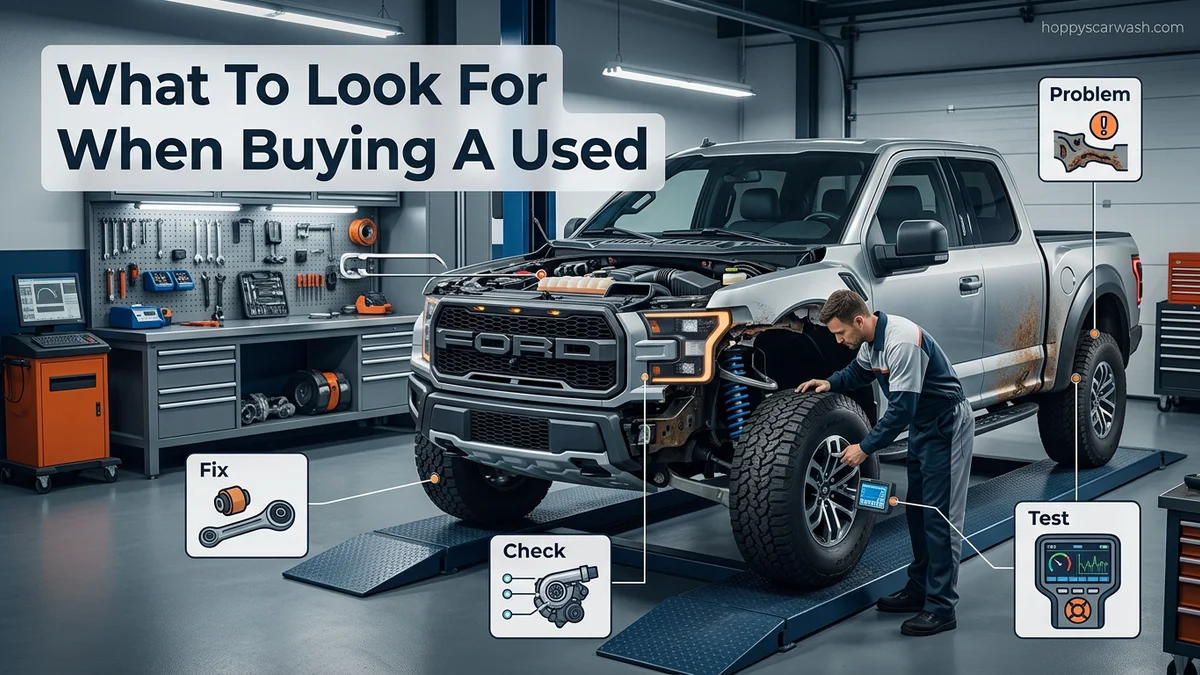
The Raptor frame is reinforced compared to a standard F-150, but hard jumps and high-speed impacts still take a severe toll. When you crawl underneath the truck, you must look past the factory skid plates and search for structural deformation.
- Check the front frame horns and steering box mounting points for hairline cracks or bending.
- Inspect the crossmembers and leaf spring perches for signs of heavy bottoming out or structural straightening.
- Look closely at the underside of the cab and bed mounts; severe frame twisting often leaves ripples in the sheet metal alignment.
- Scrapes on the skid plates are normal, but deep gouges combined with bent structural components mean the truck was heavily abused.
Evaluating FOX Live-Valve and Bypass Shocks
The sophisticated FOX suspension is the defining feature of the Raptor ride quality, but it is also an expensive wear item. Factory shocks typically require rebuilding or replacement every 50,000 miles, regardless of generation.
- Look for oil weeping or active fluid leaks around the shock shafts and remote reservoirs.
- Check the electronic wiring harnesses on Gen 2 and Gen 3 Live-Valve shocks for frayed wires or corroded connectors.
- Test drive the truck through varied terrain to feel for excessive body roll or a harsh, unyielding ride that signals dead dampening.
- Factor a $2,000 to $4,000 shock rebuild or replacement cost into your purchase budget if the seller has no service records for them.
How to Inspect and Diagnose Engine and Transmission Failures
EcoBoost Cam Phasers, Turbochargers, and V8 Quirks
Powertrain issues vary wildly depending on whether you are looking at a V8 or an EcoBoost V6 model. Each generation carries specific mechanical traits that demand careful listening during a cold start.
- Listen carefully during a completely cold start on Gen 2 (3.5L EcoBoost) models for a 2-to-3-second metallic rattle, which indicates failing cam phasers.
- Inspect the 3.5L twin-turbochargers for blue smoke under acceleration or excessive shaft play, as heavy towing wears them out prematurely.
- For Gen 1 (6.2L V8) trucks, listen for valve train ticking and check for rear main seal leaks.
- Verify that the intercooler weep hole TSB has been performed on EcoBoost models to prevent condensate buildup and misfires.
Transmission Shifting Performance and Transfer Case Health
Raptors utilize heavy-duty transmissions that handle immense torque, but they are prone to specific shifting anomalies that can signal impending failure.
- Test drive the 10-speed transmission (Gen 2 and Gen 3) thoroughly, checking for harsh 1-3-5 skip shifts or slipping under heavy throttle.
- Ensure the older 6-speed transmission in Gen 1 models shifts smoothly without delayed engagement into reverse or drive.
- Cycle through all four-wheel-drive modes (4A, 4H, 4L) and engage the electronic locking rear differential to ensure the transfer case actuators work immediately without binding.
- Check transmission fluid color and smell on a dipstick or via scan tool data to rule out burnt fluid or excessive metal debris.
Step-by-Step Used Ford Raptor Inspection Checklist
Evaluating a high-performance truck requires a systematic approach. Following a strict inspection protocol prevents costly surprises after purchase.
1. Exterior and Frame Inspection
Examine the body panels for uneven gaps. Check the factory graphics package for fading or peeling, which indicates frequent sun exposure. Inspect the frame rails underneath for structural dents, deep scratches, or fresh undercoating sprayed to hide damage.
2. Suspension and Undercarriage Walkaround
Look closely at the FOX live-valve dampers for fluid leaks around the seals. Check the bash plates and skid plates for heavy scraping. Excessive gouges indicate the truck was subjected to severe rock crawling without proper line selection.
3. Powertrain and Diagnostic Scan
Plug an OBD-II scanner into the port to check for stored or cleared Diagnostic Trouble Codes (DTCs). Listen to a cold start for cam phaser rattle. A metallic ticking noise that lasts for a few seconds signals an expensive timing component replacement.
- Verify service records via the FordPass app or CARFAX history report.
- Test every drive mode, including Baja and Rock Crawl, to ensure the transfer case shifts smoothly.
- Inspect the brake rotors for deep scoring and measure remaining pad thickness.
- Check the condition of the oversized factory tires for cupping and uneven wear patterns.
What If the Raptor Has Undisclosed Mechanical or Structural Issues
Discovering hidden damage during or immediately after the purchase process requires immediate mitigation. Dealership laws and private sale terms dictate the available recourse for major undisclosed defects.
Steps to Take When Hidden Problems Emerge
- Obtain a written diagnostic report from an independent Ford certified service center detailing the structural or mechanical failure.
- Review the bill of sale for “As-Is” clauses or implied warranty protections depending on state laws for 2026 vehicle transactions.
- Contact the selling dealer immediately to request a remediation agreement or financial adjustment for repair costs.
- Consult a consumer protection attorney if the seller intentionally concealed structural frame damage or flood history.
- Engage professional mobile pre-purchase inspection services to establish a documented timeline of the defect if legal action becomes necessary.
Repair costs for neglected Raptor components scale rapidly. Replacing a full set of OEM FOX live-valve shocks ranges from $3,500 to $5,000 including labor, while cam phaser and timing chain overhauls often exceed $2,500 at a dealership.
Conclusion
Buying a used Ford Raptor in 2026 demands rigorous mechanical evaluation, strict adherence to maintenance record verification, and a thorough inspection of the high-performance suspension. Overlooking these critical components exposes buyers to thousands of dollars in unexpected repair bills. According to verified research and automotive market experts, securing an independent pre-purchase inspection from a Ford specialist remains the single most effective safeguard against acquiring a neglected truck. Take the next step today by scheduling a professional PPI before finalizing any financial transaction.
❓ Frequently Asked Questions
What is the best model year range to buy for a used Ford Raptor?
The 2013-2014 Gen 1 models offer bulletproof V8 reliability, while 2019-2020 Gen 2 models feature updated high-output EcoBoost engines with revised cam phasers that resolved many early production issues.
How much does it cost to rebuild FOX live-valve shocks?
A professional rebuild of all four factory FOX shocks typically costs between $1,000 and $2,000, whereas complete replacement with aftermarket units can exceed $4,000.
What mileage is considered too high for a used Ford Raptor?
While well-maintained Raptors can surpass 150,000 miles, buying a model with over 80,000 miles increases the statistical likelihood of needing expensive suspension, turbo, or transmission overhauls.
How do you check for cam phaser failure during a test drive?
Always insist on a cold start where the vehicle has sat overnight; listen closely for a metallic rattling or slapping noise from the top of the engine during the first three to five seconds of idling.
Are aftermarket modifications a red flag when buying a used Raptor?
Heavy cosmetic modifications are usually fine, but performance tunes, aftermarket turbos, or suspension lifts done improperly can indicate a vehicle that was heavily abused and neglected.
What transmission issues affect the 10-speed automatic in Gen 2 and Gen 3 Raptors?
The 10R80 transmission can suffer from harsh shifting, delayed engagement, or internal clutch wear, so test drive the vehicle thoroughly through all gears when fully warmed up.